Battery Engineering Blog
Discover expert perspectives, custom battery design guides, charging solutions, and industry updates from USA engineers.
Featured Isolated DC-DC Power & Smart Lithium Battery Modules
Engineered for Autonomous Mobile Robots (AMR), Automated Guided Vehicles (AGV), Industrial Automation, and Medical Infrastructure demanding uncompromised galvanic safety.
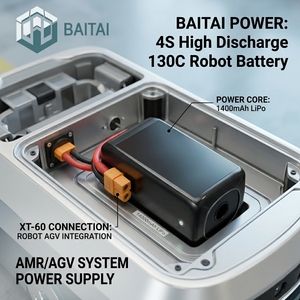
130C 1400mAh 4S High Discharge Power Module
- Continuous Discharge: 130C Peak
- Voltage Range: 14.8V (4S1P)
- Optimized for AMR Surge Currents
- Ultralight Low Impedance Design
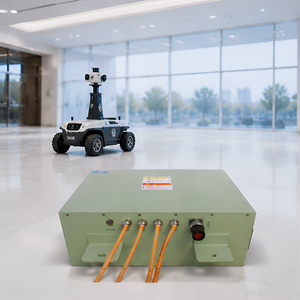
72V 60Ah LiFePO4 AMR Smart Power System
- Nominal Voltage: 72V DC
- Integrated Isolated CANbus BMS
- 3500+ Deep Cycle Life @ 80% DoD
- Heavy-Duty Industrial Casing
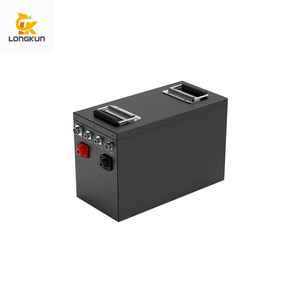
24V 30Ah Industrial Robot Battery Module
- Isolated Voltage Sense BMS
- Rechargeable High-Density Cell Tech
- Thermal Runaway Suppression
- Seamless AGV/AMR Plug-and-Play
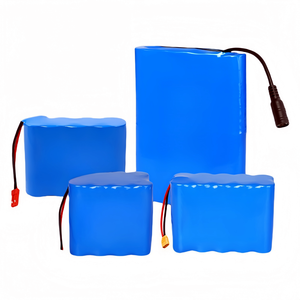
Multi-Voltage OEM Isolated Power Pack System
- Modular 3.7V to 14.8V Scalability
- Internal DC-DC Step Down Control
- Commercial Floor-Cleaning AMR Ready
- UL1642 & UN38.3 Certified Cells
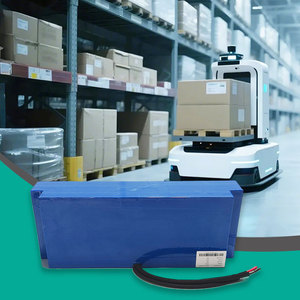
9Ah LTO Rapid-Charge AGV Power Module
- Lithium Titanate Oxide Chemistry
- 10C Ultra-Fast Charging Capability
- 20,000+ Extreme Cycle Life
- Galvanic Isolated Interface Logic
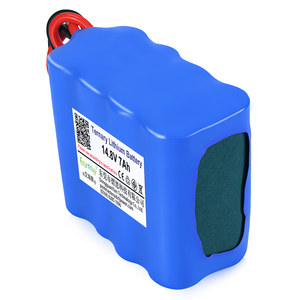
14.8V 7Ah NMC High-Density Mobility Battery
- High Energy Density 4S2P Topology
- Compact Form-Factor Encapsulation
- Low Standby Drain Current (<10µA)
- Lawn Mower & Wheelchair Certified
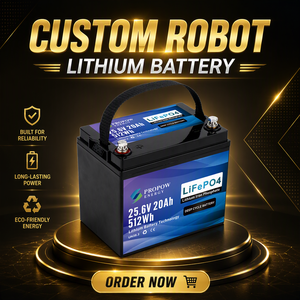
12V/24V 20Ah Heavy Industrial LiFePO4 Module
- Dual Voltage Output Selection
- Over-Current & Short Isolation
- Wide Temperature Operating Band
- Ruggedized Aluminum Chassis
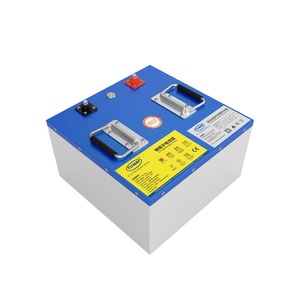
24V 50Ah-100Ah Modular LiFePO4 Energy System
- Scalable Capacity: 50Ah to 100Ah
- Operational Range: -20°C to +60°C
- Smart RS485/CANbus Telemetry
- Integrated Isolated Converters
Principles of High-Efficiency Isolated DC-DC Converter Architecture
In modern industrial electronics, autonomous robotics, telecommunications, and medical equipment, isolated DC-DC power modules form the core backbone of reliable energy distribution. Unlike non-isolated buck or boost converters, isolated topologies employ optical, magnetic, or capacitive barriers to completely sever direct electrical connection between input ground loops and output loads.
This physical separation—known as Galvanic Isolation—is essential for preventing high-voltage transients from destroying sensitive microcontrollers, eliminating ground-loop noise in sensor circuitry, and safeguarding human operators against electric shock in high-voltage DC battery networks (ranging from 48V to 800V bus architectures).
"Information Gain Insight: China’s leading power module manufacturers have transitioned from silicon MOSFET topologies to Wide Bandgap (WBG) Gallium Nitride (GaN) and Silicon Carbide (SiC) switches, enabling switching frequencies above 1 MHz and power densities exceeding 100W per cubic inch."
By leveraging planar transformer technology integrated directly into multi-layer PCBs, modern isolated modules drastically reduce leakage inductance while achieving isolation withstand voltages spanning from 1500VDC to over 6000VDC under IEC/EN 62368-1 and UL 60950 standards.
Key Performance Metrics Matrix
Top Tier OEM Isolated DC-DC Module Benchmarks:
- ✔ Wide Input Ratios: 2:1, 4:1, and ultra-wide 8:1 / 12:1 input voltage ranges (e.g., 9V-36V, 18V-75V, 43V-160V DC).
- ✔ Creepage & Clearance: Reinforced insulation up to 8mm for medical 2xMOPP compliance.
- ✔ Zero Voltage Switching (ZVS): Soft-switching resonant topologies reducing EMI emissions.
- ✔ Thermal Management: Full vacuum potting using thermal silica powder encapsulation.
Isolated Topology Comparative Analysis for OEM Procurement
| Topology Type | Typical Power Range | Efficiency Range | Isolation Voltage Rating | Primary Application Spectrum |
|---|---|---|---|---|
| Flyback Converter | 1W – 60W | 82% – 89% | 1500VDC – 3000VDC | Low-power bias auxiliary power, IoT sensor nodes |
| Active Clamp Forward | 50W – 300W | 88% – 93% | 2250VDC – 4000VDC | Telecom brick modules (1/16th to 1/4 brick), Industrial automation |
| LLC Resonant Half-Bridge | 200W – 1500W+ | 94% – 97% | 3000VDC – 6000VDC | High-power AGV/AMR fast chargers, Server power supplies |
| Push-Pull Isolated | 2W – 150W | 85% – 91% | 1000VDC – 3000VDC | Isolated RS485/CANbus communications, Driver gate bias |
Future Sourcing Trends for Isolated DC-DC Power Modules (2025–2030)
1. WBG Semiconductor Adoption
Global procurement teams are shifting away from traditional legacy silicon. Future sourcing contracts prioritize China manufacturers integrating native GaN-on-Si and SiC MOSFET power stages, allowing modules to run 40% cooler with footprint reductions of up to 60% in brick formats.
2. Digital PMBus Telemetry
Analog-only converters are being rapidly superseded by smart digitally controlled DC-DC converters. Procurement specifications now mandate PMBus / I2C interfaces enabling real-time remote monitoring of voltage regulation, junction temperatures, current output, and predictive fault diagnostics.
3. Ultra-Wide 12:1 Input Windows
With industrial machinery operating on varied battery chemistries (LiFePO4, NMC, Lead-Acid, LTO), buyers favor single multi-application isolated modules supporting ultra-wide input ranges (e.g., 14V to 160V DC) to consolidate BOM stock keeping units (SKUs) across global product lines.
Next-Generation Product Development & Engineering Roadmap
Engineering Innovations Driving the Market
China's premier manufacturing hubs are investing heavily in automated Surface Mount Technology (SMT), 3D volumetric packaging, and automated magnetic winding.
Planar Magnetics Integration: Replacing hand-wound transformers with multi-layer PCB copper traces for zero manufacturing variance in isolation impedance.
Double-Sided Cooling Bricks: Thermally enhanced aluminum substrate housings offering conduction cooling directly to chassis walls, eliminating bulk cooling fans.
Key Technological Vector Shifts
A. Advanced Electromagnetic Interference (EMI) Mitigation: Next-generation power modules incorporate built-in multi-stage differential and common-mode LC filters, enabling full compliance with CISPR 32 / EN 55032 Class B radiated and conducted emission thresholds without external bulk capacitors.
B. Enhanced Extreme Environmental Immunity: Modern isolated converters utilize full epoxy encapsulation silicone compounds with UL 94V-0 flame retardancy. This grants complete resistance to high humidity, shock (MIL-STD-810G), atmospheric salt spray, and extreme thermal cycling ranging from -40°C up to +105°C ambient operational limits.
C. High Power Density Miniaturization: Standard 1/16th brick (1.3" x 0.9" x 0.5") modules are now reaching output powers previously restricted to full-brick formats (up to 300W), yielding density benchmarks > 120W/in³.
Enterprise Strengths: Why Partner with Top China Power Manufacturers
Combining four decades of battery energy storage engineering with state-of-the-art power conversion technology, our manufacturing infrastructure delivers unmatched OEM/ODM turnkey capabilities.
Rigorous Quality Management
Operating under strict ISO 9001 and ISO 13485 (Medical Devices) certified quality control systems. Every single production unit undergoes 100% full-load high-temperature burn-in testing, automatic optical inspection (AOI), and multi-stage dielectric withstand insulation testing before dispatch.
End-to-End OEM Customization
From custom pinout configurations, bespoke input/output voltage scaling (e.g., 3.3V, 5V, 12V, 24V, 48V, 72V DC), customized heat-sink geometry, to internal smart BMS integration—our specialized R&D team completes custom prototypes in as fast as 14 business days.
Agile Global Supply Chain Integration
Direct strategic partnerships with premier semiconductor vendors guarantee stable chip allocation. Combined with localized component sourcing in China's Pearl River Delta, we guarantee reliable lead times and high volume cost protection against global market volatility.
Frequently Asked Questions (FAQ) for Isolated DC-DC Sourcing
What is the functional difference between Isolated and Non-Isolated DC-DC Converters?
An isolated DC-DC converter uses a magnetic transformer or capacitive barrier to separate the input electrical ground from the output electrical ground. This prevents direct current flow between input and output, protecting control circuitry against dangerous high-voltage spikes, eliminating noise loops, and satisfying safety agency mandates (such as UL 62368-1). Non-isolated converters share a common ground line and are suitable only for low-risk, common-ground systems.
How do I determine the required Isolation Voltage (e.g., 1500VDC vs 3000VDC vs 6000VDC)?
The necessary isolation withstand voltage depends on your system's regulatory standard and operating environment. General industrial automation typically requires 1500VDC to 2250VDC. Heavy industrial, AGV/AMR high-voltage battery systems (48V to 300VDC), and telecom power systems demand 3000VDC. Medical equipment with patient contact requires up to 4000VAC / 6000VDC isolated barrier protection (2xMOPP rating) under IEC 60601-1.
What does input ratio (2:1 vs 4:1 vs 8:1) mean when specifying power converters?
The input ratio defines the operating input voltage range of the module relative to its nominal rating. A 2:1 ratio converter nominal 24V accepts 18V to 36V DC. A wide 4:1 converter accepts 9V to 36V DC. An ultra-wide 8:1 or 12:1 converter can operate across 9V to 75V DC or 14V to 160V DC, allowing a single module model to function across standard 12V, 24V, 48V, and 110V industrial rail supply voltages.
How is MTBF calculated for high-reliability isolated power modules?
Mean Time Between Failures (MTBF) is calculated according to standardized reliability prediction models such as MIL-HDBK-217F (Military Standard) or Telcordia SR-332. Top China manufacturers test modules at 25°C, 40°C, and 85°C ambient temperatures under full load, achieving MTBF metrics exceeding 1.5 million to 2.5 million operational hours.
What thermal management options are available for encapsulated brick converters?
Thermal management options include free-air natural convection, forced-air cooling via auxiliary fans, aluminum heatsink attachments (longitudinal or transverse fins), and direct baseplate conduction cooling to an external metal chassis or cold plate. Baseplate conduction allows sealed IP67 dustproof/waterproof enclosure designs without airflow holes.
How do isolated power modules assist in passing CISPR 32 / EN 55032 EMI certification?
High-quality isolated converters feature internal Pi-filters, low inter-winding capacitance transformers, and spread-spectrum clocking to minimize high-frequency switching noise. When coupled with recommended external input electrolytic capacitors and common-mode chokes, modules easily meet stringent Class B radiated and conducted EMC requirements.
What is the standard lead time for OEM custom DC-DC power module engineering?
Standard off-the-shelf samples ship within 3 to 5 business days. Bespoke OEM design customizations (such as modified voltage output, non-standard mechanical pinouts, or specialized BMS communication protocols) typically require 2 weeks for initial engineering evaluation and sample delivery, with mass production scaling in 4 to 6 weeks.
Can isolated DC-DC modules be connected in parallel for higher power output?
Yes, selected isolated DC-DC power modules equipped with built-in Active Current Sharing (DROOP mode or Share Pin control) can be wired in parallel (N+1 redundancy configuration) to scale system power output or provide fail-safe operational redundancy for mission-critical industrial applications.
Partner with China's Premier Isolated DC-DC Power Experts
Need custom isolated voltage conversion, high-density brick converters, or smart lithium battery system integration for your OEM product line? Contact our technical engineering team for instant project design consultation.
Get a Quote