Battery Engineering Blog
Discover expert perspectives, custom battery design guides, charging solutions, and industry updates from USA engineers.
Standard & Custom Electric Forklift Lithium Batteries
Engineered for extreme continuous duty, zero-maintenance operations, and high-rate power delivery across class I, II, and III material handling equipment.
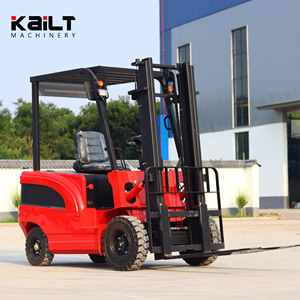
Lithium Ion Forklift Battery Powered Forklift Counterbalance Electric Forklift 5 Ton 80V Battery For Container Loading
Send an Inquiry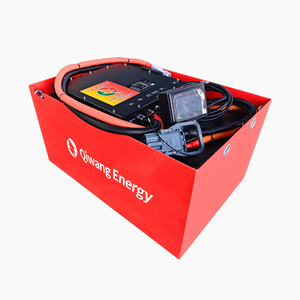
Customized electric forklift lithium ion battery, can be used to replace lead-acid batteries for forklift traction batteries.
Send an Inquiry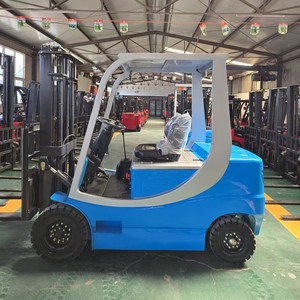
Eco Friendly 2000kg Electric Forklift Standard Lead Acid Battery Optional Lithium Battery For Cargo Handling
Send an Inquiry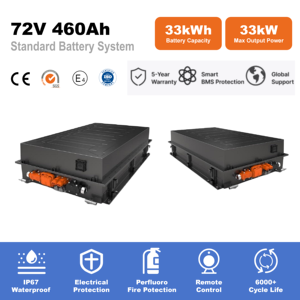
72V 460Ah Forklift Standard Battery System LiFePO4 Battery with Liquid Cooling 1C Output Power 20kW AC Fast Charge Type2 Input
Send an Inquiry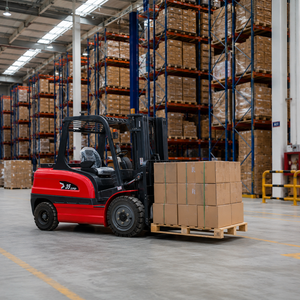
1.5 Ton 3.5 Ton Lithium Ion 5000 Cycles Life Quick Battery Swap System Warehouse Electric Forklift
Send an Inquiry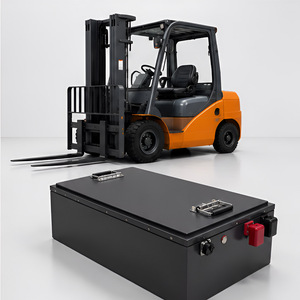
24V 100Ah LiFePO4 Lithium Ion Battery for Electric Forklift Truck Deep Cycle Battery Pack Smart BMS Long Cycle Life OEM Factory
Send an Inquiry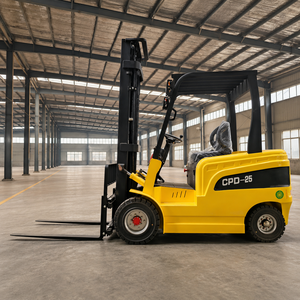
Battery Powered Electric Forklift Truck Heavy Duty Lithium Forklift Factory Direct Warehouse Solution
Send an Inquiry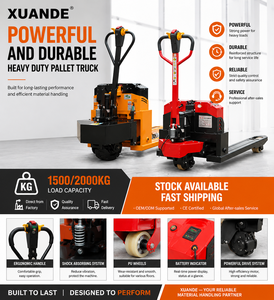
XUANDE CBD-30 3-Ton Electric Forklift Pallet Truck Lithium-Ion Battery 48V 100Ah 1150x550x85mm Fork Standing Operation
Send an InquiryElectrification Paradigm: Why LiFePO4 Dominates Modern Material Handling
An authoritative evaluation of total cost of ownership (TCO), electrochemical stability, thermal safety protocols, and operational workflows driving the transition from legacy lead-acid to premium Chinese lithium battery systems.
Eliminating Shift Downtime with Opportunity Charging
Traditional lead-acid forklift traction batteries impose severe operational bottlenecks. They require 8 hours of active charging followed by an obligatory 8-hour cooling period, alongside tedious weekly watering, equalization charges, and dedicated battery room ventilation to dissipate hazardous hydrogen gas. In high-throughput 24/7 logistics centers, this necessitates 2 to 3 battery swaps per forklift daily.
China's leading industrial lithium iron phosphate (LiFePO4) battery manufacturers have revolutionized fleet management by delivering 1C to 3C opportunity charging capability. Forklift operators can top up battery SOC (State of Charge) during 15-minute coffee breaks or shift changes without degrading cell chemistry. This enables true continuous single-battery multi-shift operation, effectively eliminating battery room infrastructure and dedicated swapping equipment.
Uncompromised Safety & Thermal Stability
Safety is the paramount criteria in indoor material handling. Lithium Iron Phosphate (LiFePO4) chemistry exhibits an exceptionally stable olivine crystal structure with strong covalent P-O bonds. Unlike Nickel Manganese Cobalt (NMC) cells, LiFePO4 does not release oxygen during thermal breakdown, eliminating the risk of explosive thermal runaway under structural puncture, heavy crushing, or electrical short-circuiting.
Our Tier-1 Chinese battery packs incorporate multi-layered safety barriers: automotive-grade prismatic cells, flame-retardant structural insulation, heavy-gauge steel enclosures, internal aerosol fire suppression canisters, and real-time smart BMS monitoring for micro-short detection, cell voltage imbalance, overcurrent protection, and multi-point temperature sensing.
Comparative Matrix: LiFePO4 vs. Lead-Acid vs. Hydrogen Fuel Cells
Direct technical benchmark evaluating chemical performance, operational costs, and environmental resilience across industrial forklift power architectures.
| Performance Metric | LiFePO4 (China OEM Premier) | Legacy Lead-Acid (PzS / Heavy Duty) | Hydrogen Fuel Cell (PEMFC) |
|---|---|---|---|
| Cycle Life (80% DoD) | 4,000 – 6,000+ Cycles | 1,200 – 1,500 Cycles | 10,000+ Hours (Stack Life) |
| Round-Trip Energy Efficiency | 95% – 98.5% | 70% – 75% (High Energy Loss) | 40% – 45% (System Level) |
| Full Charge Time | 1.0 – 2.0 Hours (Fast Charge) | 8.0 Hours + 8.0 Hours Cooling | 3 – 5 Minutes (H2 Refuel) |
| Opportunity Charging | Fully Supported (No Memory Effect) | Destructive (Severe Sulfation) | N/A (Continuous Generation) |
| Routine Maintenance | Zero Maintenance (Sealed) | Weekly Distilled Water & Acid Checks | High (Compressor/Stack Servicing) |
| Operational Temperature Range | -20°C to +60°C (Optional Heating System) | 0°C to +40°C (Derates in Cold) | -30°C to +45°C |
| Environmental & Workplace Safety | Zero Acid Leaks, Zero Outgassing | Corrosive Acid & Explosive H2 Outgassing | High-Pressure Gas Safety (350 Bar) |
| 5-Year Fleet Total Cost of Ownership | Lowest (30% - 50% TCO Reduction) | High (Battery Swaps & Labor Costs) | Very High (H2 Infrastructure Capex) |
Future Procurement Trends for Forklift Lithium Battery Systems
Key industry shifts that global logistics directors, procurement heads, and OEM manufacturers must integrate into their supply chain roadmap over the next decade.
1. Migration to High-Voltage Platforms (80V to 400V)
While 24V and 48V systems remain standard for walkie stackers and reach trucks, heavy-duty counterbalance forklifts (5 ton to 16 ton) and port container handlers are shifting to high-voltage battery architectures. Higher operating voltages drastically reduce current draw, minimizing thermal loss ($I^2R$), enabling thinner cable harnesses, and boosting overall hydraulic lift efficiency by over 18%.
2. Standardized Quick-Swap & Modular Cassettes
For automated guided vehicles (AGVs) and autonomous mobile robots (AMRs) operating 24/7 in fulfillment centers, manufacturers are standardizing modular, side-extraction quick-swap battery cassettes. These self-aligning drawer systems allow robotic swapping stations to exchange a depleted module for a fully charged unit in under 90 seconds, maximizing vehicle uptime.
3. IoT Telematics & Cloud-Based Fleet Analytics
Modern industrial procurement prioritizes battery intelligence over raw hardware. Advanced Chinese lithium packs feature built-in 4G/5G telematics modules with GPS, CANbus diagnostic bridges, and cloud telemetry. Fleet managers monitor State of Health (SOH), real-time cell voltage variance, temperature anomalies, charge cycle history, and operator battery abuse metrics via centralized web dashboards.
4. Closed-Loop Sustainability & Second-Life Recycling
With international regulations such as the EU Battery Regulation (2023/1542) taking effect, procurement contracts mandate full battery passports, carbon footprint transparency, and recycled material quotas. Top Chinese suppliers provide cradle-to-grave traceability, offering guaranteed buy-back mechanisms for second-life stationary energy storage systems (ESS) prior to final cell hydrometallurgical recycling.
5. Universal Charging Protocol Harmonization
Fleet operators are moving away from proprietary, vendor-locked charging hardware. The industry is rapidly standardizing around CCS2 / Type 2 high-rate charging interfaces and open-standard CANbus protocols (J1939 / CANopen), enabling multi-brand forklift fleets to share centralized charging corridors seamlessly.
Engineering Breakthroughs in Forklift Battery Technology
Exploring the cell-level innovations, thermal management advances, and structural design shifts driving the next wave of industrial energy efficiency.
Cell-to-Pack (CTP) & Liquid-Cooling Thermal Integration
Traditional industrial battery construction relies on assembling individual cells into modules, which are then wired into a heavy outer case. Next-generation Chinese designs utilize Cell-to-Pack (CTP) structural architecture. By eliminating intermediate module housing, energy density increases by 25% to 30%, while internal component counts drop by 40%.
Furthermore, for high-intensity 1C-2C continuous fast charging and heavy container-loading applications, liquid cooling systems (utilizing glycol channels sandwiching prismatic cell faces) maintain cell temperatures below 35°C. This active thermal control prevents localized hot spots, extending battery service life beyond 6,000 cycles even in tropical warehouse environments.
Cold-Chain Self-Heating & Low-Temperature Chemistry
Operating electric forklifts in cold storage facilities (-20°C to -30°C) typically causes severe voltage drop, capacity loss, and lithium plating during charging. Modern industrial LiFePO4 packs feature integrated PTC silicone heating blankets or high-frequency AC pulse internal heating technology controlled by the BMS.
When plugged into a charger under freezing ambient temperatures, the smart BMS automatically draws power to heat the cell core to +5°C prior to initiating high-current charging, ensuring zero lithium dendritic growth, maintaining full discharge capacity, and preserving structural cell integrity over years of cold-chain service.
Why Partner with China's Premier Battery Manufacturers?
Combining robust Tier-1 cell supply chains, automated precision laser welding, custom engineering expertise, and stringent international certification compliance.
Tier-1 Automotive Grade Cell Sourcing
We exclusively integrate Grade-A LiFePO4 prismatic cells sourced directly from global battery leaders (CATL, EVE, REPT, BYD). Every single cell undergoes automated capacity matching, internal resistance (IR) sorting, and 100% X-ray weld inspection to guarantee zero cell-to-cell variance across multi-cell series strings.
Custom Mechanical & Weight-Counterbalance Engineering
Electric counterbalance forklifts rely on battery weight as a critical physical counterweight to lift heavy cargo safely. Replacing lightweight lead-acid batteries with high-density lithium can unbalance the truck. Our engineering team designs custom heavy-duty steel ballast enclosures (ranging from 24V 300kg up to 80V 2,500kg) to match exact OEM weight distribution and compartment geometry.
Global Certification & Uncompromising Compliance
All our forklift battery systems comply fully with global safety and transport protocols, including UN 38.3 (T1-T8 shock/vibration/thermal testing), CE, UL 2580 (Electric Vehicle Batteries), UL 1973, IEC 62619, and MSDS documentation. We ensure effortless international shipping, smooth customs clearance, and total peace of mind for global importers.
Frequently Asked Questions by Fleet Procurement Managers
Detailed answers addressing critical technical, commercial, and operational considerations when sourcing industrial lithium batteries from China.
Q1 How do I determine the correct lithium battery specification for retrofit on existing lead-acid forklifts?
To retro-fit an existing electric forklift (such as Linde, Toyota, Hyster, Crown, Jungheinrich, or HELI), you must verify four key dimensions: 1) System Voltage (24V, 36V, 48V, 72V, or 80V); 2) Compartment Dimensions (LxWxH in mm); 3) Minimum Required Battery Weight (to maintain stability during max-height lifting); and 4) Truck Connector Type (e.g., REMA DIN 160/320 or Anderson SB/SBE). Our engineering team provides custom drop-in battery solutions that precisely match these mechanical and electrical parameters.
Q2 Will installing a lithium battery harm my forklift's motor controller or electronics?
No. Our lithium battery packs feature an intelligent Smart BMS that communicates directly with major forklift controllers (Curtis, Zapi, Danfoss, Sevcon) via CANbus protocol (J1939 or CANopen). The BMS delivers stable, flat voltage discharge curves under heavy hydraulic loads, eliminating the low-voltage brownouts common with lead-acid batteries, which actually extends controller and hydraulic pump motor lifespan.
Q3 What charger ratio and power supply infrastructure is required for 1-hour fast charging?
For 1-hour fast charging (0.8C to 1C charge rate), the charger output current must match the amp-hour capacity of the battery. For example, a 48V 400Ah lithium battery requires a 48V / 300A–400A industrial high-frequency charger, requiring a 3-phase 380V/415V/480V AC power supply. If your facility grid power is constrained, lower current chargers (e.g., 100A–150A) can be utilized for 2 to 3 hour opportunity charging without issue.
Q4 What is the realistic cycle life expectancy of a China LiFePO4 forklift battery pack?
Under standard operational conditions (0.5C charge/discharge at 25°C ambient temperature with 80% Depth of Discharge), top-grade LiFePO4 cells yield over 4,000 to 6,000 full charge cycles before capacity degrades to 80% of nominal rating. In typical single-shift operations, this translates to an operational lifespan exceeding 10 to 12 years—outlasting 3 to 4 successive lead-acid battery replacements.
Q5 How does the BMS handle over-discharge, over-charge, and short-circuit faults?
The Smart BMS incorporates solid-state MOSFET or heavy-duty contactor disconnects. If cell voltage drops below 2.5V (over-discharge) or exceeds 3.65V (over-charge), or if output current spikes due to an external short circuit, the BMS cuts off the power circuit in under 10 microseconds. Automatic recovery occurs once fault conditions are cleared or charging voltage is re-applied.
Q6 Can lithium batteries be operated safely in cold storage facilities (-30°C)?
Yes. We supply specialized Cold-Chain Edition lithium battery packs equipped with internal heating elements and extra thermal insulation. The BMS initiates internal pre-heating before allowing the battery to charge when temperatures fall below 0°C. Discharge performance remains strong down to -30°C, delivering consistent torque and lifting performance for refrigerated food logistics.
Q7 What lead times, MOQ, and warranty terms apply for OEM/ODM factory orders?
Our standard MOQ for OEM forklift battery packs is 1 unit for prototype testing and 5–10 units for batch production. Production lead times average 15 to 25 working days depending on custom steel box fabrication and cell balancing protocols. We provide a standard 5-Year or 10,000-Hour comprehensive commercial warranty backed by factory technical support and spare BMS module shipping.
Transform Your Material Handling Fleet Efficiency Today
Consult with our senior battery application engineers to receive custom 2D/3D CAD box drawings, tailored BMS CANbus integration specs, and factory-direct wholesale pricing tailored to your OEM or fleet requirements.
Send an Inquiry