Battery Engineering Blog
Discover expert perspectives, custom battery design guides, charging solutions, and industry updates from USA engineers.
Custom Battery Assembly Portfolio
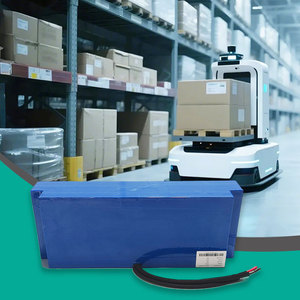
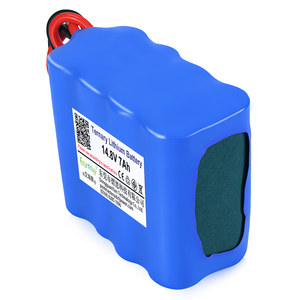
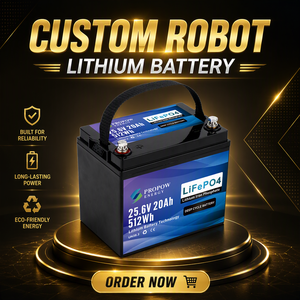
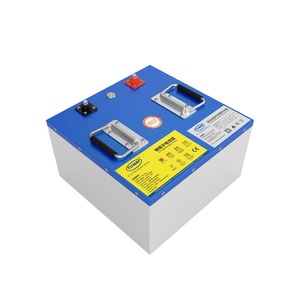
Engineered for AGVs, Autonomous Mobile Robots (AMRs), and Industrial Heavy-Duty Automation Systems
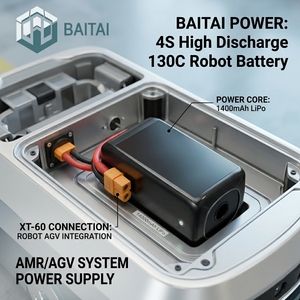
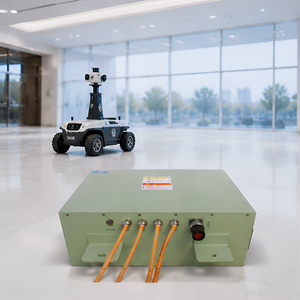
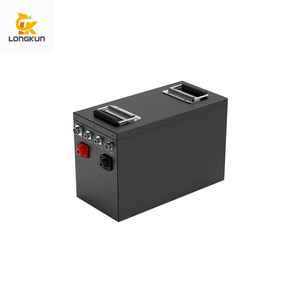
Lithium Titanate Oxide (LTO) Technology: The Ultimate Paradigm Shift in Energy Storage
As industrial automation, Autonomous Mobile Robots (AMRs), Automated Guided Vehicles (AGVs), and grid-scale energy storage systems demand unprecedented cycle durability, operational safety, and thermal resilience, standard lithium-ion chemistries—such as Lithium Iron Phosphate (LiFePO4) and Nickel Manganese Cobalt (NMC)—reach their structural and thermodynamic limitations. Enter Lithium Titanate Oxide ($\text{Li}_4\text{Ti}_5\text{O}_{12}$ / LTO) battery technology, a specialized electrochemical architecture engineered specifically to address zero-downtime, extreme-environment industrial applications.
Unlike conventional lithium-ion batteries that utilize graphite anodes subject to solid electrolyte interphase (SEI) degradation, lithium plating, and thermal runaway risks during fast charging, LTO replaces graphite with nanocrystalline lithium titanate. This zero-strain material configuration eliminates structural lattice expansion during lithiation and delithiation cycles, resulting in extraordinary longevity, unmatched safety, and continuous high C-rate capability.
"LTO technology provides a zero-strain lattice structure ($<0.2\%$ volume change during charge/discharge), guaranteeing over 20,000 to 30,000 full depth-of-discharge (DOD) cycles without thermal runaway risk—making it the premier choice for mission-critical robotic platforms."
1. Electrochemical Benchmark: LTO vs. LiFePO4 vs. NMC
To assist OEM engineering procurement teams in evaluating energy solutions, the following comprehensive performance matrix contrasts high-grade Custom LTO Assemblies against standard industrial chemistries:
| Performance Parameter | Lithium Titanate (LTO) | Lithium Iron Phosphate (LiFePO4) | Nickel Manganese Cobalt (NMC) |
|---|---|---|---|
| Nominal Cell Voltage | 2.3V - 2.4V | 3.2V - 3.3V | 3.6V - 3.7V |
| Cycle Life (100% DOD, 25°C) | 20,000 - 30,000+ Cycles | 2,000 - 4,000 Cycles | 1,000 - 2,000 Cycles |
| Continuous Charge C-Rate | 6C to 10C (6-10 Min 0-100%) | 0.5C to 1C (1-2 Hours) | 0.5C to 1C (1.5-2 Hours) |
| Peak Pulse Discharge | Up to 30C (High Peak Power) | 3C - 5C | 3C - 10C |
| Operating Temp Range | -30°C to +65°C | -20°C to +55°C | -20°C to +45°C |
| Sub-Zero Charge Capability | Direct Charge at -30°C (No Heater) | Requires Pre-Heating (<0°C) | Requires Pre-Heating (<0°C) |
| Thermal Runaway Temp | > 260°C (Inherently Safe) | ~ 270°C | ~ 210°C |
| Anode Structural Strain | Zero Strain (<0.2%) | Moderate (~6-10%) | High (~10-15%) |
2. Why China OEM Custom LTO Battery Assemblies Dominate Global Procurement
As a leading custom LTO battery manufacturer and exporter in China, our engineering facilities integrate end-to-end capabilities—from raw pouch/prismatic cell sorting and precise resistance matching to intelligent BMS design and IP67 modular enclosure fabrication. Global OEMs partner with top-tier Chinese LTO suppliers for several strategic advantages:
- Vertically Integrated Supply Chains: Direct access to tier-1 LTO cell synthesis (Yinlong/Gree, Toshiba SCiB license variants, and specialized custom cells), enabling competitive volumetric pricing.
- Advanced BMS Micro-Architecture: In-house microcode development for SMBus, CANbus 2.0B, CANopen, and Modbus RS485 communication protocols, allowing real-time state-of-health (SoH) diagnostics and automated opportunity charging control.
- Custom Thermal & Mechanical Enclosure Engineering: Aluminum-clad, laser-welded structural casings certified to UN38.3, IEC 62133-2, UL 2580, and CE international standards.
Enterprise Superiority & Customization Capabilities
Why Tier-1 OEMs Worldwide Trust Our Engineering Precision & USA/Global OEM Standards
ISO 9001 Certified Quality System
Over four decades of technical heritage (established legacy since 1983). Every LTO assembly undergoes automated cell sorting, active laser welding inspection, and 100% burn-in discharge testing under full thermal load.
Custom Smart BMS Integration
Proprietary active balancing BMS hardware supports real-time monitoring of individual cell voltages, temperature gradients, and current spikes with dual-redundant safety cutoffs and IoT remote telemetry.
Ultra-Fast Opportunity Charging
Engineered specifically for 6C-10C automated inductive and physical contact chargers. Replenish AGV battery capacity from 10% to 90% in under 10 minutes during automated station docks.
Extreme Sub-Zero Resilience
Maintains >80% capacity retention at -30°C cold storage facilities and arctic outdoor deployments without demanding high-parasitic internal heating jackets required by LiFePO4 or NMC packs.
Flexible Form Factor & Packaging
From ultra-compact 12V / 24V robotic auxiliary modules to 72V / 96V heavy forklift energy storage units, our custom mechanical team designs sheet metal, extruded aluminum, or IP67 composite housings.
Turnkey OEM/ODM Global Export
Full UN38.3, MSDS, DG Shipping Certification, and customs clearance packaging. Exporting directly to OEM equipment manufacturers across North America, Europe, East Asia, and Australia.
Future Procurement & Technological Trends in Custom LTO Assemblies
As industrial automation transforms global manufacturing, warehouse logistics, and heavy transport, purchasing managers and engineering leads must anticipate structural shifts in battery technology. The following four macro-trends are reshaping global procurement requirements for custom LTO assemblies:
1. Transition to Continuous 24/7 "Zero-Downtime" Automated Operations
Legacy AGV and AMR systems relied on swapping battery packs manually or parking vehicles for multi-hour charging cycles. In modern high-throughput fulfillment hubs, every minute of idle robot time impacts operational metrics. Modern procurement strategies prioritize LTO opportunity charging—where autonomous vehicles execute rapid 1-to-3 minute fast charges while loading or unloading goods. This continuous cycle operational model completely removes spare battery inventory and battery-swap stations from facility capital expenditures.
2. Total Cost of Ownership (TCO) Replaces Initial Upfront Capital Cost
While the initial purchase cost per kilowatt-hour ($/kWh) of LTO cells is higher than standard LiFePO4 or NMC cells, forward-thinking procurement teams evaluate **Total Cost of Ownership over 10 to 15 years**. Because LTO batteries routinely achieve over 25,000 cycles (compared to 2,000-3,000 cycles for LiFePO4), an LTO pack lasts the entire lifetime of the robotic platform. In contrast, standard lithium packs require 4 to 6 replacements over the same period, incurring massive labor, replacement cell, and system downtime expenses.
3. Integration of Smart Edge-BMS and Predictive IoT Fleet Diagnostics
Industrial battery packs are no longer passive chemical boxes; they are intelligent network nodes. Modern custom LTO battery assemblies feature integrated IoT BMS units that stream state-of-charge (SoC), individual cell impedances, temperature maps, and cycle counts directly to enterprise cloud dashboards via CANopen, Ethernet, or wireless mesh protocols. Predictive AI algorithms analyze real-time chemical degradation curves to prevent field failures before they occur.
4. Stringent Global Safety & Cleanroom Environmental Standards
In semiconductor fabrication plants, pharmaceutical manufacturing cleanrooms, and subterranean mining environments, thermal runaway risks are completely non-negotiable. Because LTO titanium oxide anodes prevent dendrite growth even during 10C ultra-fast charging or accidental pin penetration, global safety regulators increasingly recommend LTO chemistry for high-risk enclosed operating zones.
Engineering Customization Workflow
From Concept Prototyping to Full-Scale OEM Mass Production
Application Audit
Analysis of voltage, load current profile, continuous vs peak discharge, thermal limits, and charging docking mechanism.
Cell Selection & Matching
Selecting tier-1 LTO pouch or cylindrical cells with strict internal resistance ($\le 0.5\text{m}\Omega$) and capacity binning.
BMS & Thermal Design
Custom PCB artwork layout, firmware protocol implementation (CAN/RS485), and thermal heat-dissipation modeling.
Prototyping & Testing
Laser busbar welding, shock/vibration enclosure fabrication, UN38.3 certification, and thermal stress testing.
Mass OEM Delivery
Automated assembly line manufacturing, ISO9001 quality sign-off, export packaging, and global logistics support.
Procurement & Technical FAQ
Comprehensive Insights for Engineering Leads & Supply Chain Directors
Why is nominal voltage lower for LTO cells (2.3V) compared to LiFePO4 (3.2V) or NMC (3.7V)?
The standard electrode potential of the lithium titanate anode is approximately 1.55V vs. $\text{Li}/\text{Li}^+$, compared to 0.1V for graphite anodes. This higher anode potential reduces the overall cell voltage to 2.3V nominal. While this requires slightly more series cell connections to achieve a targeted system voltage (e.g., 10S for 23V LTO vs 8S for 25.6V LiFePO4), it is precisely this electrochemical threshold that completely prevents SEI layer formation and metallic lithium dendrite plating, delivering unparalleled safety and cycle life.
Can custom LTO battery packs be charged in sub-zero freezer environments (-30°C)?
Yes. Conventional lithium-ion batteries cannot be charged below 0°C without permanent capacity loss and dendrite short-circuit risks, requiring energy-consuming internal heating elements. LTO chemistry allows high C-rate charging at temperatures as low as -30°C without dendrite formation, making custom LTO packs ideal for cold-chain automated warehousing, outdoor defense hardware, and polar research robotics.
What communication protocols are integrated into your custom smart BMS assemblies?
Our custom BMS boards can be integrated with CANbus (CANopen / J1939), RS485 (Modbus RTU), SMBus, UART, and Bluetooth/Wi-Fi telemetry. This allows seamless plug-and-play communication with motor controllers (Curtis, Zapi, Kelly), main AGV vehicle control units (VCUs), and industrial chargers.
What is the minimum order quantity (MOQ) and sample lead time for custom OEM assemblies?
For custom engineering prototypes, our standard lead time is 2 to 4 weeks depending on enclosure complexity and certification requirements. We offer flexible MOQs for specialized industrial machinery OEMs, ranging from small pilot runs (10-50 packs) to high-volume automated assembly contracts (10,000+ packs annually).
How does LTO technology impact long-term corporate sustainability and environmental compliance?
LTO packs contain zero toxic heavy metals like cobalt or nickel. Furthermore, because an LTO pack lasts over 20 years in standard single-shift operations, it reduces electronic battery waste by over 80% compared to short-lived lead-acid or standard lithium solutions, directly aligning with ESG and European circular economy directives.
Partner with China's Premier Custom LTO Battery Supplier
Have an upcoming AGV, AMR, or industrial robotics program? Request a technical consultation and direct factory quote from our senior engineering team today.