Battery Engineering Blog
Discover expert perspectives, custom battery design guides, charging solutions, and industry updates from USA engineers.
Recommended High-Performance Marine & Autonomous Robot Battery Systems
Engineered for heavy-duty marine service robots, autonomous underwater vehicles (AUVs), and rugged maritime systems.
1. Executive Technical Overview: The Marine Electrification Paradigm
The global maritime domain is undergoing a revolutionary transition toward full electrification and autonomous operation. Powered by stringent IMO (International Maritime Organization) decarbonization mandates and the rapid adoption of Autonomous Surface Vessels (ASVs), Autonomous Underwater Vehicles (AUVs), and marine service robotics, the demand for waterproof marine lithium battery packs has escalated exponentially. China has emerged as the global epicenter for advanced energy storage manufacturing, providing world-class OEM and ODM capabilities that combine extreme volumetric energy density with military-grade mechanical ingress protection.
Engineered to withstand harsh saltwater submersion, aggressive humidity, salt-spray oxidation, and high-frequency vibration, marine-grade battery systems require a radical departure from standard industrial battery architecture. Modern marine energy systems must integrate pressure-tested structural enclosures, advanced thermal management phase-change materials (PCM), and intelligent Battery Management Systems (BMS) supporting multi-protocol marine networks such as NMEA 2000, CANbus (J1939), and Modbus RS485.
SEO & Industry Perspective: Search intent analysis reveals that global B2B buyers—ranging from naval defense contractors to commercial autonomous vessel developers—are no longer searching for generic battery cells. Modern procurement teams evaluate Information Gain metrics: IP ratings, anti-corrosion chemistry endurance, sub-zero C-rate efficiency, and single-source customized manufacturing capabilities.
As premier Chinese exporters and custom battery pack manufacturers, our engineering facilities bridge the gap between heavy industrial reliability and cutting-edge battery innovation. By controlling the entire manufacturing value chain—from precision cell sorting and spot-welding to custom BMS firmware calibration and IP68 pressure chamber testing—we empower global OEMs to deploy reliable power solutions across oceanographic research, subsea exploration, electric propulsion, and automated docklands.
2. Core Engineering Standards: Achieving True Marine Sealed Integrity
Designing a battery pack capable of operating continuously in saline marine environments requires solving complex multi-physics challenges: liquid ingress, moisture condensation, galvanic corrosion, and internal heat dispersion. True waterproof marine battery manufacturing hinges on four foundational design pillars:
A. Mechanical Ingress Protection (IP67, IP68 & IP69K Standards)
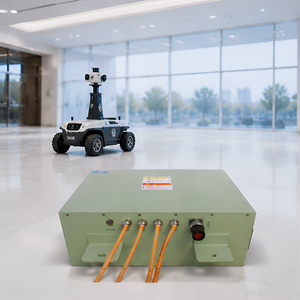
While standard industrial batteries settle for IP65 water resistance, marine battery packs must guarantee total protection under hydrostatic pressure. Our custom enclosures utilize custom-molded dual-O-ring fluoroelastomer (FKM) gaskets, CNC-machined marine-grade 316L stainless steel, or anodized 6061-T6 aluminum alloys. For subsea robotics and AUV platforms, battery modules undergo pressure-vessel simulation up to 10 MPa (1000m subsea depth equivalency) to prevent micro-fractures and seal degradation.
B. Galvanic Corrosion Mitigation & Environmental Coatings
Salt spray poses a perpetual threat to external terminals, connectors, and enclosure fasteners. Following ASTM B117 salt spray testing benchmarks (exceeding 1000 hours of continuous exposure), our marine battery architectures feature passivated stainless hardware, nickel-plated copper busbars sealed in anti-oxidant gel, and hydrophobic ePTFE breathers. These pressure-equalizing valves prevent internal air compression during thermal expansion while blocking water molecules completely.
C. Thermal Management & Thermal Runaway Containment
Waterproof enclosures, by design, restrict ambient air cooling. To prevent thermal accumulation during continuous high C-rate discharge (such as in fast-response service robots or electric marine thrusters), cells are encapsulated in flame-retardant (UL94-V0) epoxy potting or phase-change materials (PCM). This structural potting absorbs kinetic shock, dampens vibration, and conducts localized heat directly to the aluminum heat-sink chassis.
D. Smart BMS Architecture with Marine Communication Protocols
A waterproof battery is only as reliable as its internal electronic brain. Integrated Smart BMS units provide multi-layer protection against over-charge, over-discharge, short circuit, cell imbalance, and thermal spikes. Furthermore, they support real-time digital telemetry integration via CANbus, NMEA 2000, and Bluetooth LE, enabling vessel operators to monitor State of Charge (SoC), State of Health (SoH), individual cell voltages, and cycle counts from central bridge displays.
3. Marine Battery Chemistry Architectural Matrix
Selecting the optimal lithium cell chemistry is a critical engineering decision that dictates pack weight, spatial footprint, thermal stability, and operational lifespan. Below is an authoritative technical comparison matrix evaluated by our senior battery engineering team for marine procurement specifications:
| Chemistry Type | Nominal Voltage | Energy Density (Wh/kg) | Cycle Life (80% DoD) | Operating Temp Range | Primary Marine Application |
|---|---|---|---|---|---|
| LiFePO4 (Lithium Iron Phosphate) | 3.2V / cell | 140 - 170 | 3,500 - 6,000 | -20°C to +60°C | Main propulsion, auxiliary house power, commercial ASVs & workboats. Maximum thermal safety. |
| NMC (Nickel Manganese Cobalt) | 3.6V - 3.7V / cell | 200 - 260 | 1,500 - 2,500 | -20°C to +55°C | Compact autonomous underwater vehicles (AUVs), weight-sensitive marine drones, high-speed crafts. |
| LTO (Lithium Titanate Oxide) | 2.3V / cell | 70 - 110 | 15,000 - 20,000 | -40°C to +65°C | Ultra-fast charging harbor ferries, extreme polar oceanographic sensors, continuous heavy-duty duty cycles. |
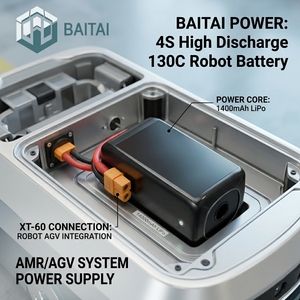
| High-Discharge LiPo (Lithium Polymer) | 3.7V / cell | 160 - 200 | 500 - 1,000 | -10°C to +50°C | High-burst marine service robots, autonomous mobile thrusters (burst rates up to 130C). |
For standard marine propulsion and stationary offshore energy storage, LiFePO4 remains the gold standard due to its inherent chemical immunity to thermal runaway, long calendar life, and exceptional cost-per-cycle economics. Conversely, for deep-sea robotics where displacement volume is constrained, high-density NMC or long-life LTO packs present unmatched engineering trade-offs.
4. Future Procurement & Technological Trends in Marine Energy (2025–2030)
As maritime engineering advances toward fully uncrewed fleets and zero-emission ports, procurement managers must anticipate major technological shifts. China's leading battery exporters are driving four key trends shaping the future of marine energy procurement:
Moving away from legacy 12V/24V/48V architectures, modern electric vessels are shifting to high-voltage series strings. High voltage minimizes current draw, reducing copper wire mass, decreasing I²R resistive heat losses, and increasing total motor efficiency.
Next-generation Smart BMS boards integrate IoT telemetry with cloud AI algorithms. By analyzing micro-changes in internal cell impedance and voltage delta curves over time, systems can predict cell failures weeks before an actual operational glitch occurs at sea.
By eliminating intermediate module housings, CTP technology allows battery cells to be packed directly into waterproof structural frames. This increases volumetric utilization efficiency by 15–20% and reduces pack weight significantly.
Emerging solid-state cells eliminate flammable organic liquid electrolytes entirely. Offering higher energy density and zero risk of fire even upon hull puncture, solid-state chemistry will define the high-end marine market by 2028.
5. OEM / ODM Manufacturing Strengths & Enterprise Capabilities
As a leading Chinese custom battery manufacturer with over four decades of combined engineering pedigree, our production facilities deliver full end-to-end integration for global original equipment manufacturers (OEMs). We do not simply assemble off-the-shelf components—we engineer custom power solutions tailored precisely to your mechanical, electrical, and environmental constraints.
From specialized cell chemistry selection (LiFePO4, NMC, LTO, LiPo) to custom metal enclosure fabrication, wire-harness soldering, and custom BMS firmware development.
Every pack undergoes automated cell grading, laser-welding inspection, 100% capacity cycle validation, thermal shock testing, and high-pressure water immersion testing prior to shipment.
Fully certified to international safety and transportation standards including UN 38.3, IEC 62133, CE, RoHS, UL 1973, and maritime transport approvals for dangerous goods exporting.
6. Frequently Asked Questions (Procurement & Engineering FAQ)
Partner with China's Premier Marine Battery Engineers
Need a customized IP67/IP68 waterproof battery solution for your marine project, autonomous vessel, or robotic application? Request a direct consultation and complete product catalog today.
Get Catalog