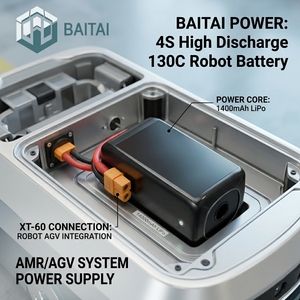
130C 1400mAh 4S High Discharge LiPo Battery for Service Robot AGV & Marine USV Systems
C-Rate: 130C Burst Discharge | 14.8V Nominal
Discover expert perspectives, custom battery design guides, charging solutions, and industry updates from USA engineers.
Engineered for extreme marine operational environments, unmanned surface vehicles (USVs), autonomous mobile platforms, and heavy-duty auxiliary marine energy storage.
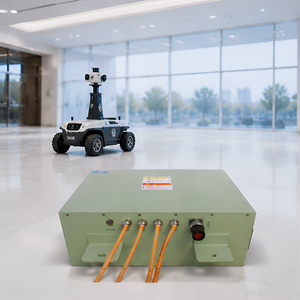
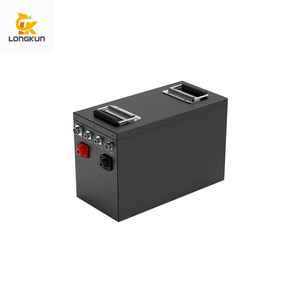
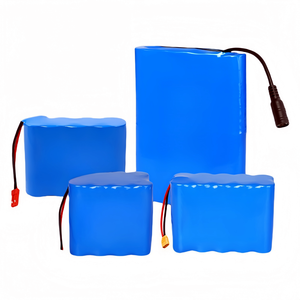
The rapid decarbonization of maritime transport—driven by International Maritime Organization (IMO) greenhouse gas emissions compliance mandates—has positioned lithium-based Marine Energy Storage Systems (ESS) at the core of next-generation commercial vessel engineering. Unlike stationary land-based storage, marine energy storage requires rigorous engineering standards due to high thermal stresses, salt-fog corrosion, mechanical shocks, and zero-tolerance fire safety protocols.
Selecting the optimal cell chemistry involves balancing energy density, volumetric efficiency, operating thermal window, cycle longevity, and inherent thermal runaway thresholds. China’s advanced manufacturing ecosystem provides direct OEM customization across the three key lithium chemistries utilized in commercial marine applications:
| Battery Chemistry | Energy Density (Wh/kg) | Cycle Life (80% DOD) | Thermal Runaway Threshold | Primary Marine Application |
|---|---|---|---|---|
| LiFePO4 (Lithium Iron Phosphate) | 140 – 185 Wh/kg | 3,500 – 6,000 Cycles | Ultra High (~270°C) | Commercial Electric Ferries, Tugboats, Auxiliary Marine ESS |
| LTO (Lithium Titanate Oxide) | 70 – 110 Wh/kg | 15,000 – 25,000 Cycles | Maximum (~300°C+) | Ultra-Fast Opportunity Charging Boats, Subsea Drones |
| NMC (Nickel Manganese Cobalt) | 210 – 260 Wh/kg | 1,500 – 2,500 Cycles | Moderate (~210°C) | Weight-Critical Autonomous USVs, Racing Crafts |
In marine energy storage engineering, preventing cascading thermal runaway between individual battery cells is the single most critical safety requirement. Advanced Chinese battery factories implement cell-level ceramic isolation barriers combined with phase-change material (PCM) heat sinks. Additionally, battery enclosures designed for maritime installation must feature robust IP67 or IP68 ingress protection utilizing marine-grade 316 stainless steel or anodized aluminium alloy enclosures to withstand continuous exposure to high humidity and salt spray (IEC 60068-2-52 standards).
Modern marine smart BMS units incorporate redundant dual CANbus architectures compliant with NMEA 2000 protocol, allowing real-time telemetry streaming of state-of-charge (SOC), state-of-health (SOH), and cell-level voltage balance directly to the ship’s central bridge management system.
High-current active balancing circuits dynamically transfer energy between individual cell series during charge/discharge cycles, maximizing usable pack capacity while maintaining minimal temperature variance across large-capacity marine modules.
Global shipbuilders and marine system integrators are increasingly bypassing multi-tier distributors to work directly with qualified Chinese OEM/ODM factories. Direct factory collaboration ensures custom mechanical geometry, tailored voltage curves, and significantly reduced total cost of ownership (TCO).
As a leading OEM/ODM battery manufacturer with over four decades of engineering heritage, our production facilities combine state-of-the-art automated cell testing, precision laser welding, and full-spectrum quality control frameworks:
Every single battery cell undergoes automated internal resistance (IR) and voltage screening. Only cells exhibiting tight tolerance matching (< 2mV voltage deviation, < 0.5 mΩ IR variance) are approved for pack construction.
All battery pack designs undergo rigorous physical environmental testing including vibration, mechanical impact, thermal shock, short-circuit testing, and UN38.3 transport certification compliance.
Before shipment, 100% of finished marine battery packs undergo full-cycle automated burn-in testing to verify BMS overcurrent protection, balancing efficiency, and rated Ah output.
Commercial marine battery installations typically require compliance with classification society standards such as DNV-GL, ABS (American Bureau of Shipping), CCS (China Classification Society), or Bureau Veritas. Key tests cover thermal runaway propagation prevention, salt spray corrosion resistance, and vibration fatigue resistance.
LiFePO4 offers vastly superior chemical stability and a significantly higher thermal runaway onset temperature (~270°C vs ~210°C for NMC). Furthermore, LiFePO4 provides 3,500+ cycles at 80% DOD compared to NMC’s ~2,000 cycles, delivering a much lower operational cost per megawatt-hour over the vessel's lifespan.
Salt spray accelerates galvanic corrosion on unsealed battery terminals and structural enclosures, leading to short circuits or structural failure. Marine-grade packs utilize IP67/IP68 sealed enclosures made of anti-corrosive aluminum alloys or 316 stainless steel, backed by conformal-coated circuit boards.
Engineering design and initial prototype development typically take 3 to 5 weeks. Mass production and testing usually take 4 to 6 weeks. Factory-direct partners benefit from streamlined customs handling and UN38.3 transport documentation readiness.
Yes. Custom BMS engineering allows integration with NMEA 2000, Modbus RTU/TCP, and CANopen protocols, ensuring seamless communication with onboard propulsion controllers, display units, and shore-side charging infrastructure.
Standard lithium batteries suffer significant capacity loss and charging restrictions below 0°C. Marine-grade packs designed for cold-climate operation utilize integrated self-heating BMS films or LTO chemistry, which can safely operate down to -20°C or even -30°C.
LTO batteries feature extreme C-rate capabilities (charging/discharging up to 10C-20C) and extraordinary cycle life (over 20,000 cycles). They are ideal for high-duty fast-charging harbor shuttles and unmanned subsea exploration equipment.
Robust manufacturing plants enforce ISO 9001 certified protocols, including 100% automated optical inspection (AOI), laser welding depth checks, ultrasonic cell bonding validation, and full-cycle load testing before final packaging.
Looking for a custom OEM/ODM battery system tailored to your marine electrification project? Contact our technical engineering team for custom voltage, capacity, mechanical enclosure, and BMS protocol configuration.
Inquire Now