Battery Engineering Blog
Discover expert perspectives, custom battery design guides, charging solutions, and industry updates from USA engineers.
Featured Industrial IoT & Autonomous Sensing Battery Packs
Engineered specifically for demanding telemetry platforms, automated wireless sensors, and robotics, our customized battery packs utilize high-grade Li-Ion, LiFePO4, NMC, and LTO chemistries. Below are our top 8 enterprise-grade power solutions built to withstand extreme operating conditions, high impulse discharge rates, and extended operational lifecycles.
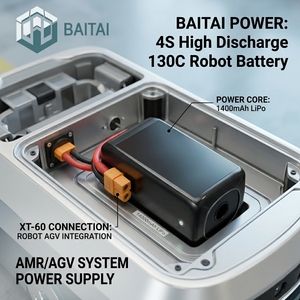
130C 1400mAh 4S High Discharge LiPo Battery for AGV & AMR Systems
Ultra-high peak pulse output engineered for dynamic sensing payloads, robotic arm actuators, and burst telecommunication nodes.
Get Catalog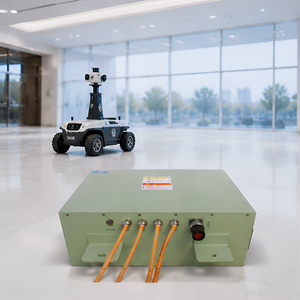
72V 60Ah LiFePO4 Heavy-Duty Mobile Robot Battery Pack with Smart BMS
Designed for heavy autonomous mobile robots (AMRs) integrating wide-area LiDAR arrays and continuous environmental sensing.
Get Catalog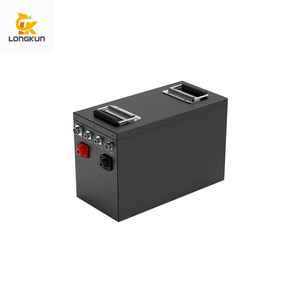
Longkun 24V 30Ah Lithium Ion Smart Battery Pack with Integrated BMS
Compact high-density energy module supporting multi-channel IoT sensor hubs, automated mobile platforms, and telemetric gateways.
Get Catalog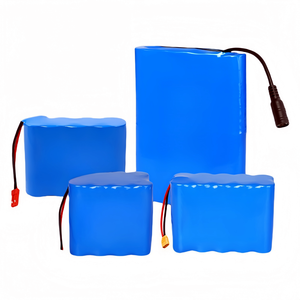
OEM Modular Li-ion Battery Pack 3.7V - 14.8V (18650 / 26650 / 32650)
Scalable cell matrix configurations engineered for floor-cleaning AMRs, distributed wireless IoT networks, and smart trackers.
Get Catalog
Customized Rechargeable LTO 9Ah Autonomous Sensing AGV Battery Pack
Lithium Titanate chemistry providing 20,000+ cycle life, rapid 10C fast charging, and extreme sub-zero operation down to -40°C.
Get Catalog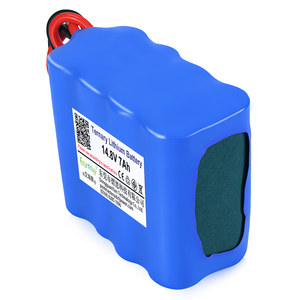
Custom 14.8V 7Ah NMC 4S2P High Energy Density Battery Assembly
Lightweight energy pack designed for outdoor robotic lawnmowers, remote environmental sensing arrays, and field telemetries.
Get Catalog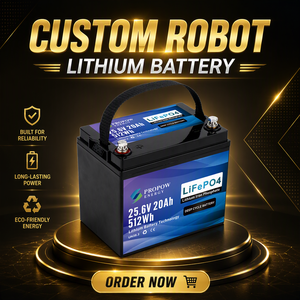
Custom 12V / 24V 20Ah Rechargeable LiFePO4 Robot Sensing Battery
Resilient thermal architecture with intelligent CANbus communication telemetry for enterprise logistics sensors and AMRs.
Get Catalog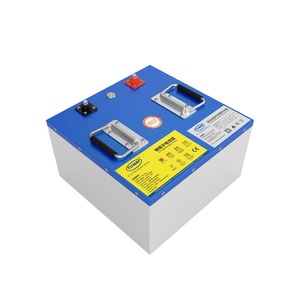
24V LiFePO4 Battery Pack 50Ah - 100Ah (-20°C to 60°C Operating Range)
Heavy industrial grade solution with 1,500+ deep cycles, wide thermal endurance, and dynamic power balancing for automated platforms.
Get CatalogWhy Global Tech OEMs Partner with China's Premier Battery Exporters
In the era of ubiquitous connectivity, Internet of Things (IoT) sensors, wireless condition monitoring nodes, and autonomous mobile systems demand far more than standard off-the-shelf energy cells. They require custom-engineered electrochemical systems built to deliver steady micro-amp current baselines punctuated by millisecond high-current wireless transmission pulses (LoRaWAN, NB-IoT, 5G RedCap, Sigfox) over 10 to 20-year operational horizons without maintenance.
Advanced Electrochemical Cell Selection
We source and rigorously test top-tier primary (Li-SOCl2, Li-MnO2) and secondary (LiFePO4, NMC, LTO) cell chemistries. Every single batch undergoes rigorous automated impedance matching (<1.5mΩ variance) to ensure flawless cell balancing and long-term stack stability.
Smart BMS Telemetry Integration
Our proprietary Smart Battery Management Systems feature micro-power microcontrollers capable of real-time State-of-Charge (SoC), State-of-Health (SoH) diagnostics, dynamic cell balancing, and low-latency communication via SMBus, I2C, CANbus 2.0B, and RS485 protocols.
Extreme Environmental Hardening
Engineered with IP67/IP68 hermetic sealing, flame-retardant ABS/PC or high-strength stainless steel housings, structural potting encapsulation, and anti-vibration spot welding designed to endure heavy industrial shock loads and thermal cycling.
Primary Lithium Thionyl Chloride (Li-SOCl2) batteries are renowned for having the highest energy density (up to 650 Wh/kg) and lowest annual self-discharge (<1% per year at 20°C). However, long idle periods cause a microscopic Lithium Chloride (LiCl) passivation layer to grow on the lithium anode. While this layer prevents self-discharge, it induces a temporary voltage lag upon pulse transmission. Our custom exported IoT battery packs integrate hybrid capacitor units (HPC/HLC) parallelized with the primary cell, ensuring instant voltage recovery and zero data transmission loss for smart gas meters, pipeline sensors, and remote asset trackers.
Future Sourcing & Procurement Trends in IoT Sensor Power Systems
As enterprise organizations transition toward Industry 4.0, smart infrastructure, and zero-touch asset tracking, battery procurement strategies are evolving rapidly. Technical procurement leaders must evaluate chemical trade-offs, total cost of ownership (TCO), and global regulatory compliance when selecting a manufacturing partner in China.
| Battery Chemistry | Nominal Voltage | Energy Density | Cycle / Shelf Life | Operating Temp Range | Optimal IoT Application Target |
|---|---|---|---|---|---|
| Li-SOCl2 (Primary) | 3.6V | 400 - 650 Wh/kg | 10 - 20 Years (Shelf) | -55°C to +85°C | Smart Utilities / Gas Meters |
| Li-MnO2 (Primary) | 3.0V | 280 - 400 Wh/kg | 7 - 10 Years (Shelf) | -40°C to +70°C | Security & Asset Trackers |
| LiFePO4 (Rechargeable) | 3.2V / 12V - 72V | 120 - 160 Wh/kg | 2,000 - 5,000 Cycles | -20°C to +60°C | AGV / AMR Sensing Platforms |
| NMC Lithium-Ion | 3.7V / 14.8V + | 200 - 260 Wh/kg | 500 - 1,000 Cycles | -20°C to +55°C | Robotic Cleaners & Mowers |
| LTO (Lithium Titanate) | 2.3V / 24V | 70 - 110 Wh/kg | 20,000+ Cycles | -40°C to +65°C | Rapid 10C Fast Charging AGV |
1. Shift Toward Hybrid Energy Harvesting
Procurement teams are increasingly requesting hybrid IoT battery solutions that combine small secondary LiFePO4 or LTO batteries with micro energy harvesters (solar photovoltaic, thermoelectric, piezo-vibrational). This hybrid approach extends sensor operational life indefinitely in remote environmental installations.
2. Mandated UN38.3 & IEC 62133 Certification
Global export standards require stringent transport safety validations. As a premier Chinese exporter, our facility conducts in-house thermal abuse, altitude simulation, mechanical shock, vibration, and heavy impact tests, providing fully certified UN38.3, MSDS, CE, UL, and RoHS compliance documentation for frictionless customs clearance.
3. Data-Driven Telemetry & Fleet BMS
Future industrial battery packs for mobile sensors and warehouse AMRs are no longer black boxes. Procurement officers prioritize battery packs featuring integrated Bluetooth Low Energy (BLE) or cellular telemetry, enabling real-time monitoring of pack health, temperature gradients, and predictive replacement scheduling.
Key Development Trends Reshaping the IoT Power Industry
Understanding the multi-year technology trajectories enables system architects and product designers to future-proof their IoT platform designs. Over the next decade, three foundational technological shifts will redefine autonomous wireless power:
Solid-State & Micro-Battery Electrochemistry
The miniaturization of IoT hardware demands sub-millimeter battery power sources. Solid-state micro-batteries featuring solid polymer or ceramic electrolytes eliminate liquid leakage risks, drastically lower internal degradation, and allow direct surface-mount soldering (SMD) onto sensor PCBs for compact wearable and medical sensors.
Ultra-Wide Temperature Electrolyte Formulations
Sensors deployed in cold-chain logistics, sub-zero arctic pipelines, or high-temperature oil and gas drilling equipment require non-standard electrolyte chemistry. Advanced Chinese battery research has pioneered specialized organic solvent blends that preserve over 75% capacity at -40°C while resisting gas evolution up to +85°C.
AI-Driven Edge BMS & Predictive Diagnostics
Next-generation battery management systems embed micro-AI inference models directly on the BMS microcontroller. By analyzing micro-changes in internal cell impedance and Coulomb counting over millions of duty cycles, the BMS predicts thermal runaway hazards and calculates remaining useful life (RUL) with over 98% accuracy.
Frequently Asked Questions (FAQ) for Enterprise Battery Sourcing
Below are expert answers to critical technical and logistical questions faced by enterprise engineering teams and international buyers when procuring custom IoT sensor battery packs from China.
Total Capacity (mAh) = [ (I_sleep × t_sleep) + (I_sense × t_sense) + (I_transmit × t_transmit) ] × Safety Factor (1.3) × Operating Years
Because wireless sensors spend >99% of their lifespan in sleep mode, selecting a battery chemistry with an ultra-low self-discharge rate (such as Li-SOCl2 at <1% per year) is far more critical than choosing a battery with high continuous discharge capacity.
Ready to Optimize Your IoT & Sensor Battery Performance?
Consult with our senior battery application engineers today to request technical datasheets, CAD models, customized engineering proposals, and bulk export pricing.