Battery Engineering Blog
Discover expert perspectives, custom battery design guides, charging solutions, and industry updates from USA engineers.
Recommended Active Balancing BMS & Equalizer Modules
Engineered for LiFePO4, NCM Lithium-ion, and LTO chemistry battery packs across ESS, solar, mobility, and industrial application sectors.
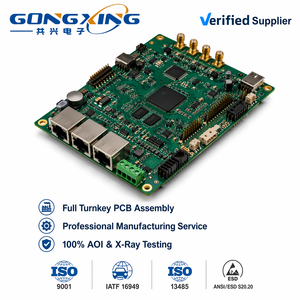
Smart BMS Battery Management System PCBA | Active Balancing Board | Full Turnkey PCB Assembly Service | IATF 16949 Factory
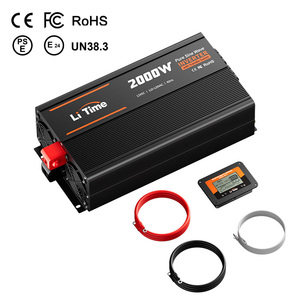
LiTime 48V 10A 4S Active Battery Balancer High Efficiency Energy Transfer Battery Equalizer M8 Terminals ABS for Lithium
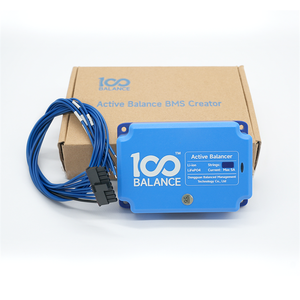
Active Balance Equalizer Balancing Capacitive Lifepo4 48v Livepo4 Cell Nmc 100balance 5A Active Balancer For Lithium Battery
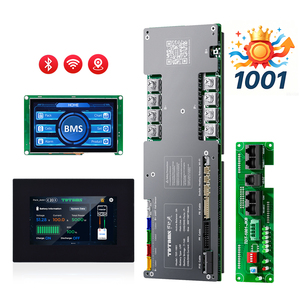
TDT Smart BMS PCBA 3A Active Balance 8S 16S 48V 100A 300A LiFePO4 Li-ion Battery Management System for Home ESS Energy Storage
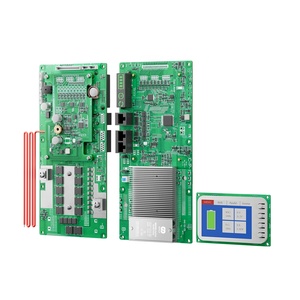
Daly Smart Active Balance Inverter ESS BMS 8S 24V 16S 48V 100A 200A Energy Storage Lithium Battery Management System Lifepo4 BMS
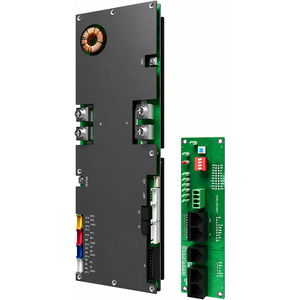
JKBMS PB2A16S20P Smart BMS 200A LiFePO4 Battery Management System 2A Active Balance Inverter BMS for Home Solar Energy Storage
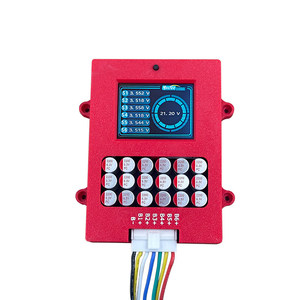
BMS 4S 6S 8S Battery Active Balancer with Display LFP NCM LTO Balancer 4S 6S 8S Battery Equalizer with Voltage Display
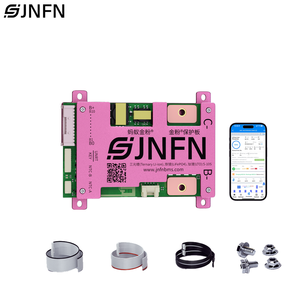
JNFN ANT BMS 1A Active Balance Smart BMS 3S-10S 24V 36V 50A 100A 200A 400A LifePO4 Li-ion Battery Pack with RS485 Bluetooth
Active Balancing vs. Passive Balancing: Architecture & Information Gain
An authoritative analysis of cell equalization topologies, power transfer efficiencies, and thermal dissipation dynamics in large-scale lithium battery management systems.
1. Passive Balancing Limitations
Traditional passive balancing operates by bleeding off excess energy from higher-voltage cells through resistive heat dissipation. While cost-effective for small 12V lead-acid replacement packs, passive balancing is capped at low bleed currents (typically 30mA to 200mA). In high-capacity LiFePO4 commercial energy storage systems (ESS) or electric vehicle traction batteries (100Ah–305Ah cells), passive bleed cannot correct cell state-of-charge (SoC) drift fast enough during brief charge/discharge cycles. Furthermore, passive dissipation generates unwanted localized thermal hot-spots inside sealed battery enclosures, accelerating thermal degradation of neighboring cells.
2. Active Balancing Energy Transfer Mechanics
Active Balancing BMS solutions dynamically redistribute charge from higher-energy cells to lower-energy cells using reactive power storage elements (capacitors, inductors, or high-frequency transformers). Instead of wasting electrical power as thermal energy, active balancing transfers power across cells with efficiencies reaching 88% to 98.5%. With high active transfer currents ranging from 1A to 10A, cell voltage equilibrium is achieved up to 20 times faster than passive methods. This drastically reduces micro-cycling fatigue, prevents premature over-voltage shutdown during bulk solar charging, and extends pack usable capacity by up to 15-20%.
Engineering Insight: Capacitive vs. Inductive vs. Transformer-Based Topologies
Selecting the optimal active balancing topology depends directly on your system's operational duty cycle and voltage configuration:
• Switched Capacitive Equalization: Ideal for 3S–8S battery strings. Capacitive transfer operates via high-frequency switched LC networks, delivering smooth, non-isolated energy transfer proportional to inter-cell voltage differentials (ΔV). Highly compact and cost-efficient for consumer e-mobility and small 24V/48V solar banks.
• Inductive Energy Transfer: Utilizes energy storage inductors to pump charge sequentially between adjacent cells or directly to adjacent pairs. Offers continuous high current (1A–5A) even when cell voltage differences are under 30mV.
• Isolated Multi-Winding Transformer (Flyback/Forward): The pinnacle choice for megawatt-scale ESS and high-voltage EV packs (up to 24S–100S). Allows bidirectional energy transfer between individual cells and the entire battery pack bus. Delivers true bi-directional active equalization regardless of cell proximity inside large series strings.
| Performance Metrics | Passive Bleed BMS | Capacitive Active Balancer | Inductive / Flyback Active BMS |
|---|---|---|---|
| Equalization Current | 30mA - 200mA (Max) | 1A - 5A (Voltage-Dependent) | 2A - 10A+ (Constant / Controlled) |
| Energy Efficiency | 0% (100% Heat Loss) | 85% - 92% Energy Transfer | 90% - 98.5% Energy Transfer |
| Thermal Footprint | High Heat Generation inside Pack | Ultra-Low Heat Footprint | Negligible Heat Generation |
| Cell Capacity Utilization | Baseline (~80-85% Usable) | Optimized (~92-95% Usable) | Maximum (>98% Usable Capacity) |
| Battery Pack Life Extension | Standard Cycle Life | Extended by 25% - 35% | Extended by up to 50% |
| Recommended Applications | Standby UPS, Small E-bikes | Residential 48V ESS, Solar Storage | Commercial ESS, Heavy Traction EVs |
Technological Trends Driving Active Balancing BMS (2025–2030)
How artificial intelligence, solid-state chemistries, automotive safety standards, and cloud IoT integration are transforming global BMS sourcing strategy.
AI-Powered State-of-Health (SoH) Algorithms
Next-generation Chinese BMS factories are integrating machine learning microcontrollers directly on the PCBA. By tracking impedance growth, dynamic internal resistance (IR), and coulomb counting variations across thousands of cycles, AI algorithms dynamically adjust active balancing threshold triggers, preventing cell aging divergence before it impacts overall pack capacity.
Inverter Protocol Synchronization
Procurement trends favor unified Smart Active Balance BMS units with native multi-protocol communication (CAN2.0B, RS485, Modbus RTU, Bluetooth 5.0). Modern active balancing boards seamlessly handshake with major global inverter brands (Victron, Deye, Growatt, Luxpower, SMA), enabling closed-loop voltage control during high-amp charging.
Automotive Safety (IATF 16949 / ISO 26262)
Global buyers require rigorous manufacturing controls. China’s top-tier BMS suppliers are transitioning from standard industrial lines to certified automotive-grade cleanroom automated assembly (SMT). Redundant hardware protection circuits, dual MOS control, and conformal coatings against moisture and salt spray are now baseline requirements.
Cloud-Connected Wireless BMS (wBMS)
Replacing heavy copper wiring harnesses with robust 2.4GHz wireless mesh networks reduces assembly labor and system weight. Cloud-based telemetry platforms upload real-time individual cell voltages, enabling fleet operators to remotely trigger manual deep-balancing cycles and update firmware Over-The-Air (OTA).
Ultra-High Current Megawatt ESS Trends
As grid-scale energy storage containers migrate from 280Ah to 314Ah, 560Ah, and 625Ah ultra-large prismatic cells, active balancing currents are scaling up to 10A–20A continuous power transfer. High-current equalizers prevent cell-to-cell delta expansion during 1C/1C rapid power dispatch on renewable grids.
Solid-State & LTO Multi-Chemistry Adapters
Modern active balancing circuits must accommodate wider operating voltage windows — from Lithium Titanate (LTO: 1.5V–2.8V) to high-voltage Solid-State cells (up to 4.4V). Advanced software-defined BMS topologies enable seamless parameter modification via mobile apps or PC software interfaces.
Why Source Active Balancing BMS from Leading Chinese Manufacturers?
Leverage scalable SMT assembly lines, rigorous quality inspection standards, full turnkey engineering support, and competitive global supply chain logistics.
End-to-End Turnkey SMT & Electronics Assembly
Our state-of-the-art Chinese manufacturing facilities feature high-speed Panasonic and Siemens SMT surface mount production lines. We provide comprehensive turn-key manufacturing — including high-layer PCB fabrication, precision component procurement from verified global semiconductor distributors (TI, STMicroelectronics, Infineon, NXP), automated solder paste inspection (SPI), automated optical inspection (AOI), and 100% In-Circuit Testing (ICT).
Certified Quality Management & Environmental Testing
Every Active Balancing BMS unit undergoes rigorous environmental stress screening (ESS). Our factories operate strictly under IATF 16949, ISO 9001, and ISO 14001 quality frameworks. Production protocols include thermal shock testing (-40°C to +85°C), high-humidity burn-in under load, vibration testing, and conformal coating application to ensure bulletproof reliability in harsh tropical, marine, or industrial mining environments.
Custom OEM/ODM Engineering & Firmware Design
Whether you require a custom form factor to fit inside compact rack-mounted ESS chassis, specialized CANbus communication routines for proprietary industrial vehicles, or high-amp solid-state relay (SSR) driver circuits, our senior engineering team delivers rapid prototyping in as little as 14 business days. We provide complete hardware engineering, schematic layout, software stack tailoring, and pre-compliance support for UL 1973, CE, and IEC 62619 certifications.
Global Supply Chain Resilience & Cost Optimization
Direct factory sourcing from China’s central electronics manufacturing hubs provides unmatched cost-efficiency without sacrificing component authenticity. By leveraging direct semiconductor supply contracts and strategic raw material stocking, we guarantee short production lead times, flexible MOQ tiers for growing engineering brands, and complete bill-of-materials (BOM) transparency.
Frequently Asked Questions (FAQ) for B2B Sourcing
Essential guidance for engineering managers, product developers, and supply chain procurement officers evaluating Active Balancing BMS suppliers.
What is the difference between a standalone Active Equalizer and an Active Balancing Smart BMS?
A standalone active equalizer is dedicated exclusively to transferring energy between cells to maintain uniform voltage; it typically does not contain safety MOSFETs or over-current protection logic. An Active Balancing Smart BMS combines high-current active energy transfer circuits with complete battery safety management — including over-voltage, under-voltage, over-current, short-circuit, and multi-point temperature protection, alongside digital communication protocols (CAN, RS485, Bluetooth).
How do I determine the right active balancing current (1A, 2A, 5A, or 10A) for my battery pack?
The ideal balancing current depends on cell capacity (Ah), cell quality grade, and expected charge/discharge C-rates. For standard 50Ah–100Ah battery modules, a 1A–2A active balancer is sufficient. For large-format 280Ah–314Ah energy storage cells subjected to rapid solar charging or heavy industrial loads, a 3A–5A active balancing current is recommended. High-capacity commercial ESS systems or recycled second-life battery packs benefit from 10A active balancing to aggressively correct severe cell capacity mismatch.
Can Active Balancing BMS boards be used with second-life or mixed-capacity lithium cells?
Yes. Active balancing is the premier technology for second-life battery energy storage systems (BESS). Because second-life cells exhibit higher internal resistance variance and capacity degradation delta, passive balancing cannot keep up. A high-current active balancer continuously transfers charge from healthier cells to weaker cells during operation, enabling the pack to deliver its maximum available capacity without early cell-under-voltage cutoffs.
Do your active balancing BMS products support communication with major home ESS inverters?
Absoltely. Our smart active balancing BMS systems feature pre-programmed firmware protocols compatible with market-leading inverter brands including Victron Energy, Deye, Growatt, GoodWe, Sofar, Luxpower, Voltronic, and SMA. Communication protocols can be selected via the onboard LCD display or mobile app interface, or customized via PC software.
What certifications and quality standards do your active balancing BMS factories hold?
Our partner manufacturing facilities operate under strict IATF 16949 automotive quality management systems and ISO 9001 standards. Products comply with international safety and electromagnetic compatibility directives including CE, FCC, RoHS, and testing protocols aligned with UL 1973, IEC 62619, and UN38.3 transport standards.
What is the typical minimum order quantity (MOQ) and sample lead time for custom OEM projects?
For standard off-the-shelf active balancer boards and smart BMS modules, sample orders are available with no strict MOQ (from 1 to 5 units). For custom OEM/ODM hardware and PCBA engineering projects, prototype samples are typical delivered within 14–21 days following schematic approval. Mass production lead times range from 3 to 4 weeks depending on batch volume.
How does an active balancing BMS improve total cost of ownership (TCO) in commercial battery installations?
By preventing premature pack shutdown caused by a single lagging cell, active balancing unlocks up to 15%–20% additional usable energy per cycle. Furthermore, by eliminating thermal hotspots associated with passive resistors and reducing cell degradation, active balancing extends total battery service life by 30% to 50%. Over a 10-year ESS deployment, this significantly lowers levelized cost of storage (LCOS) and reduces maintenance callouts.
How can I request customized firmware, custom cable harnesses, or specific CANbus ID maps?
Simply click our inquiry button below to connect directly with our application engineering team. Please submit your project specifications including cell chemistry (LiFePO4/NCM/LTO), series string count (e.g., 4S, 8S, 16S, 24S), peak discharge current requirements, and required communication protocols. We provide complete technical consulting and customized engineering quotes within 24 hours.