Battery Engineering Blog
Discover expert perspectives, custom battery design guides, charging solutions, and industry updates from USA engineers.

1. Industrial Whitepaper: Architecture of CE Certified Portable Power Station Modules
As global industries transition toward electrified mobile infrastructure, zero-emission auxiliary power, and autonomous logistics, the demand for CE Certified Portable Power Station Modules has experienced unprecedented growth. Modern commercial energy storage systems (ESS) require a shift from monolithic battery packs to modular, hot-swappable, and intelligent power building blocks. These modules must satisfy rigorous European Economic Area (EEA) standards—specifically mandatory compliance under the Low Voltage Directive (LVD 2014/35/EU), Electromagnetic Compatibility (EMC 2014/30/EU), and the Battery Regulation framework (EU 2023/1542).
At the core of an enterprise-grade portable power station module is the integration of premium cell chemistries—predominantly Lithium Iron Phosphate (LiFePO4), Nickel Manganese Cobalt (NMC), and Lithium Titanate Oxide (LTO)—with sophisticated electronic supervisory systems. High-density energy storage modules must deliver flawless power delivery while resisting thermal runaway, severe vibration, and harsh environmental degradation.
1.1 Electro-Chemical Topology & Cell Selection Criteria
Engineering a portable power module requires balancing volumetric energy density (Wh/L), gravimetric power density (W/kg), thermal stability, and levelized cost of storage (LCOS). Original Equipment Manufacturers (OEMs) must evaluate key electro-chemical characteristics across three core cell topologies:
| Battery Chemistry | Energy Density | Nominal Cell Voltage | Cycle Life (80% DoD) | Thermal Runaway Threshold | Best Use Cases |
|---|---|---|---|---|---|
| LiFePO4 (LFP) | 140 - 180 Wh/kg | 3.2 V | 3,500 - 6,000 Cycles | ~270 °C (Highly Stable) | Commercial ESS, AGV/AMR, Portable Power Stations |
| NMC (High Nickel) | 220 - 270 Wh/kg | 3.6 V - 3.7 V | 1,200 - 2,000 Cycles | ~210 °C (Moderate) | Ultra-portable medical devices, light EV power, outdoor gear |
| LTO (Lithium Titanate) | 70 - 110 Wh/kg | 2.3 V | 15,000 - 25,000 Cycles | >300 °C (Extreme Safety) | Heavy industrial automation, sub-zero robotics, continuous 24/7 duty |
While NMC remains preferred for ultra-light consumer power stations where weight is the primary design metric, LiFePO4 has established absolute dominance in B2B portable power station modules and commercial energy storage. Its intrinsic chemical safety—driven by robust iron-phosphate P-O covalent bonding—eliminates oxygen release during internal short-circuit events, preventing cataclysmic thermal combustion.
1.2 Embedded Smart Battery Management Systems (Smart BMS)
A CE certified module is not merely a collection of electrochemical cells; it is an intelligent subsystem governed by a multi-tiered Smart BMS. The BMS continuously monitors individual cell voltages, pack temperature profiles, charge/discharge current vectors, and State of Charge / State of Health (SoC/SoH) metrics using advanced Kalman filtering algorithms.
- Multi-Protocol Telemetry: Seamless integration via CANbus (CANopen/SAE J1939), RS485, SMBus, and Bluetooth Low Energy (BLE) enables continuous telemetry streaming to master controllers and cloud-based IoT analytics engines.
- Active vs. Passive Balancing: Custom modules utilize active capacitive or inductive balancing topologies (1.5A to 5A balancing current) to equalize cell states during rapid charge cycles, extending usable system capacity by up to 14% over traditional passive resistive dissipation.
- Hardware-Level Safety Cutoffs: Dual-redundant MOSFET or contactor circuitry provides instant hardware cutoffs (<10 microseconds) against short circuits, over-voltage spikes, reverse polarity, and sub-zero lithium plating conditions.
2. Future Procurement Trends in Portable Power Station Modules (2025–2030)
B2B buyers, system integrators, and OEM procurement directors are facing a structural transformation in how industrial energy modules are sourced and standardized. Sourcing decisions are no longer evaluated solely on initial purchase cost per watt-hour ($/Wh); instead, procurement strategies prioritize supply chain traceability, modular interchangeability, regulatory compliance, and total lifecycle sustainability.
Modular Hot-Swappable Stacking
End users demand click-and-play expansion modules ranging from 1kWh to 20kWh without requiring external wiring, allowing seamless capacity scaling in the field.
Digital Battery Passport (EU Mandate)
Future-proof procurement demands verified supply chain transparency, carbon footprint accounting, and recycled material composition tracking encoded into digital passports.
Universal Bi-Directional Inverter Ready
Modules are engineered to pair natively with wide-bandgap (GaN/SiC) bidirectional micro-inverters, supporting grid-tied V2X, peak shaving, and UPS islanding modes.
2.1 Shift Toward Bidirectional GaN/SiC Power Architecture
Traditional portable power stations relied on bulky separate AC-to-DC chargers and DC-to-AC inverters. Global procurement trends show a rapid transition toward sub-assembly modules designed to interface directly with Gallium Nitride (GaN) and Silicon Carbide (SiC) bidirectional power converters. This architecture achieves inverter efficiency ratings exceeding 97.5%, dramatically decreases volumetric footprint, and permits ultra-fast charging times (0% to 80% SoC in under 45 minutes).
2.2 Tier-1 Cell Supply Chain & Contractual Risk Mitigation
Leading global buyers are avoiding unbranded white-label battery packs in favor of certified original manufacturers who enforce strict cell selection protocols. Procurement contracts increasingly specify Tier-1 automotive-grade cells (A-Grade matching within 5mV cell-to-cell voltage variance and under 0.5mΩ internal resistance variance). Partnering with a vertically integrated manufacturer guarantees long-term product availability, engineering lifecycle support, and absolute batch-to-batch consistency.
3. Key Technological & Industry Development Trends
The portable energy landscape is advancing rapidly, driven by breakthrough manufacturing techniques, smarter energy orchestration software, and robust structural mechanics. Key engineering vectors shaping the future of portable power station modules include:
3.1 Cell-to-Pack (CTP) and Structural Battery Enclosures
Conventional module designs utilized cell-to-module-to-pack hierarchy, adding structural dead weight via intermediate housing frameworks. Modern high-efficiency power station modules employ Cell-to-Pack (CTP) or Cell-to-Chassis architecture, utilizing structural thermal adhesives and high-tensile extruded aluminum casings. This design increases volumetric space utilization efficiency by up to 25%, allowing higher energy capacities to be packaged inside compact portable footprints.
3.2 Advanced Thermal Runaway Propagation Barriers
Under CE and international safety standards (UN38.3, IEC 62619, UL 1973), modern battery modules must demonstrate complete thermal propagation resistance. In the unlikely event of a single-cell thermal event triggered by severe external mechanical penetration, multi-layered insulation barriers—comprising aerogel blankets, phase-change materials (PCM), and localized pressure-relief venting channels—prevent thermal transfer to adjacent cells. The module safely vent gases without fire or catastrophic rupture.
3.3 AI-Driven Cloud Predictive Analytics & Remote Diagnostics
The integration of IoT telemetry modules directly into portable power station sub-assemblies enables fleet operators to monitor battery health metrics in real time. Machine learning models analyze charging curves, ambient thermal exposure, and impedance growth to predict remaining useful life (RUL), detect cell degradation anomalies before failure occurs, and deploy OTA (Over-The-Air) firmware updates to optimize BMS operation.
4. Manufacturing Authority & OEM/ODM Capability Profile
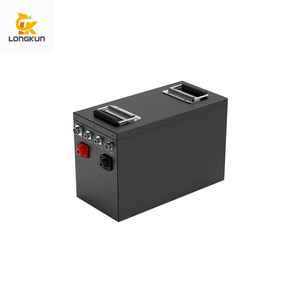
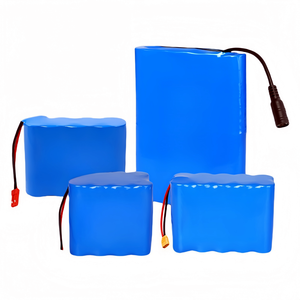
Established as an industry-leading power solutions pioneer since 1983, our manufacturing enterprise delivers over 40 years of continuous battery engineering excellence. Serving premier Original Equipment Manufacturers (OEMs) across North America, Europe, and Asia-Pacific, our facility specializes in custom smart battery packs, high-discharge power station modules, precision chargers, and large-format energy systems.
ISO 9001 Certified Manufacturing
Rigorous quality management systems govern every phase of production—from incoming raw cell screening to automated end-of-line (EOL) computerized testing.
Full OEM/ODM NPI Workflow
Comprehensive New Product Introduction (NPI) services: mechanical CAD modeling, custom PCB enclosure design, hardware/software BMS tuning, and UN38.3 certification handling.
Global Compliance & Export Authority
Fully compliant with CE (LVD/EMC), UL1973, UL2743, IEC 62133, IEC 62619, RoHS, and REACH international export standards for hassle-free worldwide deployment.
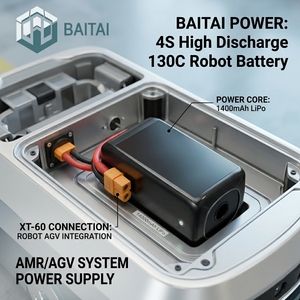
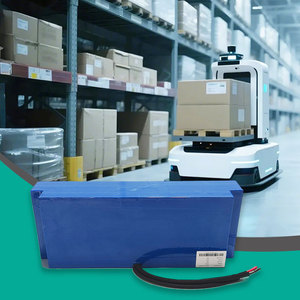
Our centralized manufacturing and technical support facilities operate with complete vertical integration. Whether your project requires high-rate discharge lithium polymer modules for autonomous mobile robotics, extreme sub-zero LTO battery banks, or customized LiFePO4 portable power station sub-assemblies, our engineering team works directly with your procurement specialists from concept validation to mass-volume commercial production.
5. Industrial Procurement & Technical Engineering FAQ
Below are detailed responses to the most critical technical, regulatory, and supply chain questions asked by global B2B procurement managers and system integration engineers:
Request Custom Battery Module Engineering Specifications
Partner with an established U.S. and global battery manufacturer. Submit your electrical requirements, target mechanical dimensions, and application parameters directly to our senior power systems engineering team.
Send an Inquiry