Battery Engineering Blog
Discover expert perspectives, custom battery design guides, charging solutions, and industry updates from USA engineers.
Featured CE Certified MPPT Solar Charge Controllers
Explore our engineering-grade line-up of Maximum Power Point Tracking solar charge regulators certified for industrial, commercial, marine, street lighting, and residential off-grid energy storage applications.
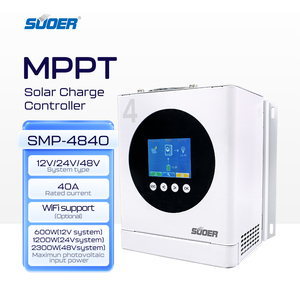
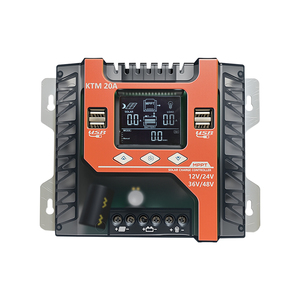
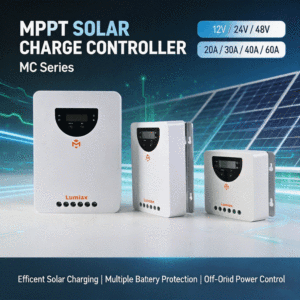
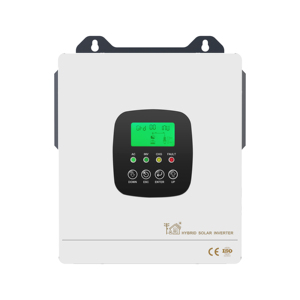
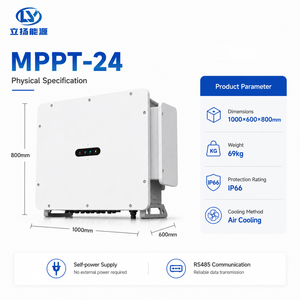
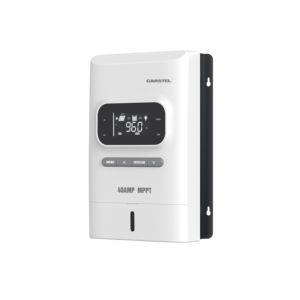
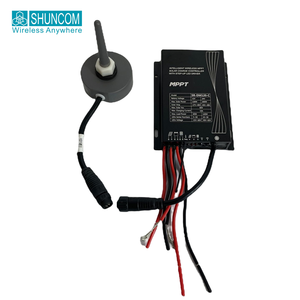
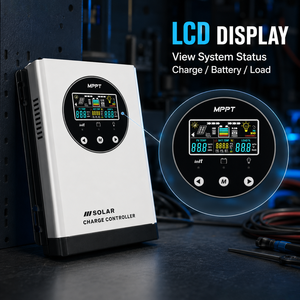
The Technical Architecture of CE Certified MPPT Controllers
In off-grid photovoltaic (PV) systems, the charge controller serves as the vital energy conversion nexus between solar array inputs and electro-chemical storage units. Standard PWM (Pulse Width Modulation) controllers physically clamp panel voltage to the battery bank level, resulting in power losses ranging from 20% to 45%. Modern CE certified Maximum Power Point Tracking (MPPT) regulators eliminate this thermal and volumetric inefficiency through dynamic high-frequency DC-DC buck converter topology.
By continuously tracking the Maximum Power Point (MPP) voltage ($V_{mp}$) along the solar panel's non-linear Current-Voltage ($I-V$) curve under variable irradiance ($W/m^2$) and ambient temperature conditions ($^\circ C$), advanced MPPT algorithms ensure that the PV array operates at peak energy extraction output, delivering up to 99% tracking accuracy and conversion efficiency exceeding 98%.
All industrial solar charge controllers exported to the European Economic Area (EEA) and global B2B markets must comply with low-voltage safety (LVD) and electromagnetic compatibility (EMC) mandates. CE certification guarantees immunity to electrical fast transients (EFT), surge protection against cloud lightning strikes, and low radiated noise that could interfere with RF communication gear.
MPPT Algorithm Comparison: P&O vs. Incremental Conductance
Top-tier B2B manufacturers employ dual-core 32-bit ARM Cortex processors to run real-time tracking math. Understanding algorithm differentiation is key to technical procurement:
- Perturb and Observe (P&O): Periodically shifts system operating voltage and measures power output delta. Highly reliable for uniform solar radiation, serving as the benchmark standard in 20A–40A controllers.
- Incremental Conductance (IncCond): Calculates the derivative of power with respect to voltage ($dP/dV$). Identifies the exact peak when $dP/dV = 0$, eliminating oscillation around the MPP in rapidly changing cloud cover conditions.
- Multi-Peak Scanning: Sweeps the entire PV voltage range during partial shading events caused by trees, poles, or clouds, preventing the controller from locking onto false local maxima.
B2B Sourcing & Procurement Trends in the Global MPPT Market
As commercial energy storage systems transition toward higher operating voltages and smart microgrids, B2B buyers must adapt their procurement specification criteria.
1. Transition to High-PV Input Voltage (150V - 250V VOC)
Industrial buyers are favoring high-voltage PV array designs. Connecting 3 to 6 solar modules in series reduces line current ($I$), enabling thinner copper wire gauges, reducing installation labor costs, and suppressing line loss ($I^2R$) over long cable runs in commercial solar farms and large off-grid facilities.
2. Native Compatibility with LiFePO4 & Smart BMS
Legacy charge regulators designed strictly for Sealed Lead-Acid (SLA) or AGM batteries lack precise voltage cut-off thresholds. Procurement trends demand custom LiFePO4 charging profiles with low-temperature charge lockout algorithms, automated cell balancing assistance, and direct CAN/RS485 handshake integration with Lithium BMS.
3. Cloud Telemetry, IoT & Bluetooth Integration
Modern solar operations demand real-time telemetry. Buyers prioritize MPPT suppliers offering integrated Bluetooth 5.0 modules, Wi-Fi cloud gateways, Mobile Monitoring Apps, and standard Modbus-RTU protocols for centralized Supervisory Control and Data Acquisition (SCADA) monitoring.
Future Technological Trends in Solar Energy Regulation
How next-generation semiconductor materials, AI computing, and thermal engineering are defining the future of MPPT solar manufacturing.
Wide Bandgap Semiconductors (GaN & SiC)
Replacing traditional Silicon MOSFETs with Gallium Nitride (GaN) and Silicon Carbide (SiC) switches allows MPPT power stages to operate at switching frequencies beyond 200 kHz. This reduces the physical size of inductors and capacitors, yielding ultra-compact controllers with >99.2% peak efficiency.
AI-Driven Predictive Irradiance Curve Fitting
Integrating micro-AI edge computing directly into MPPT firmware allows controllers to predict solar cloud coverage patterns by monitoring historical thermal and meteorological trends, dynamically optimizing tracking intervals to minimize energy yield losses under variable weather conditions.
Passive Die-Cast Heat Dissipation Architectures
Industrial off-grid installations demand fanless, maintenance-free designs. Advanced heavy-duty extruded aluminum heatsinks coupled with thermally conductive epoxy resin potting achieve IP67/IP68 ingress protection, ensuring reliable heat dissipation at ambient temperatures up to +60°C without derating.
Why Partner With Us as Your OEM/ODM Solar Controller Manufacturer
Backed by over 40 years of accumulated engineering operational excellence, our state-of-the-art power electronics manufacturing facility serves global energy brands, EPC contractors, and B2B distributors across 80+ countries.
- Strict Quality Management System: Certified ISO 9001:2015 manufacturing operations equipped with automated SMT production lines, ICT circuit testing, and 100% full-load high-temperature burn-in rooms.
- Turnkey OEM/ODM Customization: Complete engineering support from custom PCB hardware schematic design, firmware tuning for proprietary battery chemistry profiles, customized LCD UI interface designs, to branded chassis molding.
- Comprehensive International Certifications: Fully certified with CE (EN62109-1, EN61000-6-1/3), RoHS compliant, FCC Part 15 Class B, and ISO standards for seamless global market entry and compliance assurance.
- Robust Supply Chain Continuity: Direct component sourcing partnerships with Tier-1 semiconductor suppliers (STMicroelectronics, Texas Instruments, Infineon) guarantees stable lead times and long-term production availability.
Custom Engineering Checklist for OEM Buyers
We tailor MPPT controller specifications to your application requirements:
Solar Charge Controller Procurement & Technical FAQ
Address key technical considerations when selecting, sizing, and importing CE-certified MPPT solar charge regulators for commercial applications.
Need Custom MPPT Solar Charge Controllers for Your Business?
Get in touch with our power electronics engineering team today for factory-direct volume pricing, OEM/ODM customization inquiries, and technical datasheet requests.