Battery Engineering Blog
Discover expert perspectives, custom battery design guides, charging solutions, and industry updates from USA engineers.
Executive Summary: The Paradigm Shift in Industrial Rapid Charging Architecture
In modern automated logistics and high-throughput manufacturing, continuous operational uptime represents the single most critical key performance indicator (KPI). As global supply chains transition toward 24/7 autonomous operations driven by Autonomous Mobile Robots (AMRs), Automated Guided Vehicles (AGVs), and heavy electric material handling machinery, legacy slow-charging battery paradigms are rapidly being rendered obsolete. Modern industrial facilities require high-efficiency, multi-stage CE Certified Industrial Fast Battery Chargers capable of replenishing battery energy storage systems during micro-break intervals without compromising cycle stability or safe thermal limits.
Engineering a high-power industrial charger demands a deep understanding of electrochemical dynamics, advanced power electronics topology, and digital closed-loop communications. Fast charging is not merely a matter of delivering elevated amperage; it involves intelligent voltage control algorithms (including CC/CV multi-stage charging, dynamic pulse regulation, and temperature-compensated float charge), robust galvanic isolation, and active real-time handshakes with internal Battery Management Systems (BMS) via CANbus, RS485, or Modbus protocols. This engineering whitepaper examines the core technical standards, industry procurement benchmarks, dynamic thermal governance, and future technology trajectories defining high-performance industrial energy management.
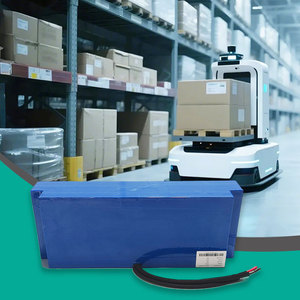
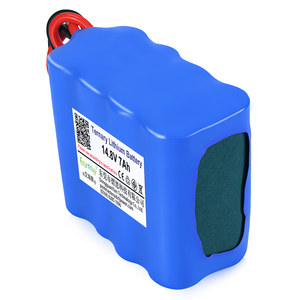
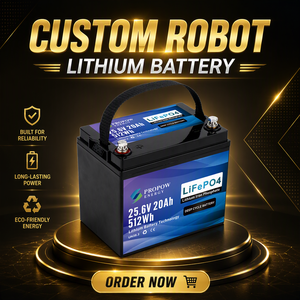
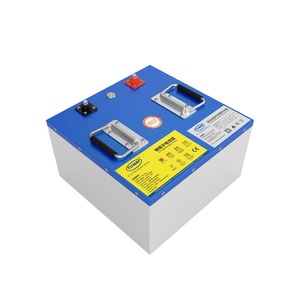
Featured Industrial Fast Charging Systems & Smart Battery Packs
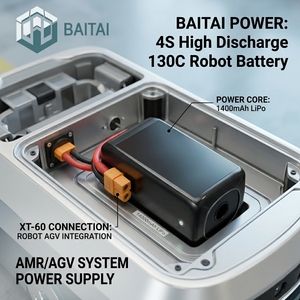
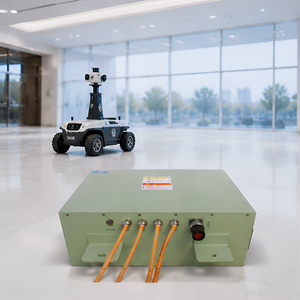
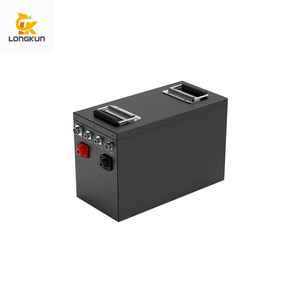
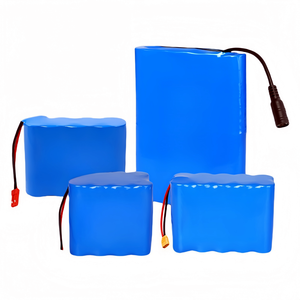
Engineered to international safety standards, our industrial energy storage packs and fast chargers deliver maximum discharge capacity, low internal resistance, and seamlessly integrate with automated industrial platforms.
Technical Benchmark Matrix: Industrial Fast Chargers vs. Legacy Systems
When selecting industrial chargers for enterprise deployment, technical directors must evaluate operational parameters beyond simple wattages. Below is an engineering comparison matrix detailing the parameters of CE Certified fast charging architecture compared to standard industrial chargers.
| Performance Parameter | Next-Gen CE Fast Chargers (Custom OEM) | Standard Legacy Chargers | Operational Gain / Impact |
|---|---|---|---|
| Power Conversion Efficiency | 94.0% – 97.5% (GaN/SiC Based) | 82.0% – 88.0% (Silicon MOSFET) | Significantly reduces thermal dissipation & electricity costs |
| Charging Rate Capability (C-Rate) | 1C to 5C Opportunity Charging | 0.2C to 0.5C Overnight Charging | Enables continuous 24/7 operation with micro-opportunity charges |
| Communication Protocol | Isolated CANbus 2.0B / RS485 / Modbus RTU | Analog / Non-communicative | Real-time pack telemetry, cell voltage monitoring, dynamic current control |
| Compliance & Certification | CE (LVD 2014/35/EU, EMC 2014/30/EU), UL1564, IEC60335 | Basic CE / Minimal testing | Guarantees safety in medical, industrial, and global export environments |
| Protection Protocols | OVP, OTP, OCP, SCP, Reverse Polarity, Soft Start, dT/dt shutdown | Basic fuse / Thermal shutdown | Prevents thermal runaway and extends battery pack lifecycle to >3000 cycles |
| Environmental Rating | IP65 / IP67 Sealed Convection / Cold Plate Options | IP20 Vented Fan (Dust Prone) | High reliability in hostile industrial, dusty, or humid warehouse settings |
Architectural Pillars of High-Reliability Industrial Fast Chargers
To ensure high information gain for technical decision-makers, our engineering architecture relies on four foundational technical pillars engineered to eliminate operational bottlenecks.
Closed-Loop Smart BMS Integration
Our fast chargers interact dynamically with smart battery packs (LiFePO4, NMC, LTO). Through CANbus communication, the charger dynamically adjusts its voltage output and current injection based on individual cell temperatures, state of charge (SoC), and state of health (SoH).
Thermal Management & Protection
High charging currents induce internal thermal stress. Our fast chargers utilize advanced phase-shift full-bridge (PSFB) topologies coupled with active temperature-sensing cutoffs to prevent thermal acceleration, safeguarding cell separators and maintaining cycle longevity.
Multi-Chemistry Compatibility
Engineered to handle various lithium chemis (Lithium Iron Phosphate - LiFePO4, Lithium Nickel Manganese Cobalt - NMC, and Lithium Titanate - LTO), our fast chargers allow factory reconfiguration for broad industrial applications, from lightweight floor sweepers to heavy AMRs.
Global Industry Development & Technology Trajectories (2025–2030)
As industrial automation accelerates worldwide, procurement managers must align their purchasing strategies with emerging technological trends. Over the next decade, three key technological shifts will redefine the industrial charging ecosystem:
1. Widescale Adoption of Wide Bandgap (WBG) Semiconductors
The integration of Silicon Carbide (SiC) and Gallium Nitride (GaN) power transistors represents a transformative jump in charger design. WBG semiconductors allow power supplies to operate at higher switching frequencies with significantly lower switching losses. This enables a 40% reduction in physical charger footprint while achieving power conversion efficiencies exceeding 97%. For AGVs and AMRs with onboard charging modules, this weight reduction directly translates to extended operational range and increased payload capability.
2. Automated Opportunity Charging & Wireless Inductive Systems
Traditional plug-in charging requires human intervention or dedicated physical connector alignment, creating mechanical wear points in automated environments. The industry is moving toward high-efficiency wireless inductive fast charging and high-current automated side-contact pads. Industrial chargers configured for opportunity charging can deliver 2C to 5C energy pulses during 30-second robot idle windows (such as during pallet loading or elevator waits), eliminating downtime dedicated solely to battery replenishment.
3. IoT-Connected Fleet Energy Analytics & Predictive Maintenance
Modern industrial fast chargers are transitioning from isolated hardware units to cloud-connected edge nodes within Smart Factory frameworks. By logging charge profiles, internal resistance trends, ambient temperatures, and total kWh throughput, system administrators can predict battery degradation, detect micro-shorts before catastrophic failure occurs, and balance warehouse grid loads dynamically using peak-shaving algorithms.
Future Procurement Trends for OEM Systems Integrators
System integrators and enterprise buyers are shifting their procurement strategies to mitigate supply chain volatility and ensure long-term total cost of ownership (TCO) efficiency:
- Mandatory CE and Global Compliance Certification: Procurement divisions now universally mandate comprehensive CE certification (incorporating both Low Voltage Directive LVD and Electromagnetic Compatibility EMC directives) alongside UL, IEC, and UN 38.3 standard compliance to prevent customs hold-ups and regulatory fines during cross-border equipment distribution.
- Unified Platform Standardisation: Rather than sourcing disparate chargers for varied robotic fleets, enterprise procurement teams favor modular, programmable multi-voltage chargers (supporting 12V, 24V, 36V, 48V, and 72V configurations) capable of adapting to diverse battery chemistry chemistries via firmware upgrades.
- Total Cost of Ownership (TCO) vs. Initial Capital Expenditure: While high-efficiency fast chargers carry a higher initial procurement cost than standard silicon-based units, the elimination of battery swapping infrastructure, reduction in standby fleet size, and lower thermal energy losses result in a full Return on Investment (ROI) within 8 to 14 months of deployment.
Frequently Asked Questions (FAQs) for Industrial Procurement
Below are authoritative responses to the most critical technical and logistical questions asked by OEM procurement leads, automation engineers, and facility operations managers when evaluating CE-certified fast chargers and smart battery assemblies.
What specific testing standards guarantee true CE compliance for industrial fast battery chargers?
Authentic CE certification for industrial battery chargers requires adherence to two primary directives: the Low Voltage Directive (LVD 2014/35/EU) verified through IEC/EN 60335-1 & IEC/EN 60335-2-29 standards, and the Electromagnetic Compatibility Directive (EMC 2014/30/EU) verified under EN 61000-6-2 (Industrial Immunity) and EN 61000-6-4 (Industrial Emissions). Always request valid test reports issued by accredited ISO/IEC 17025 testing laboratories to ensure compliance.
How does fast charging affect the cycle life of LiFePO4 and NMC industrial batteries?
Fast charging affects battery lifespan primarily through thermal buildup and lithium plating risks at high state-of-charge levels. When utilizing a smart fast charger equipped with closed-loop CANbus communication and dynamic multi-stage CC/CV algorithms, the charger throttle amperage down as the pack reaches threshold voltages. This intelligent management prevents lithium plating, allowing LiFePO4 packs to maintain >2,000 to 3,000 cycles even under 1C opportunity charging conditions.
Can custom fast chargers be integrated with third-party AGV/AMR control software?
Yes. Custom industrial fast chargers utilize industrial communications bus standards such as CANopen, Modbus RTU, or Ethernet/IP. This allows the charger to share telemetry data (including charging voltage, current, internal temperature, fault codes, and estimated time to complete) directly with the AGV fleet manager or warehouse execution system (WES) for automated fleet scheduling.
What IP (Ingress Protection) rating is required for heavy industrial and outdoor warehouse environments?
For standard cleanroom or dry warehouse operations, IP20 or IP32 enclosure ratings are acceptable. However, for food processing, mining, chemical manufacturing, or outdoor logistics ports, chargers with IP65 or IP67 ratings are required. These feature potted electronics or sealed aluminum enclosures with external cold plate heat sinks to prevent ingress of dust, moisture, and corrosive airborne agents.
What key details must be provided to receive a custom OEM/ODM charger quotation?
To provide an accurate technical recommendation and quote, buyers should supply: 1) Battery chemistry (LiFePO4, NMC, LTO, Lead-Acid); 2) Nominal pack voltage & capacity (Ah); 3) Maximum allowable charge current (A) or targeted charge time window; 4) Input voltage (e.g., Single Phase 110V/220V or 3-Phase 380V/480V); 5) Desired communication interface; and 6) Target IP rating and safety compliance requirements.
What are the lead times and warranty frameworks for enterprise OEM custom production runs?
Standard prototyping and custom engineering validation generally require 4 to 6 weeks, while mass OEM production runs typically ship within 6 to 8 weeks depending on component sourcing. Enterprise supply contracts typically include comprehensive 24 to 36-month warranties backed by advanced technical support, failure analysis reporting, and spare part replacement guarantees.
Why Partner with Our Custom Battery & Charger Engineering Division?
With over four decades of engineering leadership, our organization stands as a single-source OEM/ODM partner for global industrial leaders. Operating under strict ISO 9001 quality management frameworks, we specialize in end-to-end custom battery pack assembly, high-efficiency charger integration, and comprehensive BMS programming tailored specifically for high-reliability applications.
Whether your application requires high-discharge LiPo systems for service robotics, robust 72V LiFePO4 packs for heavy autonomous transport, or specialized LTO technology for sub-zero warehouse automation, our engineering team delivers precision-matched power systems that comply with global safety standards (CE, UL, IEC, UN 38.3).
Strategic Engineering Consultation & Request for Quotation (RFQ)
Selecting the optimal combination of industrial fast chargers and customized battery packs is a critical strategic decision that influences operational efficiency, equipment longevity, and global regulatory compliance. Our application engineers are prepared to evaluate your project specifications, analyze thermal envelopes, and design an optimized energy storage and fast-charging architecture tailored to your unique equipment requirements.
Click below to connect directly with our senior application engineering team to request technical datasheets, CAD drawings, compliance documentation, or a customized prototype quotation.