Battery Engineering Blog
Discover expert perspectives, custom battery design guides, charging solutions, and industry updates from USA engineers.
Featured High-Power DC-DC Converters & Robotics Power Systems
Industrial-grade energy conversion modules, smart lithium power packs, and high-discharge voltage regulation architectures engineered for AGV, AMR, and automated machinery platforms.
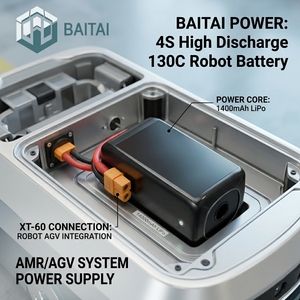
130C 1400mAh 4S High Discharge LiPo Battery for Service Robot AGV & AMR Power System
Engineered for intense instantaneous burst power demands with ultra-low internal resistance, supporting step-down DC-DC converter integration.
Inquire Now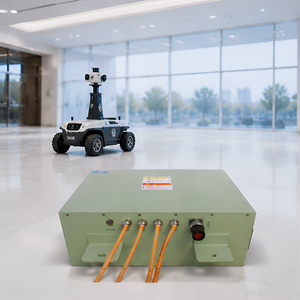
72V 60Ah LiFePO4 AMR Mobile Robot Battery Pack for Autonomous System High Discharge
Heavy-duty industrial power system equipped with CANbus communications and high-voltage DC conversion stability for 24/7 continuous warehouse AGVs.
Inquire Now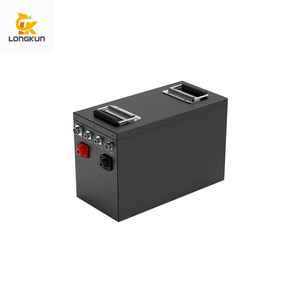
Longkun 24V 30Ah Lithium Ion Robot Battery Pack with Integrated Smart BMS
Optimized voltage output stability with integrated buck converter compatibility, thermal management, and over-current protection for mobile robotics.
Inquire Now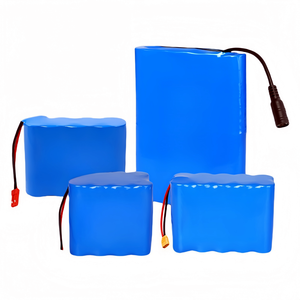
OEM Li-ion Battery Pack 3.7V to 18.5V for Autonomous Floor-Cleaning AMR Robots
Modular form-factor power pack engineered for high power density and seamless coupling with wide-input DC step-up/step-down converters.
Inquire Now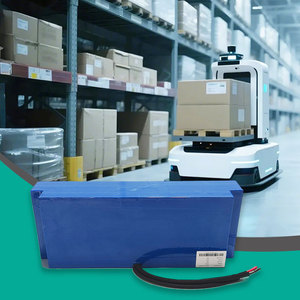
Customized Rechargeable LTO AGV Battery Pack 9Ah Autonomous Mobile Robot Power
Ultra-fast charging Lithium Titanate technology operating across extreme temperature regimes (-30°C to 65°C) with isolated voltage regulation modules.
Inquire Now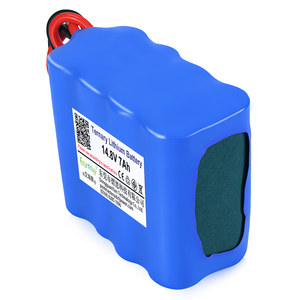
Custom Lithium Battery 14.8V 7Ah NMC 4S2P High Capacity for AMR & Electric Lawn Mowers
Compact high energy density battery module designed for precise power delivery to onboard DC-DC auxiliary control boards and drive motors.
Inquire Now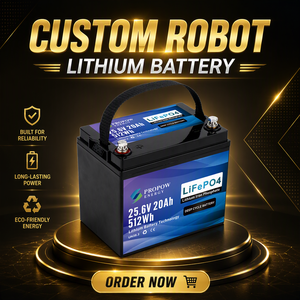
Custom Robot Lithium Battery 12V 24V 20Ah Rechargeable LiFePO4 Pack for AGVs
Long cycle-life iron phosphate architecture featuring ruggedized mechanical shielding and regulated dual DC output capabilities.
Inquire Now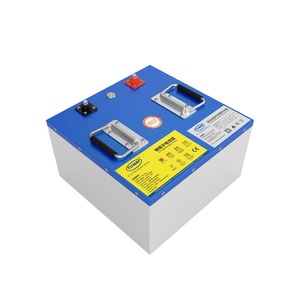
24V LiFePO4 Battery Pack 50Ah 60Ah 80Ah 100Ah with BMS 1500+ Cycles for Robot Platforms
Heavy-duty industrial battery power system engineered for wide operating temperatures, high dynamic load stability, and converter pairing.
Inquire NowEnterprise Manufacturing Competencies & Technical Capabilities
Delivering single-source authority from custom topological circuit design to turnkey high-voltage power converter and smart energy storage manufacturing.
CE & International Compliance
Every high-power DC-DC converter and smart power module complies strictly with CE EN62368-1, EN61000-6-2/4 EMC standards, UL safety requirements, and UN 38.3 transport standards for reliable global deployment.
Custom OEM / ODM Topology Design
Our in-house R&D engineering team designs custom wide input-voltage step-up/step-down converters (12V–800V DC range) tailored for heavy robotics, industrial automation, and oceanic energy systems.
Advanced BMS & CANbus Telemetry
Seamlessly pair DC-DC power regulators with intelligent BMS battery monitoring. Features real-time state-of-charge (SoC), state-of-health (SoH), and automated thermal throttling over CANOpen or Modbus.
Technical Whitepaper: Engineering High-Density, CE-Certified DC-DC Converters for Autonomous Robotics & Industrial Systems
In modern industrial automation, autonomous mobile robots (AMRs), automated guided vehicles (AGVs), and high-capacity battery energy storage systems (BESS), voltage stabilization and galvanic power conversion represent the core operational backbone. As operational battery bus voltages increase from traditional 24V DC systems up to 72V, 96V, and high-voltage 800V architectures, the demand for CE certified high-power DC-DC converters has escalated rapidly.
1. Advanced Topological Architectures: Buck-Boost, Push-Pull, and LLC Resonant Converters
The operational reliability of heavy-duty DC-DC converters hinges directly on topological selection. Standard non-isolated switching regulators frequently fail to provide adequate noise immunity and safety isolation in noisy industrial environments. Modern CE-certified high-power converters utilize zero-voltage switching (ZVS) LLC resonant topologies and isolated phase-shifted full-bridge (PSFB) circuitry to achieve power conversion efficiencies exceeding 98.5%.
By implementing Silicon Carbide (SiC) MOSFETs and Gallium Nitride (GaN) switching elements, our conversion hardware drastically reduces switching losses, minimizes magnetic component volume, and enables power densities beyond 100 Watts per cubic inch. This allows system integrators to embed compact 1kW to 15kW voltage regulation modules directly within space-constrained AGV chassis designs.
| Converter Parameter | Standard Converter Module | Industrial High-Power Series | Next-Gen SiC/GaN Architecture |
|---|---|---|---|
| Input Voltage Range | 18V – 36V DC | 18V – 120V DC Wide Range | 200V – 900V High Voltage DC |
| Galvanic Isolation | 1500V DC | 3000V AC / 4200V DC | 5000V AC Reinforced |
| Peak Efficiency | 88% – 91% | 94% – 96.5% | 98.2% – 99.1% |
| EMC Compliance | Basic CE Mark | CE EN61000-6-2/4 Heavy Industry | CE EN62368-1 & MIL-STD-461G |
| Thermal Dissipation | Convection Cooling | Integrated Heatsink / Cold Plate | Liquid Cooled / Direct Thermal Contact |
2. Galvanic Isolation, Noise Suppression & Safety Compliance
Industrial ground loops, motor back-EMF spikes, and high-current electrical noise are major causes of failure in autonomous control electronics. Our factory's DC-DC converters feature heavy galvanic isolation (tested up to 4200V DC dielectric withstand voltage) between primary input and secondary output stages.
Built-in multistage electromagnetic interference (EMI) filters ensure strict adherence to CE EN61000 Class A and Class B radiated and conducted emission standards. This eliminates ripple noise that could otherwise corrupt sensitive LiDAR signals, ultrasonic sensor feeds, or internal wireless CANbus telemetry on autonomous robotics platforms.
Future Procurement & Technological Trends in Industrial Power Conversion (2025–2030)
Key technological shifts shaping how engineering buyers, original equipment manufacturers (OEMs), and procurement managers source power hardware.
1. Shift Toward 72V–120V AGV Bus Voltages
To reduce copper cable weight and continuous resistive losses (I²R), logistics automated guided vehicle manufacturers are rapidly transitioning from legacy 24V/48V power buses to high-voltage 72V, 96V, and 120V LiFePO4 battery platforms. Factory buyers must prioritize wide-input DC-DC converters capable of stepping down high battery pack voltages to steady 12V/24V levels for auxiliary sensors and actuators.
2. Bi-Directional Power Converters for Energy Regeneration
Next-generation industrial equipment requires bi-directional DC-DC buck-boost topologies. During braking cycles or mast lowering, kinetic energy generated by drive motors is stepped up and recycled back into the primary lithium pack, increasing overall robotic operating autonomy by up to 18% per charge cycle.
3. Modbus/CANbus Predictive Telemetry Integration
B2B procurement teams are no longer evaluating hardware purely on passive electrical specifications. Smart DC-DC converters featuring active CANOpen or Modbus RTU communication interfaces allow central fleet software to monitor real-time thermal junction temperatures, input voltage degradation, and load current curves, facilitating true predictive maintenance schedules.
4. Modular Plug-and-Play Scalability
To reduce inventory complexity, enterprise manufacturers prefer standardized converter modules that support N+1 parallel redundancy. Parallel active current-sharing enables engineers to scale output power from 500W to 5kW simply by adding converter cards into a common rack backplane.
Frequently Asked Questions by Industrial Power Buyers
Direct technical guidance covering CE certification, thermal derating, customized input ranges, and OEM ordering procedures.
What specific safety and EMC standards define a true "CE Certified" DC-DC converter?
A compliant CE-marked industrial DC-DC converter must satisfy both the Low Voltage Directive (LVD) under EN 62368-1 (or EN 60950-1 for legacy systems) for electrical safety, dielectric isolation, and clearance distances, as well as the EMC Directive under EN 61000-6-2 (Industrial Immunity) and EN 61000-6-4 (Industrial Emissions).
How does your factory manage heat dissipation in high-power sealed converter housings?
We utilize baseplate-cooled aluminium substrate PCBs (Metal Core PCBs) encased in thermally conductive epoxy encapsulation compound (IP67 rated). Heat is directly transferred to external fins or chassis aluminum plates, allowing full-load continuous operation from -40°C up to +85°C ambient without forced air fan failure risks.
Can your factory customize DC-DC converter voltage inputs to fit non-standard battery chemstries?
Yes. As a factory supplier, we offer OEM/ODM engineering customization. We tailor input voltage cut-off thresholds and regulation windows for unique cell chemistry profiles, including Lithium Iron Phosphate (LiFePO4), Lithium Titanate (LTO), Nickel Manganese Cobalt (NMC), and high-voltage Lithium Polymer configurations.
What is the typical Mean Time Between Failures (MTBF) for your industrial high-power series?
Our industrial power converters achieve an MTBF exceeding 500,000 hours at 25°C ambient in accordance with MIL-HDBK-217F standards. We achieve this by strictly utilizing 105°C long-life Japanese ceramic capacitors and high-grade planar transformers.
How do isolated converters protect sensitive AGV LiDAR and navigation computers?
Galvanic isolation creates a physical break between the noisy motor battery power rail and the output logic rail. High dielectric insulation prevents ground voltage shifts, differential noise spikes, and motor inductivekickback from damaging expensive onboard processing computers or sensor arrays.
What is the lead time for OEM sample prototyping and mass production orders?
Standard engineering sample prototypes for customized DC-DC converters and battery power systems are typically produced within 10 to 14 business days. Full-scale batch production orders under ISO 9001 quality control generally ship within 3 to 4 weeks depending on volume.
Partner with a Leading CE Certified High Power DC-DC Converter Factory
Consult with our senior power electronics engineering team today to review your schematic requirements, request custom quotes, or obtain technical datasheets for OEM integration.
Inquire Now