Battery Engineering Blog
Discover expert perspectives, custom battery design guides, charging solutions, and industry updates from USA engineers.
High-Performance Custom Battery Systems for Autonomous Platforms
Explore our engineering-grade lithium battery packs custom-designed for heavy continuous duty cycles, fast opportunity charging, and intelligent Battery Management System (BMS) telemetry integration.
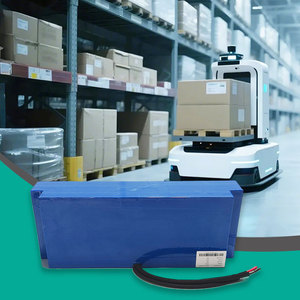
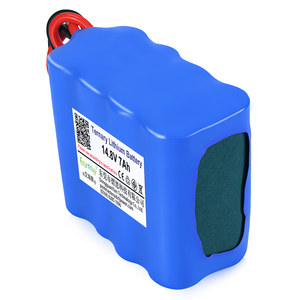
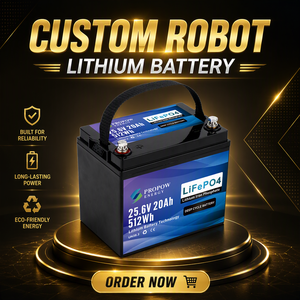
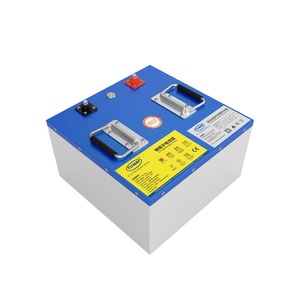
Engineering Standards of CE-Certified Deep Cycle LiFePO4 Power Systems
A comprehensive examination of chemistry thermal stability, smart BMS firmware integration, structural prismatic packaging, and compliance benchmarks in modern industrial energy storage.
1. Olivine Crystal Lattice Thermal Stability
Lithium Iron Phosphate (LiFePO4 / LFP) chemistry exhibits superior thermodynamic stability compared to standard Nickel Manganese Cobalt (NMC) and Lithium Cobalt Oxide (LCO) variants. The robust P-O covalent bonds within the PO4³⁻ olivine crystal lattice suppress oxygen release even under high thermal stress up to 500°C. This intrinsic material property eliminates thermal runaway risk during heavy discharge cycles and rapid charging events typical in warehouse AGV/AMR deployments.
2. Intelligent Smart BMS Telemetry & Protocol Integration
Modern B2B equipment design demands real-time diagnostic visibility. Our integrated Smart Battery Management System (BMS) incorporates advanced Coulomb counting SOC algorithms, high-precision thermal monitoring arrays, and active cell balancing circuitry. Supporting industrial bus communications including CANopen, SAE J1939, RS485, and Modbus RTU, our battery systems allow seamless integration into automated vehicle controllers and central fleet management software.
Prismatic vs. Cylindrical Architecture
Utilizing high-capacity Prismatic LiFePO4 cells reduces internal interconnect joints by up to 70% compared to cylindrical 18650 packs. This minimizes internal resistance (IR), heat generation, and potential electrical failure points under continuous industrial vibration.
Opportunity Fast-Charging Capabilities
Engineered for high-rate continuous charge acceptance (up to 1C–3C fast charging), our LiFePO4 configurations support 15-minute partial recharges during robotic shift transitions without inducing lithium plating or cell degradation.
Strict CE & International Compliance
Every deep cycle system undergoes rigorous multi-point validation to ensure conformity with EN 61000-6-2 (EMC Immunity), EN 61000-6-4 (Emissions), IEC 62619 (Industrial Lithium Battery Safety), UL 2580, and UN38.3 transport standards.
LiFePO4 vs. Legacy Industrial Battery Technologies
An objective quantitative evaluation of operational parameters across major commercial battery chemistries utilized in autonomous logistics and energy storage.
| Performance Metric | Cell-Con Deep Cycle LiFePO4 | Standard Lithium NMC | Lithium Titanate (LTO) | VRLA / AGM Lead-Acid |
|---|---|---|---|---|
| Cycle Life (80% DOD) | 3,500 – 6,000 Cycles | 1,200 – 2,000 Cycles | 15,000 – 25,000 Cycles | 300 – 500 Cycles |
| Nominal Cell Voltage | 3.2 V | 3.6 V - 3.7 V | 2.3 V | 2.0 V |
| Thermal Runaway Temperature | > 270°C (Extremely Safe) | ~ 210°C (Requires Active Cooling) | > 300°C (Extremely Safe) | N/A (Thermal Hydrogen Risk) |
| Charge Efficiency | 98% | 95% | 96% | 75% - 82% |
| Fast Charge Rate Capability | 1C to 3C (Continuous) | 0.5C to 1C | Up to 10C | 0.2C (Slow Charge Only) |
| Operating Temperature Window | -20°C to +60°C | -10°C to +50°C | -40°C to +65°C | -15°C to +40°C |
| Maintenance & Equalization | Zero Maintenance (Auto BMS) | Zero Maintenance | Zero Maintenance | Periodic Acid/Venting Check |
| 5-Year Total Cost of Ownership (TCO) | Lowest (Optimal ROI) | Moderate | High Initial CapEx | High (Frequent Replacements) |
Future Procurement & Technological Trends in Industrial Energy
Key market vectors shaping global OEM procurement strategies over the next decade as automation, sustainability, and cloud connectivity converge.
1. Transition to 48V & High-Voltage Architectures
Global AGV and industrial equipment OEMs are rapidly transitioning from traditional 12V/24V power systems to 48V, 72V, and 96V platforms. Higher system voltages reduce copper wiring mass, minimize $I^2R$ resistive power losses, increase motor efficiency, and allow thinner cable harnesses in autonomous vehicle frames.
2. Cloud-Connected Fleet IoT Telemetry
Procurement teams no longer view batteries as passive components. Modern sourcing criteria require smart BMS hardware capable of transmitting State of Charge (SOC), State of Health (SOH), cell temperature gradients, and cycle count data via CANbus to onboard IoT gateways for predictive maintenance cloud analytics.
3. Automated Wireless & Contact Charging
The rise of 24/7 dark-warehouse operations requires autonomous mobile robots to recharge without manual intervention. Advanced LiFePO4 formulations accept immediate high-current charging from automated floor pad inductive coils or sliding contact plates during brief stopping points.
4. Supply Chain Resilience & ESG Traceability
Tier-1 equipment manufacturers are mandating strict supply chain compliance. LiFePO4 chemistry completely avoids cobalt and nickel, eliminating ethical sourcing vulnerabilities while providing a clean, non-toxic recycling stream aligned with global ESG guidelines.
5. Modular Plug-and-Play Scalability
Standardized modular battery building blocks allow OEM system designers to configure custom voltage and capacity configurations (e.g., combining 12V or 24V sub-modules in series/parallel) without paying exorbitant upfront NRE engineering charges for every custom chassis.
Direct Factory Manufacturing Excellence & OEM Engineering Support
Combining four decades of US and international battery engineering leadership with state-of-the-art automated manufacturing facilities.
100% Cell Matching & Grading
Every prismatic and cylindrical cell undergoes automated capacity, internal resistance (IR), and voltage sorting prior to pack assembly to guarantee perfect inter-cell harmony and maximum cycle life longevity.
Precision Laser Welding
Our automated assembly lines utilize high-precision CNC fiber laser welding for nickel and copper busbar interconnects, ensuring ultra-low electrical contact resistance and superior mechanical shock immunity.
Comprehensive Testing Protocols
100% end-of-line functional testing includes thermal imaging, high-current load testing, BMS cut-off verification, insulation resistance checks, and environmental chamber cycle simulation.
Frequently Asked Questions (FAQ) for OEM Engineers & Buyers
Get immediate technical clarity regarding custom pack development, BMS firmware customization, safety testing, and volume ordering terms.
Our products are engineered to comply with strict international regulatory standards. Standard certifications include CE (EMC & LVD), UL 1642 (Cell Safety), UL 2580 (EV/Industrial Battery Safety), IEC 62619 (Industrial Secondary Lithium Cells), and UN38.3 (Safe Transport Criteria including altitude, thermal shock, vibration, impact, and external short circuit tests). Fully certified test reports are available upon catalog request.
Yes. We specialize in end-to-end OEM/ODM customized battery pack production. Our engineering team designs custom stainless steel, aluminum, or IP65/IP67 waterproof plastic enclosures tailor-made to your physical chassis envelope. We also customize wire gauge harnesses, high-current Anderson/Molex connectors, and custom mounting brackets.
Charging lithium batteries below 0°C without precautions can cause permanent lithium metal dendrite plating, causing short-circuit risks. Our Smart BMS incorporates built-in low-temperature charging cut-off sensors. Additionally, for sub-zero industrial cold-storage environments (-20°C to -30°C), we offer custom internal heating pad elements that warm the cells to safe charging temperatures prior to current acceptance.
Our standard smart BMS designs support CAN2.0B, CANopen, RS485, RS232, and Modbus protocols. We also offer Bluetooth low energy (BLE) diagnostic modules for handheld tablet monitoring and custom protocol firmware flashing to match proprietary vehicle control units (VCUs).
Initial engineering review and 3D CAD modeling are completed within 3 to 5 business days. Prototype samples are delivered within 2 to 3 weeks following drawing approval. Standard mass production lead times range from 4 to 6 weeks depending on volume, cell availability, and certification testing requirements.
We provide a standard 3-year to 5-year limited factory warranty on our deep cycle LiFePO4 products, backed by global engineering support. Warranty terms cover cell retention capacity, BMS functional protection, and manufacturing defects.