Battery Engineering Blog
Discover expert perspectives, custom battery design guides, charging solutions, and industry updates from USA engineers.
CE & Medical Grade Battery Pack Portfolio
Explore our custom OEM/ODM power solutions integrated with intelligent SMBus/CANbus BMS, high discharge rates, and multi-tier protection circuits.
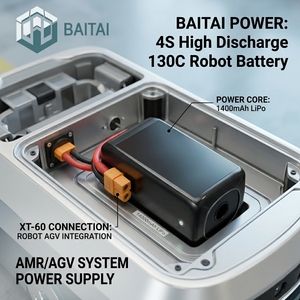
130C 1400mAh 4S High Discharge LiPo Battery for Service Robot AGV & Medical AMR
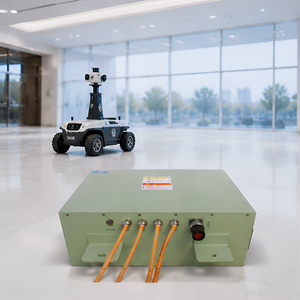
72V 60Ah LiFePO4 AMR Mobile Robot Battery Pack with Smart BMS & CANbus Telemetry
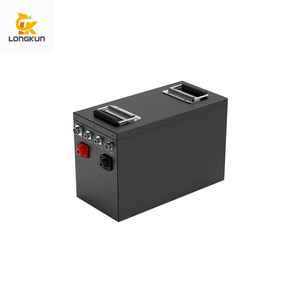
24V 30Ah Rechargeable Li-ion Battery Pack with BMS for Hospital Logistics AGVs
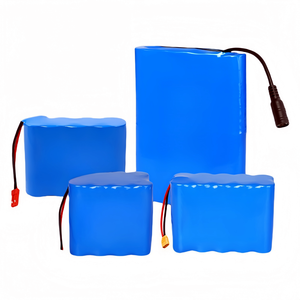
Modular OEM Li-ion Battery Assembly (3.7V–14.8V) for Autonomous Floor-Cleaning AMR
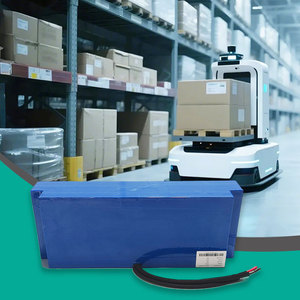
Extreme Long-Life LTO (Lithium Titanate) 9Ah Battery Pack for Fast-Charge AGV
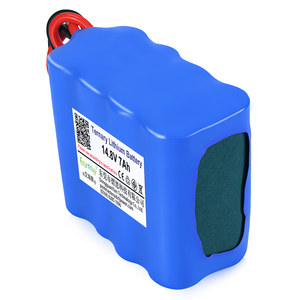
Custom 14.8V 7Ah NMC 4S2P Battery Pack for Powered Electric Wheelchairs & Medical Carts
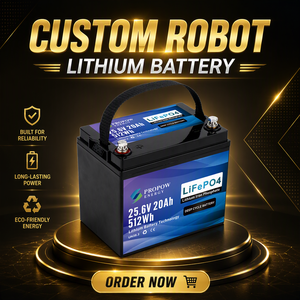
Heavy-Duty 12V 24V 20Ah LiFePO4 Battery Pack for Mobile Disinfection & Surgical Robots
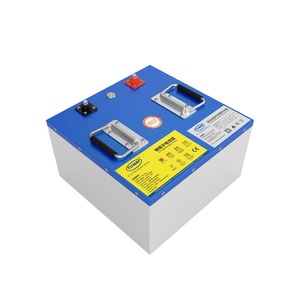
24V LiFePO4 Smart Battery System (50Ah-100Ah) with Extreme Temp Range (-20°C to 60°C)
Medical Grade Battery Architecture: Rigorous Compliance with CE, IEC 60601-1 & ISO 13485
In life-critical medical environments—ranging from surgical operating theaters and patient monitoring stations to autonomous disinfection AMRs—power system reliability is not merely a technical specification; it is an absolute safety mandate. Modern medical device manufacturers require custom battery solutions built around uncompromising standards of safety, electromagnetic compatibility (EMC), fault tolerance, and long-term electrochemical stability.
As a leading CE certified custom medical battery supplier with over four decades of engineering heritage, our design philosophy strictly aligns with international medical electrotechnical guidelines:
IEC 60601-1-2 Compliance
Ensures our battery management systems (BMS) withstand high electromagnetic interference (EMI) from surgical equipment and MRI environments without false trips or communication lockups.
IEC 62133-2 Safety Standards
Mandatory thermal, electrical, and mechanical stress testing for portable sealed secondary cells. Guarantees safety under external short-circuits, thermal abuse, and mechanical shock.
Dual-Redundant Smart BMS
Integrated primary microcontrollers teamed with secondary hardware trip ICs. Monitors cell voltages, dual NTC temperatures, and current shunts to prevent single-point failures.
Comparing Battery Chemistries for Medical & Robotic OEMs
Selecting the optimal lithium cell chemistry requires balancing volumetric energy density, pulse discharge capability, cycle life, and thermal tolerance.
| Battery Chemistry | Nominal Cell Voltage | Energy Density (Wh/kg) | Cycle Life (80% DOD) | Fast Charge Rate | Optimal Medical Applications |
|---|---|---|---|---|---|
| Lithium Iron Phosphate (LiFePO4) | 3.2V | 140 – 170 Wh/kg | 3,500 – 6,000 | 1C Continuous | Autonomous Mobile Robots (AMR), Hospital AGV Carts, Heavy Mobile Medical Stations |
| Lithium Nickel Manganese Cobalt (NMC) | 3.6V – 3.7V | 200 – 260 Wh/kg | 1,000 – 2,000 | 0.5C – 1C | Portable Ventilators, Defibrillators, Surgical Power Tools, Electric Wheelchairs |
| Lithium Titanate Oxide (LTO) | 2.3V | 70 – 110 Wh/kg | > 20,000 | 6C – 10C Fast Charge | 24/7 Continuous Automated Hospital Logistics, Emergency Backups with Zero Downtime |
| High-Discharge LiPo (Lithium Polymer) | 3.7V | 180 – 220 Wh/kg | 500 – 800 | 2C – 5C | High-Torque Robotic Actuators, Surgical Robotics, Emergency Medical Drones |
Future Procurement Trends in Medical & Autonomous Battery Systems
How global healthcare OEMs and robotics developers are restructuring supply chains for enhanced energy density, compliance security, and total cost of ownership (TCO).
1. Shift Toward Smart BMS Telemetry & Cloud Predictive Maintenance
Procurement mandates are moving away from "dumb" passive battery packs. Modern healthcare systems require smart SMBus 1.1, I2C, or CANbus 2.0B protocol integration. This allows medical equipment to broadcast real-time State of Health (SOH), State of Charge (SOC), cell impedance, and charge cycle histories back to hospital asset management networks, preventing unexpected equipment failure during critical procedures.
2. Localization & Transparency in Supply Chain Sourcing
Recent global supply disruptions have driven procurement managers to seek battery manufacturers offering multi-tier component traceability. Enterprise buyers prioritize custom battery suppliers who maintain direct relationships with Tier-1 cell foundries (such as Panasonic, LG Energy Solution, Samsung SDI, and EVE) and conduct ISO 9001 quality audits on every raw material lot.
3. Rapid Opportunity Charging for 24/7 Robotic Workflows
Hospital autonomous mobile robots (AMRs) used for laundry transport, pharmaceutical delivery, and UV-C sterilization operate on high-duty cycles. Sourcing managers are increasingly favoring high-C-rate LiFePO4 and Lithium Titanate (LTO) chemistries capable of accepting 3C to 10C fast charging, enabling 15-minute quick top-ups at automated docking stations.
4. Turnkey Pre-Certified Modular Packs (UN 38.3 + CE)
To reduce time-to-market and expensive laboratory testing fees, OEM procurement officers are choosing pre-tested, modular smart battery assemblies. Sourcing turnkey modules that already possess UN 38.3 transport certification and CE conformity drastically simplifies FDA 510(k) filings and European MDR (Medical Device Regulation) approvals.
Medical Battery Design & Product Development Trends
The convergence of artificial intelligence, surgical robotics, and wearable healthcare monitoring is reshaping the design envelope for custom battery systems. Future battery architectures are evolving across several key technological frontiers:
Solid-State & Semi-Solid Electrolytes
Next-generation medical devices are exploring semi-solid-state lithium chemistry. By eliminating flammable liquid organic solvents, solid-state cells offer inherent immunity to thermal runaway while elevating energy density beyond 300 Wh/kg—ideal for implantable and wearable medical devices.
Ultra-Safe Hermetic IP67/IP68 Enclosures
Medical devices require rigorous cleaning with caustic chemical disinfectants (isopropyl alcohol, hydrogen peroxide vapor). Custom enclosure development now emphasizes sonic welding, overmolded silicone gaskets, and medical-grade anti-microbial Polycarbonate/ABS resins engineered for IP67 washdown immunity.
Wireless Power Transfer & Resonant Charging
Eliminating exposed charging contacts prevents galvanic corrosion and fluid ingress in sterile surgical environments. High-efficiency inductive and resonant wireless charging interfaces are being integrated directly into custom battery pack enclosures for seamless contactless power replenishment.
Enterprise Manufacturing Advantages
Over 40 years of specialized custom battery pack design, prototyping, testing, and mass production for global OEMs.
40+ Years Engineering Heritage
Founded in 1983, our engineering team brings unmatched expertise in custom battery assembly, circuit design, and thermal management for demanding industrial and healthcare platforms.
In-House Smart BMS Electronics Design
We do not rely on generic off-the-shelf protection boards. Our hardware and firmware engineers develop custom BMS architectures equipped with active cell balancing, fuel gauging (TI Impedance Track™), and custom communication protocols.
Comprehensive In-House Reliability Testing
Every custom pack undergoes rigorous quality verification: thermal shock testing, short-circuit testing, vibration sweep analysis, UN 38.3 altitude simulation, and 100% automated end-of-line functional screening.
Frequently Asked Questions (Procurement & Technical FAQ)
Get authoritative answers regarding medical battery certifications, custom tooling, BMS integration, and cycle life optimization.
Q1: What mandatory certifications are required for exporting custom medical battery packs to Europe and North America?
For European markets, battery packs must carry the CE mark, conform to the EU Battery Directive (2006/66/EC & 2023/1542), and meet IEC 62133-2 safety requirements. For North America, FDA 510(k) submissions typically mandate UL 2054 certification or compliance with IEC 60601-1 / ANSI/AAMI ES60601-1. Additionally, all lithium batteries transported globally must hold UN 38.3 test summary reports.
Q2: How does a custom Smart BMS enhance safety in hospital mobile robots (AMRs) and surgical tools?
A Smart BMS continuously monitors cell voltages, pack temperature via multiple NTC thermistors, and charge/discharge current. If any parameter exceeds predefined thresholds, the BMS opens primary solid-state MOSFETs to isolate the pack. Dual-redundant hardware fuses provide secondary physical protection against short circuits or microcontroller failure.
Q3: What is the typical NRE (Non-Recurring Engineering) lead time for custom medical battery prototyping?
Initial 3D mechanical models and electrical schematics are typically completed within 1 to 2 weeks. Working prototype samples for engineering validation (EVT) are usually delivered in 4 to 6 weeks. UN 38.3 and IEC 62133 certification testing generally requires an additional 4 to 8 weeks depending on laboratory availability.
Q4: Why is LiFePO4 chemistry preferred for autonomous hospital AGVs over traditional NMC?
While NMC offers higher energy density, LiFePO4 delivers superior thermal stability, zero risk of oxygen release during thermal abuse, and a significantly longer cycle life (3,500–6,000 cycles vs 1,000–1,500 for NMC). For 24/7 automated hospital logistics platforms, LiFePO4 yields a drastically lower Total Cost of Ownership (TCO).
Q5: Can custom battery enclosures be engineered to withstand IP67 sterilization procedures?
Yes. We design custom battery enclosures using medical-grade flame-retardant resins (UL 94-V0 Polycarbonate/ABS). Enclosures feature ultrasonic welding or precision perimeter silicone seals with liquid-tight connector glands, achieving full IP67/IP68 ingress protection against hospital disinfectants and fluids.
Q6: What communication protocols are supported for integrating battery telemetry into OEM host devices?
Our custom BMS solutions support standard industrial and medical protocols including SMBus v1.1, I2C, HDQ, CANbus 2.0B, and RS-485. We provide custom API data maps so host equipment can query real-time cell voltages, remaining capacity %, cycle count, internal impedance, and diagnostic error codes.
Q7: How does cell balancing prevent premature capacity degradation in multi-cell series battery packs?
Manufacturing variations cause subtle capacity and impedance differences among cells. Without balancing, the weakest cell reaches discharge cutoff first, limiting the pack's usable energy. Our smart BMS implements active or passive cell balancing during the charge phase, equalizing cell voltages to preserve 100% usable capacity and maximize cycle life.
Q8: What quality management standards govern your manufacturing facilities?
Our manufacturing facilities operate under strict ISO 9001 quality management systems, with specialized production lines certified to ISO 13485 for medical device manufacturing. Every battery pack undergoes automated end-of-line (EOL) electrical testing and barcode trace recording for complete component lineage.
Engineering Your Next Medical-Grade Battery Solution
Partner with an industry-leading CE certified manufacturer. Our engineering team is ready to evaluate your custom voltage, capacity, BMS, and certification requirements.
Inquire Now