Battery Engineering Blog
Discover expert perspectives, custom battery design guides, charging solutions, and industry updates from USA engineers.
Featured Commercial & Industrial Battery Modules
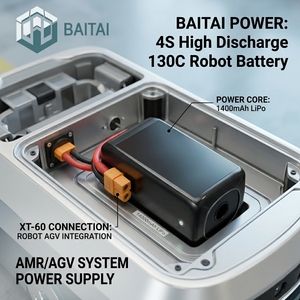
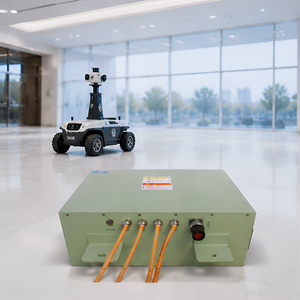
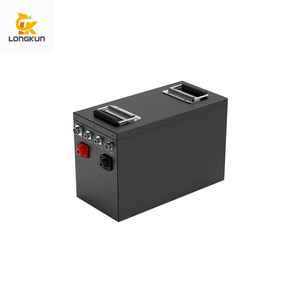
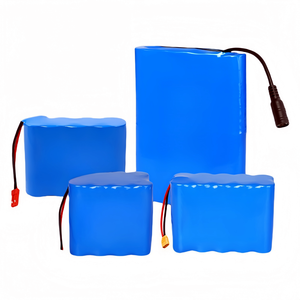
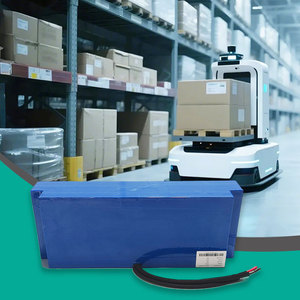
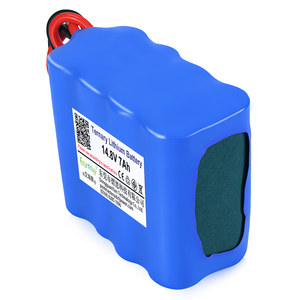
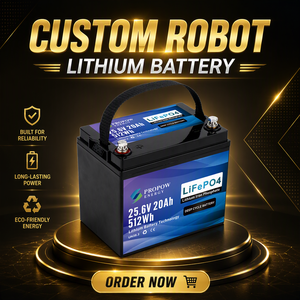
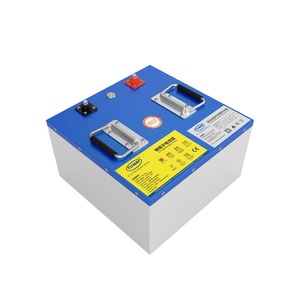
CE-compliant high-discharge and smart BMS integrated battery packs engineered for autonomous robotics, AGV/AMR platforms, and C&I energy storage.
CE Certification Architecture & Quality Directives for Commercial Energy Storage Systems
In the global energy transition landscape, Commercial and Industrial Energy Storage Systems (C&I ESS) serve as the backbone of modern power resilience, peak-shaving logistics, microgrid stability, and autonomous industrial infrastructure. Selecting a compliant OEM factory or manufacturer requires rigorous evaluation of regulatory credentials, thermal safety architecture, and electrochemical performance capabilities.
The CE Marking (Conformité Européenne) is not merely a trading seal; it represents full alignment with European Union safety, health, and environmental protection standards. For high-capacity commercial energy storage cabinets, containerized ESS installations, and heavy-duty AGV/AMR battery modules, achieving valid CE compliance demands adherence to a multi-layered regulatory architecture:
EN IEC 62619:2022 Certification
Mandatory safety requirements for secondary lithium cells and batteries used in industrial applications, evaluating mechanical shock, thermal abuse, and internal short-circuit propagation resistance.
Low Voltage Directive (LVD 2014/35/EU)
Verifies electrical safety for systems operating between 50 and 1000V AC or 75 and 1500V DC, ensuring insulation integrity, creepage distances, and emergency cutoff reliability.
EMC Directive (2014/30/EU)
Guarantees that high-frequency Power Conversion Systems (PCS) and smart BMS telematics generate zero electromagnetic interference while withstanding severe industrial surges.
Information Gain Insight: Modern commercial buyers must distinguish between self-declared CE marks and valid Type Examination Certificates issued by EU Notified Bodies (such as TÜV Rheinland, SGS, or Intertek). A comprehensive CE technical file must include cell-level UN38.3 transport safety documentation, BMS functional safety assessment (IEC 61508 / SIL2), and full UL 9540A thermal runaway fire propagation testing data.
Key Certification & Regulatory Requirements for C&I Energy Storage Manufacturers
Enterprise procurement teams must verify that energy storage manufacturers uphold strict manufacturing quality standards, detailed in the technical comparison matrix below:
| Compliance Standard | Target Component / Level | Testing Scope & Primary Objectives | Market Authorization |
|---|---|---|---|
| EN IEC 62619 | Cell & Module Level | Thermal propagation prevention, overcharge/over-discharge safety, internal short-circuit containment. | European Union / Global Industrial |
| EN 61000-6-2 / 6-4 | System / PCS Inverter | Electromagnetic Compatibility (EMC) immunity and emission testing for industrial environments. | CE Requirement (EMC Directive) |
| UL 9540 / UL 9540A | Complete ESS Enclosure | Evaluating fire safety and thermal runaway flame propagation within battery energy storage cabinets. | North America & Global Standard |
| EU Battery Regulation 2023/1542 | Full Product Lifecycle | Mandatory Battery Passport, supply chain due diligence, recycled content minimums, and carbon footprint disclosure. | EU Market Mandate (2024-2027) |
Over 40 Years of Engineering & Custom Pack Assembly Excellence
From precision smart BMS integration to high-voltage commercial storage cabinets, our manufacturing facilities deliver uncompromised reliability across critical OEM sectors.
Why Enterprise OEMs Partner With Certified Battery Factories
Founded on rigorous engineering heritage established since 1983, our manufacturing framework eliminates supply chain risk for global Original Equipment Manufacturers (OEMs), systems integrators, and commercial facility developers. Unlike white-label brokers, direct-from-factory partnerships provide end-to-end transparency:
- Cell Tiering & Direct Chemical Sourcing: We utilize exclusively Grade-A prismatic Lithium Iron Phosphate (LiFePO4), Lithium Titanate (LTO), and high-discharge NMC cells sourced directly from top-tier raw material partners. Every cell undergoes strict internal resistance (IR) matching and capacity sorting prior to pack assembly.
- Proprietary Smart BMS & Telematics: Integrated multi-protocol Battery Management Systems support CANbus 2.0B, RS485, and Modbus TCP/IP protocols. Features include microsecond short-circuit protection, active cell balancing (up to 5A), state-of-charge (SoC) estimation algorithms, and real-time cloud diagnostic telemetry.
- Custom Structural & Thermal Packaging: Engineering robust enclosures rated IP65/IP67, featuring integrated liquid-cooling plates, thermal barrier insulation between cells, and flame-retardant phase-change materials (PCM) to prevent cascaded thermal runaway.
- Comprehensive OEM/ODM Turnkey Services: Full lifecycle engineering support spanning feasibility study, 3D mechanical modeling, rapid prototyping, UN38.3 transport certification, and full-volume assembly line production.
Future Trends in Commercial Energy Storage Procurement (2025–2030)
As utility grids face increased volatility and renewable penetration accelerates, C&I energy storage technology is undergoing rapid evolution across four major vectors.
1. Liquid Cooling Standardization
Liquid cooling systems are replacing forced-air cooling in C&I cabinets, reducing internal cell thermal variance to <2.5°C. This extends battery cycle life by up to 20% and reduces auxiliary parasitic power consumption by over 30%.
2. All-In-One Outdoor Modular Cabinets
Procurement is shifting away from site-assembled component systems toward pre-tested, factory-integrated outdoor cabinets containing battery racks, PCS inverters, liquid chiller units, aerosol fire suppression, and smart EMS controller in a single footprint.
3. AI-Driven Virtual Power Plant (VPP) Integration
Next-generation commercial battery platforms feature edge computing controllers capable of algorithmic market arbitrage, demand-response management, dynamic peak shaving, and automatic frequency regulation via cloud-connected VPP software.
4. Ultra-Fast Charging LTO & High-Discharge Chemistries
For heavy logistics, industrial AGVs, and automated mobile robots (AMR), Lithium Titanate (LTO) and high-discharge C-rate packs enable 10-minute ultra-fast opportunity charging and operate reliably in extreme ambient environments (-30°C to 65°C).
Frequently Asked Questions by Industrial Buyers & EPC Engineers
Technical clarity on compliance, battery longevity, system safety, and factory sourcing for Commercial Energy Storage Systems.
What specific test documentation is required to verify genuine CE compliance for a commercial energy storage system?
To ensure compliance with European Union directives, buyers must request a complete Technical Documentation File (TDF). This includes official test reports for EN IEC 62619 (industrial battery safety), EN 61000-6-2 / EN 61000-6-4 (EMC industrial immunity and emission), LVD 2014/35/EU electrical safety verification, and cell-level UN38.3 transport safety clearance. Make sure test reports are issued by an accredited ISO/IEC 17025 laboratory.
Why is LiFePO4 (Lithium Iron Phosphate) preferred over NMC for commercial energy storage installations?
LiFePO4 offers superior thermal and chemical stability compared to NMC (Nickel Manganese Cobalt). LiFePO4 cells feature a thermal runaway threshold of approximately 270°C (versus ~210°C for NMC) and release zero oxygen during decomposition, dramatically reducing fire risks. Furthermore, LiFePO4 provides a cycle life of 6,000+ cycles at 80% Depth of Discharge (DoD), yielding a significantly lower Total Cost of Ownership (TCO) over a 15-year operational window.
How does an AI-enabled Smart BMS protect against thermal runaway in high-capacity storage cabinets?
A Smart BMS constantly monitors single-cell voltage, temperature, internal resistance, and string current at millisecond sampling rates. Utilizing predictive algorithms, the BMS detects micro-short-circuits or abnormal voltage drop patterns long before temperature spikes occur. If anomalous behavior is detected, the BMS automatically isolates the affected string, triggers active cooling, and alerts central monitoring systems via CANbus, RS485, or cloud IoT channels.
What is the expected ROI and payback period for a C&I energy storage installation?
Typical payback periods for commercial energy storage systems range between 3 to 6 years, depending on local utility peak demand charges, time-of-use (TOU) tariff differentials, available government incentives, and solar PV integration. By shaving expensive peak demand loads and providing emergency backup power to prevent production downtime, C&I storage systems deliver reliable long-term financial returns over their 10 to 15-year service life.
Can your manufacturing facility support custom dimensions, voltage levels, and communication protocols for OEMs?
Yes. As a direct custom battery pack manufacturer and engineering specialist, we support full OEM/ODM tailoring. We design battery enclosures, custom rack layouts, specific voltage platforms (from 24V up to 800V DC high-voltage architectures), custom harness configurations, and custom BMS software firmware mapped to your exact inverter or vehicle communications protocol (CANopen, Modbus, J1939, Ethernet).