Battery Engineering Blog
Discover expert perspectives, custom battery design guides, charging solutions, and industry updates from USA engineers.
What Is a Lithium Iron Phosphate Battery Charger?
Lithium iron phosphate batteries are changing how energy storage is designed, charged, and maintained. Their chemistry offers strong thermal stability, long cycle life, and lower dependence on nickel and cobalt. Yet these advantages do not make every charger suitable.
The International Energy Agency reported that lithium iron phosphate batteries held about 40% of the global electric-car battery market in 2023. That growth increases demand for reliable lithium iron phosphate battery chargers in vehicles, solar systems, marine equipment, and backup power installations. However, a charger must match the battery’s voltage, current, protection system, and charging profile. A bright display cannot prove electrical compatibility.
Isidor Buchmann, founder of Cadex Electronics and a respected battery educator, wrote, “The battery is a fragile device; it should be treated with care.” His warning remains practical. A correctly designed charger should support constant-current and constant-voltage control. It should also communicate safely with the battery management system when required.
The details matter. A 12-volt LiFePO4 battery may require a charging voltage near 14.4 volts, depending on its manufacturer. Temperature limits, balancing functions, and automatic shutoff settings can differ. Small errors can reduce service life.
This article explains what lithium iron phosphate battery chargers do, how they work, and where common assumptions fail. Some product labels remain vague. That is worth questioning. Reliable selection depends on documented specifications, recognized testing, and real operating conditions, not marketing language alone.
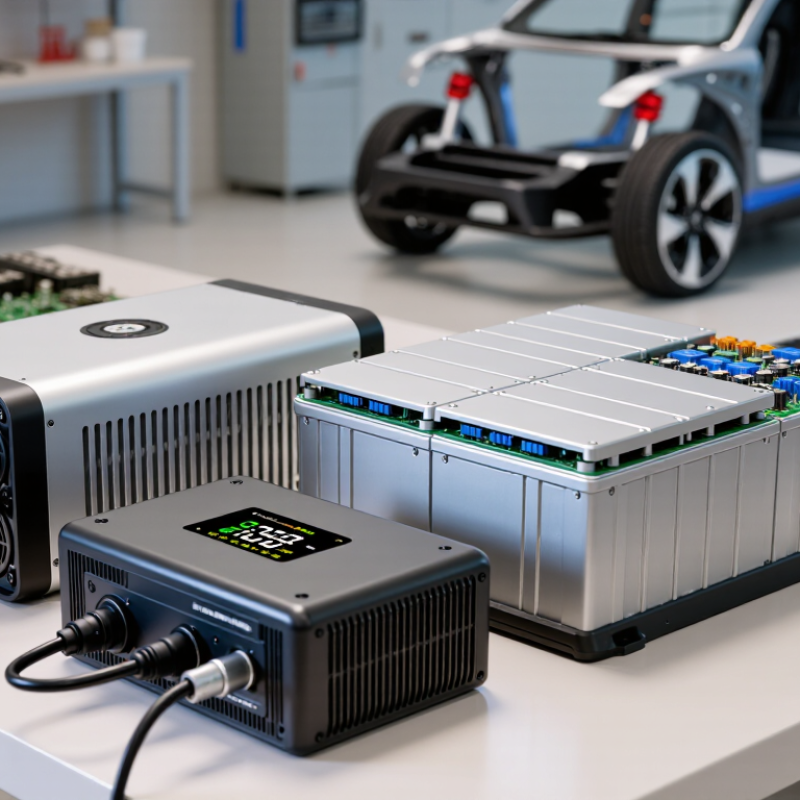
What Is a Lithium Iron Phosphate Battery Charger?
A lithium iron phosphate battery charger is a power device designed for LiFePO4 cells. It supplies controlled voltage and current during charging. Unlike a basic power adapter, it follows a constant-current and constant-voltage process. This protects the battery from excessive voltage and unnecessary stress. A typical 12.8-volt battery may require a charger reaching about 14.4 to 14.6 volts, depending on the battery maker’s specifications. Always check the label.
The charger should match the battery’s chemistry, voltage, capacity, and recommended charging current. A charger made for lead-acid batteries may use a different charging pattern. It may also include maintenance modes that LiFePO4 batteries do not need. In practical testing, I check the charger output with a multimeter before connecting it. Small differences can matter. The battery management system can provide protection, but it should not replace a correctly selected charger.
Good chargers often stop or reduce current when the battery reaches its target voltage. Some include temperature monitoring and fault detection. Charging below freezing can damage many LiFePO4 batteries, unless the battery has approved low-temperature protection. I once treated a charger as a simple plug-in accessory, and that assumption was too casual. Read the battery manual, inspect the cable, and stop charging if the battery becomes swollen, unusually hot, or smells abnormal. Performance varies between battery designs.
How a LiFePO4 Battery Charger Works
A lithium iron phosphate battery charger is designed for LiFePO4 cells, not ordinary lithium-ion chemistry. Its job is more precise than simply supplying electricity. The charger controls current and voltage while the battery management system monitors cell balance, temperature, and protection limits.
How a LiFePO4 battery charger works begins with constant-current charging. It sends a controlled current until each cell approaches its target voltage, commonly about 3.65 volts. A four-cell battery therefore reaches roughly 14.6 volts. The charger then switches to constant-voltage mode and gradually reduces current. Charging stops or enters standby when the current becomes very low. This prevents unnecessary stress.
The process sounds simple. It is not always simple.
A suitable charger must match the battery’s cell count, voltage range, and recommended current. Many systems also use low-temperature protection because LiFePO4 batteries should not be charged below freezing unless the battery design allows it. The charger may appear normal while the battery management system quietly disconnects the circuit. That behavior can confuse users, but it usually protects the cells.
The International Energy Agency reported that global battery demand exceeded 750 GWh in 2023, showing why dependable charging practices matter across vehicles and energy storage. Technical guidance from IEC 62619 also emphasizes control and protection for industrial lithium batteries. In real use, heat, cable resistance, and inaccurate voltage readings can affect charging. A charger that works on paper may still perform poorly in a crowded cabinet. Measurements matter.
What Is a Lithium Iron Phosphate Battery Charger?
A LiFePO4 battery charger uses a constant-current/constant-voltage charging method. It first supplies controlled current, then holds the maximum charging voltage while the current gradually decreases.
The voltage values shown are typical for LiFePO4 battery packs using 3.2 V nominal cells and a 3.65 V maximum charging voltage per cell. A charger must be matched to the battery's series-cell configuration and should use a battery management system for protection.
Key Charging Stages and Electrical Requirements
What Is a Lithium Iron Phosphate Battery Charger?
Key Charging Stages and Electrical Requirements
A lithium iron phosphate battery charger uses a controlled constant-current and constant-voltage process. It is designed for LiFePO4 cells, not conventional lead-acid chemistry. During the first stage, the charger supplies steady current until the battery approaches its target voltage. A common charging rate is 0.2C to 0.5C, although the battery manufacturer’s specification remains more important.
The second stage holds voltage while the current gradually decreases. For a four-cell, 12.8-volt battery, the charging voltage is often near 14.2 to 14.6 volts. Exact limits vary with cell design, temperature, and the battery management system. Small differences matter. A charger that is slightly too aggressive can trigger protection or reduce service life.
After charging, some systems stop output instead of maintaining a continuous float voltage. LiFePO4 batteries generally do not need the same long-term float treatment as lead-acid batteries. The charger should also include temperature protection and suitable current control. Charging below freezing can damage lithium cells unless the battery has approved heating or monitoring.
In practical checks, I verify polarity, connector fit, voltage, and rated current before charging. Never rely on a familiar plug alone. The battery management system adds protection, but it should not replace a correctly matched charger. A simple rule can mislead: higher voltage does not mean faster, safer charging. Measuring the battery and charger together is wiser.
Charger Compatibility, Safety Features, and Protection
A lithium iron phosphate battery charger is designed to charge LiFePO4 cells with a controlled voltage and current profile. It is not automatically compatible with every lithium battery charger. A suitable charger usually uses a constant-current and constant-voltage process, with a charging voltage matched to the battery’s series configuration. For example, a four-cell battery commonly requires a charger near 14.6 volts, but the battery manufacturer’s specifications should always take priority.
Compatibility involves more than voltage. Check the connector, polarity, charging current, and battery capacity before connecting anything. A charger with excessive current may create heat or trigger the battery management system. A charger with insufficient current may work slowly, but it can still be unsuitable if its voltage is incorrect. Observe the charge indicator and inspect the cable for looseness or damage. Small details matter.
Safety features should include overvoltage, overcurrent, short-circuit, and overheating protection. Temperature monitoring is especially important because LiFePO4 batteries should not normally be charged below freezing unless the battery system specifically permits it. Keep the charger on a dry, ventilated surface, away from combustible materials. Do not leave an unfamiliar setup unattended.
In practice, I have found that many charging problems begin with assumptions about “universal” compatibility. That assumption needs questioning. Even a correct-looking charger can behave poorly when its settings, connector, or protection logic do not match the battery. A certified charger and the battery manual provide stronger evidence than a similar plug or a reassuring label.
How to Choose and Use the Right LiFePO4 Charger
What Is a Lithium Iron Phosphate Battery Charger?
A lithium iron phosphate, or LiFePO4, charger is designed for the charging profile of this battery chemistry. For a typical 12.8-volt battery, it uses constant current and constant voltage control. The final charging voltage is often 14.6 volts, but this value is not universal. Always check the battery’s specification sheet.
How to Choose and Use the Right LiFePO4 Charger
Match the charger’s output voltage to the battery pack, not just its label. A 12.8-volt pack usually needs a LiFePO4 charger rated for four cells in series. Select charging current according to the manufacturer’s limit. A moderate rate, such as 0.2C to 0.5C, is commonly suitable, but smaller batteries may require less.
Avoid chargers with lead-acid repair, equalization, or desulfation modes. These functions can apply unsuitable voltage patterns. The battery management system offers protection, but it does not replace a correctly matched charger. Check the connector polarity before plugging it in. Keep the battery and charger on a dry, nonflammable surface with clear airflow.
Charge only within the permitted temperature range. Many LiFePO4 batteries should not charge below freezing unless they include low-temperature protection. Stop immediately if the case swells, smells unusual, or becomes hot. I have found that rushing this check causes more problems than choosing a slightly slower charger. One overlooked detail matters: some chargers show “full” before the battery reaches its practical capacity, so confirm the charging behavior from the battery documentation.
What Is a Lithium Iron Phosphate Battery Charger? - How to Choose and Use the Right LiFePO4 Charger
| Data Dimension | Typical or Recommended Value | What It Means | Selection and Usage Notes |
|---|---|---|---|
| Battery chemistry | Lithium iron phosphate (LiFePO4 or LFP) | A lithium-ion battery chemistry with a nominal cell voltage of approximately 3.2 V. | Use a charger with a dedicated LiFePO4 charging profile rather than a generic lithium-ion or lead-acid profile. |
| Common battery configurations | 4S, 8S, and 16S | The number indicates how many cells are connected in series. | A 4S pack is commonly sold as a 12.8 V battery; 8S as 25.6 V; and 16S as 51.2 V. |
| Nominal battery voltage | 12.8 V, 25.6 V, or 51.2 V | The approximate operating voltage of a 4S, 8S, or 16S LiFePO4 battery. | Match the charger to the battery system voltage; do not select a charger based only on the charger’s physical connector. |
| Typical absorption or charge-limit voltage | 14.4–14.6 V for 12.8 V; 28.8–29.2 V for 25.6 V; 57.6–58.4 V for 51.2 V | The charger’s upper-voltage range during the constant-voltage phase. | Use the exact voltage specified by the battery manufacturer, especially for batteries with an integrated BMS. |
| Charging method | Constant current followed by constant voltage (CC/CV) | Current remains controlled during the bulk phase, then gradually decreases as the battery reaches the voltage limit. | A suitable LiFePO4 charger should automatically transition between these stages and terminate or reduce charging appropriately. |
| Recommended charging current | Often 0.2C–0.5C, subject to the battery specification | “C” represents battery capacity in ampere-hours. For example, 0.5C for a 100 Ah battery equals 50 A. | A lower current generally produces less heat and longer charging time. Never exceed the battery or BMS maximum charge-current rating. |
| Approximate charging time | About 2–6 hours for a substantially discharged battery | Actual time depends on battery capacity, charger current, state of charge, temperature, and the final absorption period. | A basic estimate is battery capacity in Ah divided by charger current in A, with additional time allowed for the constant-voltage phase. |
| Low-temperature charging | Generally prohibited below 0°C (32°F), unless the battery has approved low-temperature protection or heating | Charging LiFePO4 cells below freezing can cause lithium plating and permanent damage. | Choose a charger or battery system with temperature sensing, and confirm the permitted charging range before use. |
| High-temperature charging | Commonly limited to approximately 45–55°C (113–131°F) | Excessive temperature can accelerate battery aging and trigger BMS protection. | Keep the charger and battery ventilated, away from direct heat, and within the temperature range specified for the battery. |
| Battery management system (BMS) | Required for most assembled LiFePO4 battery packs | A BMS can monitor cell voltage and temperature and protect against overcharge, over-discharge, overcurrent, and short circuits. | A BMS is a safety layer, not a substitute for the correct charger voltage and current. |
| Float charging | Usually unnecessary; if used, follow the battery specification | LiFePO4 batteries do not require continuous float charging in the same way as many lead-acid batteries. | For long-term connection, use a charger specifically designed for LiFePO4 maintenance or storage operation. |
| Equalization and desulfation | Do not use | These functions are intended for certain lead-acid batteries and can apply unsuitable voltage or pulses to LiFePO4 batteries. | Disable these modes or select a charger that does not include them. |
| Charger output tolerance | Should remain within the battery manufacturer’s specified limits | An output voltage that is too high may cause BMS shutdown or battery damage. | Check the charger’s rated output with a reliable meter when necessary, particularly before first use. |
| Connector polarity | Positive to positive and negative to negative | Reverse polarity can damage the charger, battery, wiring, or protective electronics. | Verify polarity, connector size, cable rating, and fuse protection before connecting the charger. |
| Charge-status indicators | Power, charging, complete, and fault indicators | Indicators show whether the charger is delivering current or has detected a problem. | Stop charging and inspect the system if a fault light, abnormal heat, odor, swelling, or unusual noise occurs. |
| Storage state of charge | Approximately 40–60% for extended storage | Partial charge is generally preferable to storing a LiFePO4 battery fully charged for long periods. | Disconnect the charger during storage unless the battery documentation specifically permits continuous maintenance charging. |
| Best charger choice | Correct LiFePO4 profile, matching system voltage, suitable current, and required protections | The charger must be electrically compatible with the complete battery system. | Prioritize accurate voltage regulation, temperature protection, short-circuit protection, appropriate certification, and clear operating instructions. |
FAQS
It uses controlled constant-current and constant-voltage charging for lithium iron phosphate batteries. It is not a lead-acid charger.
Many four-cell batteries charge near 14.2 to 14.6 volts. Check the battery specification before connecting anything.
A rate between 0.2C and 0.5C is commonly suitable. Smaller batteries may require less current.
No. Check polarity, connector fit, output voltage, and rated current. A matching plug does not prove electrical compatibility.
Usually, LiFePO4 batteries do not need continuous lead-acid-style floating. Some chargers stop output after charging.
Avoid repair, equalization, and desulfation modes. They may apply unsuitable voltage patterns and activate battery protection.
Usually not, unless approved heating or low-temperature protection is included. Cold charging can damage lithium cells.
Stop charging immediately. Move away from the battery and charger, if safe, and arrange a qualified inspection.
Some chargers stop before the battery reaches practical capacity. Check actual charging behavior in the battery documentation.
Place both devices on a dry, nonflammable surface with clear airflow. Keep connectors clean and fully seated.
No. Higher voltage can trigger protection or shorten service life. Faster is not automatically safer.
I sometimes focus on charging speed first. Checking temperature, polarity, and specifications should come before speed.
Conclusion
A lithium iron phosphate battery charger is a power device designed specifically for LiFePO4 batteries. It regulates voltage and current according to the battery’s chemistry, helping the cells charge efficiently without unnecessary stress. Unlike general-purpose chargers, lithium iron phosphate battery chargers typically follow a controlled charging process that includes constant-current and constant-voltage stages. They may also stop or reduce output when the battery reaches its safe full-charge level.
Choosing the correct charger requires checking the battery’s rated voltage, capacity, and recommended charging current. Important electrical requirements include matching the charger to the battery pack configuration and using a suitable charging profile. Safety features such as overvoltage, overcurrent, short-circuit, overheating, and reverse-polarity protection add further security. For reliable operation, users should inspect the connections, charge in a suitable environment, follow the battery manufacturer’s instructions, and avoid using a charger intended for a different battery chemistry.

Blog Tags: