Technical Articles & Insights

Battery Engineering Blog

Discover expert perspectives, custom battery design guides, charging solutions, and industry updates from USA engineers.

0%

Choosing the right nimh custom battery packs requires more than comparing voltage and price. Buyers must match chemistry, load profile, temperature, enclosure, and charging method. A pack for a warehouse scanner may need 12 hours of daily runtime. A medical instrument may need stable discharge and strict traceability. The details matter.

The International Energy Agency’s Global EV Outlook 2024 highlights rising battery demand and stronger attention to supply-chain resilience. Meanwhile, Grand View Research’s Nickel Metal Hydride Battery Market report identifies hybrid vehicles, industrial equipment, and consumer devices as continuing application areas. These findings do not make NiMH suitable for every product. They show why application-specific engineering remains important. Isidor Buchmann, founder of Cadex Electronics and Battery University, offers a useful warning: “The battery is only as good as its weakest link.” Cell matching, weld quality, protection design, and charger compatibility can all become that link.

A reliable sourcing process should request cycle-life data, impedance results, temperature limits, safety testing, and production samples. IEC 61951-2 and IEC 62133-1 can guide technical and safety evaluations. Still, standards alone cannot reveal every field problem. A spreadsheet may show excellent capacity. It may not show voltage sag after months of vibration. That is where buyers can misjudge the pack.

Experienced suppliers should explain their test methods, not only advertise capacity. They should also document materials, quality controls, replacement planning, and applicable transport requirements. The best choice is rarely the cheapest pack. It is the pack that performs predictably inside the finished product.
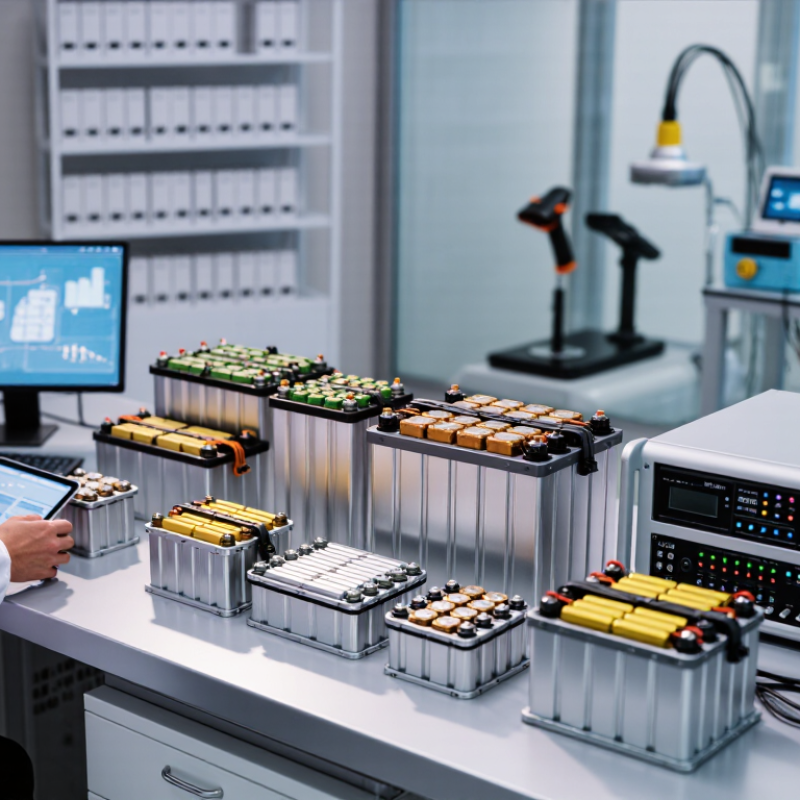
How to Choose Custom NiMH Battery Packs for Global Buyers?

Understanding Custom NiMH Battery Pack Fundamentals

Understanding Custom NiMH Battery Pack Fundamentals begins with the cell, not the outer case. A NiMH cell typically provides 1.2 volts nominally. Eight cells in series create a 9.6-volt pack. Parallel strings increase capacity, but they also require careful matching. Capacity is measured in ampere-hours under defined test conditions. Real performance changes with temperature, discharge rate, age, and storage time.

For global buyers, the load profile matters more than a headline capacity number. Record startup current, continuous current, operating hours, and charging frequency. A device drawing two amperes may need a different pack than one using two amperes in short pulses. The connector, wire gauge, fuse, and enclosure must match the measured load. Small details matter. NiMH charging also needs a compatible control method. Timed charging can suit simple applications, while temperature sensing and voltage behavior improve control. Fast charging creates heat, so airflow and sensor placement deserve attention. Never assume a universal charger is appropriate. That shortcut often causes trouble.

Custom work should define dimensions, polarity, terminal style, cycle life, and acceptable capacity tolerance. Ask for test data from representative samples, including discharge curves and charging results. Check the pack after cold storage and repeated cycling. A design that passes one laboratory test may disappoint in a vehicle or warehouse. Specifications can be incomplete. Revisit them after field feedback, because the first requirement is rarely perfect. Reliable suppliers should explain limitations, inspection methods, and applicable transport or electrical requirements clearly.

Defining Voltage, Capacity, Size, and Power Requirements

How to Choose Custom NiMH Battery Packs for Global Buyers?

Defining Voltage, Capacity, Size, and Power Requirements

Start with the device’s voltage range, not the battery label alone. A standard NiMH cell provides about 1.2 volts nominally. Connecting cells in series raises the pack voltage. A six-cell pack, for example, delivers approximately 7.2 volts. Check the device’s minimum and maximum voltage before confirming the design. I have seen projects fail because buyers matched voltage but ignored startup current.

Capacity determines operating time. A 2,500 mAh pack may not provide two hours in every device. Motor loads, cold conditions, aging, and wiring resistance reduce usable energy. Measure the real current during normal operation and during startup. Then allow practical headroom. More capacity can help, but it may increase weight, charging time, and physical size.

Measure the battery compartment carefully. Record length, width, height, terminal position, connector type, and cable exit direction. Even a few millimeters can prevent installation. Power requirements also include continuous current and short peak demand. Ask for discharge testing at the expected load, not only open-circuit voltage. A pack should be checked after charging, storage, vibration, and repeated cycles. These details expose weak connections and unexpected voltage drop. A careful specification still needs review. Real devices are sometimes less predictable than their datasheets.

Selecting NiMH Cells, Connectors, Enclosures, and Safety Features

How to Choose Custom NiMH Battery Packs for Global Buyers?

Selecting NiMH cells, connectors, enclosures, and safety features requires more than matching voltage. Cell capacity should reflect real load patterns, temperature, and charging intervals.

The U.S. Department of Energy reports typical NiMH specific energy near 60–120 Wh/kg. This is lower than many lithium systems, but NiMH chemistry offers stable performance and strong abuse tolerance.

Choose cells with consistent capacity and low self-discharge. A 10-cell pack usually provides 12 volts nominally, while actual voltage changes during discharge.

Connector selection must match current, vibration, and service frequency. Locking connectors prevent accidental separation. Gold-plated contacts can reduce corrosion, but they cannot replace proper sealing.

Small details matter.

The enclosure should resist impact, moisture, and heat. Use flame-retardant materials where the application requires them. Vent paths are valuable because charging can generate gas.

A temperature sensor near the cell core improves charge control. IEC 61951-2 provides requirements for industrial NiMH secondary cells, including safety and performance testing.

The U.S. DOE also identifies thermal management and cycle life as key battery design factors.

Field testing still matters more than a spreadsheet. I once underestimated connector strain. It failed before the cells did. That mistake remains useful.

Custom packs should include overcharge protection, short-circuit protection, polarity control, and documented inspection procedures.

International buyers should verify local transport and electrical requirements before production.

Evaluating Global Supplier Quality, Compliance, and Customization

How to Choose Custom NiMH Battery Packs for Global Buyers?

A reliable NiMH battery pack begins with supplier evidence, not attractive product photos. Ask for cell test records, production dates, batch traceability, and sample inspection results. A qualified supplier should explain capacity tolerance, cycle-life testing, charging limits, and protection methods clearly. During evaluation, request samples from the same production process used for larger orders. Check voltage stability after storage, connector quality, weld consistency, and pack dimensions with a caliper. Small gaps can create large assembly problems.

Compliance must match the destination market and application. Request current test reports, safety documentation, material declarations, and transport paperwork. Nickel-based batteries may require standards such as IEC 62133-1, while international shipping can involve UN 38.3 testing. Regional requirements may also include RoHS or REACH declarations. Do not accept vague statements like “globally approved.” A certificate without traceable scope is weak evidence. I have seen specifications change between samples and production batches, so written confirmation matters.

Tips: Define the operating temperature, discharge rate, connector, cable length, housing, label, and annual volume before requesting quotations. Ask whether customization affects lead time or minimum order quantity. Test at least three sample packs. Record capacity, internal resistance, charging temperature, and fit. Perfect testing is unrealistic, but undocumented assumptions are worse. A short supplier audit, even by video, can reveal storage conditions, calibration habits, and actual quality controls.

Comparing Costs, Testing Standards, Shipping, and After-Sales Support

Choosing custom NiMH battery packs starts with the load, not the supplier’s catalog. In field evaluations, I record voltage, capacity, discharge current, dimensions, connectors, and operating temperature. A lower price may hide weaker cells, thicker wires, or extra testing charges. Request a clear cost breakdown. Include tooling, samples, aging tests, packaging, and replacement terms. Capacity can change with temperature and discharge rate. That detail is often overlooked.

Testing should match the device and destination market. Request documented checks for capacity, internal resistance, charge retention, insulation, and cycle performance. Confirm whether testing follows recognized international methods. Ask for exact acceptance limits. A certificate alone is not enough. Review sample reports, calibration dates, and traceability records. I prefer witnessed sampling during the first production run. It costs more, but it can expose process variation early. One witnessed batch cannot prove every future batch is perfect. That limitation matters.

Shipping requires practical planning. Confirm battery classification, package protection, labels, humidity control, and transport routes before production. NiMH packs are often easier to ship than some chemistries, but carriers may apply specific requirements. Get written delivery terms and damage responsibilities. After-sales support should include response times, failure analysis, spare samples, and clear warranty evidence. Ask how returned packs are inspected. Photos help. They are not proof. A supplier that shares data, admits limitations, and corrects recurring faults may be more reliable than the lowest quote.

How to Choose Custom NiMH Battery Packs for Global Buyers? - Comparing Costs, Testing Standards, Shipping, and After-Sales Support
Evaluation Dimension Typical Requirement or Benchmark Cost Impact Testing and Documentation Shipping Considerations After-Sales Support to Request
Voltage and Pack Configuration Each NiMH cell has a nominal voltage of 1.2 V. Common configurations include 3.6 V, 4.8 V, 6.0 V, 7.2 V, 9.6 V, and 12.0 V packs. More cells, welded interconnections, insulation, connectors, and protective housings increase assembly cost. A custom connector or molded enclosure can add more cost than the cells themselves for small orders. Verify nominal voltage, fully charged voltage, polarity, dimensions, connector pinout, and electrical continuity against an approved drawing. Pack dimensions and weight affect carton utilization and freight cost. Ensure terminals are protected against short circuits during transport. Request a controlled product drawing, revision history, and confirmation that replacement packs will remain electrically and mechanically compatible.
Capacity and Discharge Performance Typical consumer and industrial NiMH packs range from approximately 600 mAh to 10,000 mAh. Rated capacity should state the discharge current, cutoff voltage, temperature, and test method. Higher capacity generally requires larger cells, longer formation and testing time, and more material. High-rate cells may cost more than standard-energy cells. Require capacity testing on samples or production lots. A commonly used method is controlled charging followed by discharge at a specified current to the specified cutoff voltage. Capacity can be affected by storage temperature and transit duration. Avoid prolonged exposure to high temperatures and request suitable packaging for long routes. Ask for lot-level test records, failure analysis for out-of-specification capacity, and a clear replacement or credit process for verified defects.
Indicative Unit Cost For a simple 4.8 V to 9.6 V pack, indicative global sourcing ranges are approximately US$4–12 per pack at 1,000–5,000 units, excluding tooling, freight, taxes, and certification. Actual prices vary significantly by capacity, casing, connector, and order quantity. Small orders, custom tooling, low-volume connectors, tighter capacity matching, and special temperature requirements usually increase the unit price. Volume pricing should be requested at several quantity tiers. Include the cost of sample approval, electrical testing, inspection, certification reports, and any required factory or third-party audit in the total landed-cost comparison. Compare total landed cost rather than unit price alone. Include export packing, freight, insurance, customs clearance, import duty, VAT or sales tax, and destination handling fees. Confirm whether warranty returns, replacement freight, inspection fees, and technical support are included or charged separately.
Minimum Order Quantity and Lead Time A practical custom-production MOQ is often 100–1,000 packs. Sample production commonly takes 1–3 weeks, while repeat production often takes approximately 3–8 weeks after approval. Low quantities usually carry higher setup and labor costs. Tooling for a custom plastic case may require a separate one-time charge and a longer development schedule. Allow time for prototype testing, dimensional approval, capacity verification, and any required compliance documentation before mass production. Build buffer time for booking, customs, inspection, and seasonal congestion. Air freight is usually faster; sea freight is normally more economical for larger shipments. Define response times for engineering questions, sample changes, corrective actions, and urgent replacement orders before placing the purchase order.
Product Safety and Quality Standards For sealed rechargeable NiMH cells and batteries, IEC 61951-2 is a relevant international standard covering nickel-metal hydride secondary cells and batteries. Product-specific and market-specific requirements may also apply. Testing to recognized standards and maintaining traceable quality records may increase the purchase price, but it reduces compliance, field-failure, and recall risks. Request applicable test reports, safety test results, dimensional inspection records, overcharge or abuse-test evidence where relevant, and certificates showing the tested configuration matches the supplied pack. Transport documents must accurately identify the battery chemistry, packaging, quantity, and condition. Carrier and destination-country requirements should be checked for every route. Request batch traceability by production date, cell lot, operator or line, inspection result, and shipment reference.
International Transport NiMH batteries are generally treated differently from lithium batteries in transport rules. When properly packaged and protected, many NiMH shipments are not regulated as dangerous goods; however, carrier, airline, vessel, and national rules must be confirmed for each shipment. Freight cost depends on gross weight, carton dimensions, route, service level, and customs terms. Special documentation or carrier handling can add charges even when the goods are not classified as dangerous goods. Prepare a battery specification sheet, safety information, packing details, invoice, packing list, and any carrier-requested transport declaration. Do not use lithium-battery documents for NiMH packs. Use non-conductive terminal protection, individual or partitioned packaging, strong outer cartons, moisture protection where appropriate, and clear package identification. Confirm responsibility for transit damage, customs holds, missing documents, and reshipment when packaging or paperwork causes delivery problems.
Operating Temperature and Storage A typical NiMH pack may operate approximately from 0°C to 45°C during charging and from -20°C to 60°C during discharge, but the permitted range depends on the cell design and charger. Extended-temperature, low-self-discharge, high-rate, and industrial-grade cells generally cost more than standard cells. Verify charge and discharge performance at the intended temperature range. Confirm storage conditions, allowable humidity, and recommended recharge intervals. Avoid excessive heat, freezing conditions, and prolonged storage at full charge unless the cell manufacturer’s specified storage procedure allows it. Obtain written guidance for storage, first use, charging, deep discharge recovery, and handling of packs that arrive below the expected voltage.
Cycle Life and Matching Properly charged NiMH packs may provide approximately 500–1,000 cycles in suitable applications, but actual life depends on depth of discharge, charge control, temperature, current, and storage. Cell matching, tighter capacity tolerances, premium separators, and production screening can increase cost while improving pack consistency. Require defined matching limits for capacity, internal resistance, open-circuit voltage, and self-discharge. Confirm how many cells are screened before pack assembly. Long transit or storage periods can increase self-discharge. Use first-in, first-out inventory control and record production dates. Ask for a minimum warranty period, commonly 12 months or more, together with a defined method for evaluating capacity-loss and premature-failure claims.
Charger Compatibility NiMH charging requires a charger designed for NiMH chemistry. Charge termination may use negative-delta-V, temperature rise, timer, or combined control methods. A compatible charger, temperature sensor, thermal fuse, or pack identification component may increase the total system cost but can reduce overcharge and field-failure risk. Test the pack with the actual charger and application load. Verify charge termination, temperature rise, charging time, discharge cutoff, and connector polarity. Ship batteries and chargers separately or together only after confirming electrical compatibility, packaging requirements, and the documentation requested by the carrier. Request troubleshooting support for charging faults and a written compatibility statement for the charger, equipment, connector, and battery pack.
Quality Assurance and Inspection A robust incoming and outgoing inspection plan should cover appearance, dimensions, polarity, voltage, capacity, connector retention, welding quality, insulation, and labeling. Pre-shipment inspection or third-party inspection adds a service fee but can reduce the risk of receiving a nonconforming production lot. Agree on an acceptance sampling plan, defect classification, inspection level, and corrective action procedure. Keep an approved golden sample for comparison. Inspect carton count, gross weight, labels, seals, and visible damage before accepting delivery. Photograph damaged cartons and retain shipping documents. Define a nonconformance report process, response deadline, root-cause analysis requirement, corrective-action deadline, and replacement or refund terms.
Recommended Selection Priority
Note: Cost ranges, lead times, cycle life, operating temperatures, and MOQs are indicative industry benchmarks for preliminary comparison, not fixed quotations. Final requirements should be confirmed through the approved product specification, test plan, contract, and destination-country regulations.

FAQS

What voltage should a custom NiMH battery pack provide?

Each NiMH cell supplies about 1.2 volts nominally. Six cells provide approximately 7.2 volts. Check the device’s full voltage range, not only its battery label. Startup current can still cause failure.

How should I choose battery capacity?

Capacity affects operating time. A 2,500 mAh pack may not last two hours. Motors, cold temperatures, aging, and wiring losses reduce usable energy. Measure normal and startup current before adding practical headroom.

Can a larger capacity pack always improve performance?

Not always. Higher capacity usually adds weight, charging time, and physical size. It may also exceed the available compartment space. More is not automatically better.

Which battery compartment measurements matter?

Record length, width, height, terminal position, connector type, and cable direction. A few millimeters can block installation. Measure the actual compartment, including nearby wires and covers.

How many cells are needed for a 12-volt pack?

Ten cells usually provide 12 volts nominally. The actual voltage changes during discharge. Confirm the device’s minimum and maximum voltage before selecting the cell count.

How should I select connectors and cables?

Match the connector to current, vibration, and service frequency. Locking connectors reduce accidental separation. Gold-plated contacts may reduce corrosion, but sealing remains important.

What enclosure and thermal features should the pack include?

The enclosure should resist impact, moisture, and heat. Flame-resistant materials may suit demanding applications. Vent paths help manage gas during charging. A temperature sensor near the cell core improves charge control.

What testing should custom battery packs receive?

Request discharge testing at the expected load, including short peak demand. Check the pack after charging, storage, vibration, and repeated cycles. Inspect voltage drop and weak connections. A spreadsheet cannot replace field testing.

Which safety features are useful for NiMH packs?

Consider overcharge protection, short-circuit protection, polarity control, and documented inspections. Verify local transport and electrical requirements before production. I once underestimated connector strain. The connector failed first.

Conclusion

Choosing the right nimh custom battery packs begins with a clear understanding of the application and operating environment. Global buyers should define the required voltage, capacity, dimensions, discharge performance, cycle life, and power output before selecting the battery configuration. Cell type, connector design, enclosure materials, thermal management, insulation, and protective features should also match the equipment and expected conditions. Accurate technical requirements help prevent performance problems, installation difficulties, and unnecessary redesign costs.

Supplier evaluation is equally important. Buyers should review manufacturing consistency, quality-control procedures, traceability, customization capabilities, and relevant testing documentation. Comparisons should include total cost, sample testing, reliability assessments, packaging, transportation requirements, delivery schedules, and after-sales support rather than focusing only on the initial quotation. A dependable supplier should communicate clearly, provide practical engineering guidance, and support safe, consistent production for different markets. By balancing technical performance, quality assurance, logistics, and long-term service, buyers can select NiMH battery packs that offer stable operation and reliable value.

Charlotte

Charlotte

Charlotte is a dedicated marketing professional with a strong understanding of the company’s products, services, and customer-focused approach. Combining strategic insight with clear, engaging communication, she regularly contributes expert articles to the company website, helping readers better......