Technical Articles & Insights

Battery Engineering Blog

Discover expert perspectives, custom battery design guides, charging solutions, and industry updates from USA engineers.

0%

Choosing the China best lithium ion smart battery packs supplier requires more than comparing factory prices. Buyers need evidence, testing discipline, and dependable communication. A capable supplier should explain cell selection, battery management systems, thermal protection, charging limits, and expected cycle performance. These details reveal practical engineering experience.

Professor Martin Winter, a leading battery researcher, has said, “The lithium-ion battery is the workhorse of our mobile society.” His observation remains highly relevant. Smart battery packs now support medical devices, robotics, energy storage equipment, and electric mobility. Their value depends on more than stored energy. A reliable pack should report voltage, temperature, current, state of charge, and fault conditions accurately.

The strongest suppliers provide traceable production records and realistic performance data. Look for sample testing, incoming cell inspection, welding quality checks, and controlled aging tests. Ask how the supplier validates communication protocols before mass production. A useful evaluation may include testing packs at low temperatures, under continuous loads, and after repeated charging cycles.

No supplier is perfect. Even experienced factories can face component delays, software revisions, or inconsistent early samples. That deserves honest discussion. A supplier that admits limitations may deserve more trust than one promising everything. Certifications, factory audits, technical support, and clear warranty terms also matter. In this guide, we examine Chinese manufacturers through those practical standards. The goal is not to name a winner too quickly. It is to identify the supplier that fits your application, safety expectations, volume, and long-term service needs.
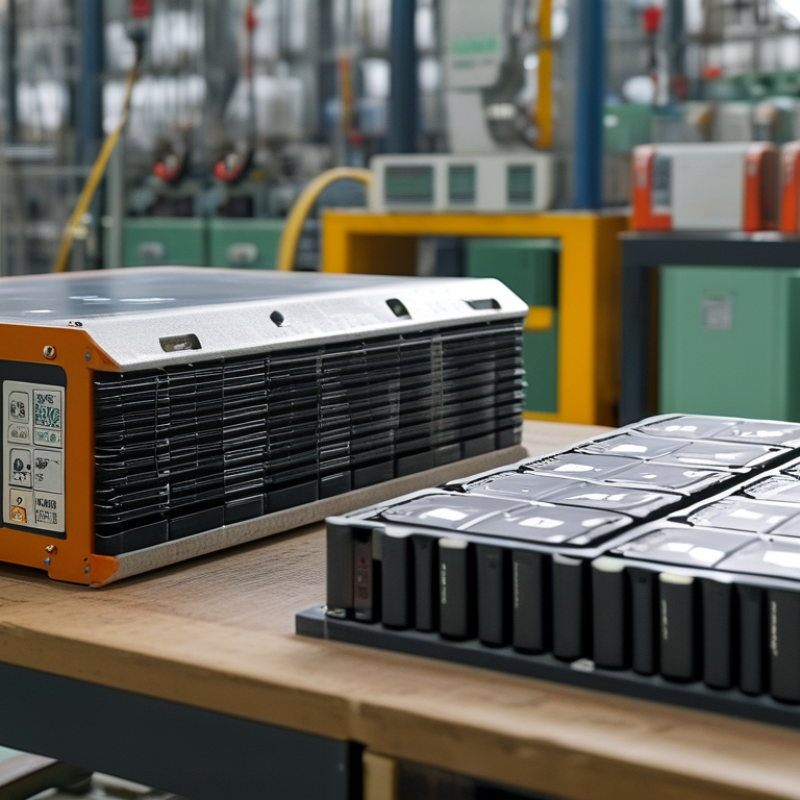
China Best Lithium Ion Smart Battery Packs Supplier?

What Are Lithium-Ion Smart Battery Packs?

What Are Lithium-Ion Smart Battery Packs?

Lithium-ion smart battery packs combine cells, sensors, protection circuits, and a battery management system. They do more than store electrical energy. The BMS measures voltage, current, temperature, state of charge, and estimated battery health. It can balance cells and disconnect the pack during unsafe conditions.

The market is expanding quickly. The International Energy Agency reported that lithium-ion battery demand grew by about 40% in 2023, reaching approximately 750 GWh across energy applications. Its Global EV Outlook 2024 also recorded nearly 14 million electric car sales in 2023. These figures explain why accurate monitoring matters in vehicles, medical devices, tools, and backup systems.

A smart pack can send operating data through CAN, UART, Bluetooth, or another communication interface. Engineers use this information to detect abnormal heating, charging errors, and capacity loss. In practical testing, a reliable pack should show stable readings under different loads, not only during laboratory charging. Standards such as IEC 62619 and UN 38.3 support safety evaluation, but compliance alone is not a complete quality guarantee. Field conditions can be harsher. Dust, vibration, cold starts, and inconsistent charging still expose weak designs. This is where supplier experience becomes important, although technical claims should always be checked against test records and traceable data.

How Do Smart Battery Packs Work?

How Do Smart Battery Packs Work?

A smart lithium-ion battery pack combines cells, sensors, a battery management system, and communication software. The management system measures voltage, current, temperature, and charging history. It estimates state of charge and state of health. These values help control charging, discharge, balancing, and thermal protection.

The International Energy Agency reported that global electric vehicle battery demand exceeded 750 GWh in 2023, rising by about 40% from 2022. This growth increases the need for accurate monitoring and dependable pack design. A smart pack can detect one unusually warm cell and reduce power before damage spreads. It can also balance cell voltages, improving usable capacity. However, estimates are not perfect. Sensors can drift, and aging cells may behave differently in cold conditions. Good suppliers validate software with laboratory tests, vibration checks, thermal cycling, and real-use data. The system should also record fault events for maintenance teams.

Tips: Check whether the pack provides readable data, not only a simple percentage. Ask about cell matching, protection thresholds, communication protocols, and independent safety testing. The Global Battery Alliance emphasizes traceability and responsible battery value chains, but technical transparency still varies between suppliers. Request test records and clear warranty limits. Small details matter. A compact enclosure, secure connectors, and accurate temperature sensors can prevent costly failures.

Why Choose a Chinese Lithium-Ion Battery Supplier?

China offers a strong case for buyers seeking lithium-ion smart battery packs. The International Energy Agency reported in its Global EV Outlook 2024 that China produced about three-quarters of global battery cells. This scale supports faster sourcing, wider cell selection, and competitive engineering costs. Many Chinese manufacturers also integrate cells, battery management systems, protective housings, and communication interfaces in one facility. That reduces handover risks.

The numbers are attractive. BloombergNEF reported an average lithium-ion battery pack price of 139 US dollars per kilowatt-hour in 2023, after a 14% annual decline. Chinese suppliers often benefit from dense material networks and high-volume production. Buyers can request customized voltage, capacity, CAN communication, thermal sensors, and enclosure protection. Real projects still need more than a quotation. I would check cycle-life test conditions, cell consistency, software functions, and traceable inspection records.

A lower price can hide gaps.

The supplier should explain how packs are tested before shipment. Reports from the International Electrotechnical Commission and the United Nations provide useful safety and transport testing frameworks. Documentation should match the actual pack, not a generic template. Factory audits, sample testing, and clear warranty terms improve reliability. Not every supplier delivers the same engineering depth. That is the uncomfortable part. Careful verification remains essential when choosing a Chinese lithium-ion battery supplier.

How to Evaluate the Best Supplier in China?

Choosing China’s best lithium-ion smart battery pack supplier requires evidence, not attractive catalogs. Begin with a factory audit, either in person or through an independent inspector. Check cell traceability, welding records, incoming inspection, and worker training. Ask who designs the battery management system and owns its software. A capable supplier should explain overcharge, short-circuit, temperature, and balancing protections clearly. Vague answers are warning signs.

Request samples from the same production line, not a hand-built demonstration unit. Test capacity at a defined current, charging time, standby loss, temperature rise, and communication accuracy. Review reports against requirements such as IEC 62133-2 and UN 38.3. Verify the issuing laboratory. Inspect safety data, labeling, packaging, and change-control procedures. One successful sample proves little. Batch consistency matters more.

During discussions, ask for failure data and warranty handling times. Honest suppliers can describe common defects without hiding behind marketing language. Confirm production capacity with purchase records, equipment lists, and realistic lead times. I have learned that price comparisons often miss tooling, firmware updates, and replacement testing. No audit is perfect. Keep a written acceptance plan, retain random samples, and schedule periodic inspections. A supplier that welcomes these checks is easier to trust.

How to Evaluate the Best Lithium-Ion Smart Battery Pack Supplier in China

This chart presents a practical procurement-weighting framework for evaluating lithium-ion smart battery pack suppliers. Safety certifications and test documentation should receive the highest priority, followed by cycle life, BMS performance, customization capability, manufacturing consistency, traceability, and after-sales support. The weighting is an evaluation model rather than a ranking of any specific company or brand.

What Applications Use Smart Lithium-Ion Battery Packs?

What Applications Use Smart Lithium-Ion Battery Packs?

Smart lithium-ion battery packs serve more than electric vehicles. IEA’s Global EV Outlook 2024 reports over 14 million electric cars were sold in 2023. These vehicles depend on battery management systems to monitor voltage, temperature, current, and state of charge. The same functions support electric buses, delivery vehicles, forklifts, and automated warehouse robots. Real-time alerts can identify an overheated cell before it damages a larger system.

Stationary energy storage is another major application. IEA’s Batteries and Secure Energy Transitions 2024 report expects global battery demand to exceed 3 TWh by 2030, driven by mobility and power storage. Smart packs help solar systems store midday electricity for evening use. They also support telecom backup, medical equipment, marine systems, and remote monitoring devices. However, a neat dashboard does not guarantee a safe pack. Cell matching, thermal design, firmware testing, and traceable production still matter.

Tips: Specify the load profile before choosing a pack. Check peak current, operating temperature, communication protocol, and cycle-life data. Ask for test records, not only marketing figures. A lower-cost pack may fit today, but poor thermal control can raise maintenance costs later. Designing for repair and replacement is often overlooked. It deserves a second review.

China Best Lithium Ion Smart Battery Packs Supplier? - What Applications Use Smart Lithium-Ion Battery Packs?

Application Typical Battery Configuration Common Energy Range Recommended Lithium Chemistry Smart Battery Functions Key Design Requirements
Electric Bicycles and Scooters 10S–14S lithium-ion pack; approximately 36–52 V nominal 250–1,000 Wh Nickel manganese cobalt oxide (NMC) for compact size; lithium iron phosphate (LFP) for longer cycle life State-of-charge estimation, overcurrent protection, temperature monitoring, cycle counting, Bluetooth or CAN communication Low weight, vibration resistance, water-resistant enclosure, balanced cells, controlled charging
Automated Guided Vehicles and Mobile Robots 24–48 V battery system with high-rate cells 1–10 kWh LFP for high cycle life and thermal stability Real-time voltage and current data, remaining-runtime prediction, event logging, CAN communication, state-of-health estimation High discharge current, rapid opportunity charging, accurate battery diagnostics, mechanical protection
Medical Carts and Portable Medical Equipment 12–24 V modular battery pack 300–1,500 Wh LFP or medical-grade NMC, selected according to size and energy requirements Battery identification, accurate fuel gauging, fault alarms, temperature records, charge-status communication Stable output, quiet operation, replaceable design, electrical safety, clear service indicators
Solar Energy Storage Systems 12, 24, or 48 V battery modules connected in parallel or series 2–100+ kWh LFP due to long service life and strong thermal stability Cell balancing, state-of-charge and state-of-health monitoring, charge/discharge control, RS485 or CAN data exchange High cycle durability, scalable architecture, thermal management, inverter compatibility, fault isolation
Telecommunications Backup Power 48 V nominal battery system 5–200 kWh LFP for extended standby life and improved safety characteristics Remote monitoring, voltage and temperature reporting, backup-time estimation, alarm transmission, battery health analysis Low maintenance, reliable standby performance, parallel expansion, narrow operating-temperature management
Marine Electronics and Electric Boats 12–48 V battery systems, often using multiple modules 1–50 kWh LFP for safety and cycle life; NMC where lower weight is critical Water-ingress alerts, temperature monitoring, current measurement, state-of-charge display, communication with propulsion systems Sealed enclosure, corrosion resistance, shock protection, reliable low-temperature charging control
Cordless Power Tools and Professional Equipment 5S–15S high-power lithium-ion pack; approximately 18–60 V 100–1,500 Wh NMC or other high-power lithium-ion chemistries Peak-current protection, thermal cutoff, pack authentication, cell balancing, charge and discharge history High power density, short-term peak output, impact resistance, fast charging, compact dimensions
Uninterruptible Power Supply Systems 24–240 V DC battery strings, depending on system architecture 1–500+ kWh LFP for long service life; NMC for space-constrained installations Continuous voltage and temperature monitoring, event records, state-of-health estimation, alarm contacts, network communication Fast response, high reliability, redundant protection, predictable backup runtime, serviceable modules
Note: Voltage, capacity, chemistry, communication protocol, and protection settings are typical industry ranges. Final battery-pack specifications should be matched to the equipment load, operating environment, charging system, safety requirements, and applicable regulations.

FAQS

: What is a smart lithium-ion battery pack?

: It combines battery cells, sensors, a management system, and communication software. It monitors voltage, current, temperature, and charging history. The pack can control charging, discharge, balancing, and thermal protection.

How does the battery management system estimate battery condition?

It estimates state of charge and state of health. These estimates use electrical readings, temperature data, and usage history. They are useful, but not perfect.

Can a smart pack detect an overheating cell?

Yes, accurate sensors can identify an unusually warm cell. The system may reduce power before heat spreads to nearby cells. Small temperature differences matter.

Why is cell balancing important?

Cell balancing reduces voltage differences between individual cells. This can improve usable capacity and support more stable operation. Poorly matched cells may age unevenly.

What information should buyers request?

Ask for readable data beyond a simple percentage. Request voltage, temperature, fault records, communication details, and protection thresholds. A basic display may hide important problems.

What testing should a battery supplier provide?

Request laboratory tests, vibration checks, thermal cycling, and real-use data. Sample testing and factory audits can reveal production weaknesses. Generic documents are not enough.

Why might buyers consider a Chinese battery supplier?

China has large-scale battery production and broad cell selection. Many suppliers integrate cells, software, protective housings, and communication interfaces. This may reduce handover risks and engineering costs.

Does a lower battery price always mean better value?

No. A lower price can hide weaker testing, inconsistent cells, or limited support. Check cycle-life conditions, inspection records, and warranty limits. Cheap is not automatically efficient.

What physical details can prevent battery failures?

Secure connectors, a compact enclosure, and accurate temperature sensors improve protection. The enclosure should suit vibration, heat, and installation conditions. Small details matter.

Are battery estimates always reliable in cold conditions?

No. Aging cells may behave differently in low temperatures. Sensors can also drift over time. Cold-weather validation is easy to overlook.

Conclusion

Lithium ion smart battery packs combine high-energy lithium-ion cells with an integrated battery management system that monitors voltage, temperature, current, and state of charge. This intelligent control helps improve safety, charging efficiency, battery life, and overall performance. Depending on the design, smart packs can also communicate with devices or chargers, allowing users to track battery condition and manage power more accurately.

China is an important sourcing destination because its battery industry offers mature manufacturing capabilities, broad customization options, competitive production costs, and extensive supply-chain support. When evaluating the best supplier, buyers should review cell quality, protection features, certifications, production capacity, testing procedures, communication capabilities, warranty terms, and after-sales service. Lithium ion smart battery packs are widely used in portable electronics, medical equipment, robotics, energy storage systems, communication devices, mobility products, and industrial tools, making supplier reliability and application-specific design essential.

Ethan

Ethan

Ethan is a dedicated marketing professional who combines strategic insight, industry knowledge, and a strong understanding of customer needs to communicate the value of the company’s products. With extensive experience in content strategy, market research, and digital communication, he regularly......