Battery Engineering Blog
Discover expert perspectives, custom battery design guides, charging solutions, and industry updates from USA engineers.
China Top Custom Large Format Batteries Supplier Guide
Table of Contents
- Define Large-Format Battery Needs: 100–280 Ah Cells and 12–48 V Packs
- Assess China’s Market Position: Over 75% of Global Cell Capacity in 2023
- Select Chemistry and Performance: LFP Designs Deliver 3,000–8,000 Cycles
- Verify Supplier Compliance: UN 38.3, IEC 62619, UL 1973, and IP Ratings
- Compare Custom Quotes Using Capacity, DoD, Warranty, and 10-Year TCO
- FAQS
- Conclusion
- Related Posts
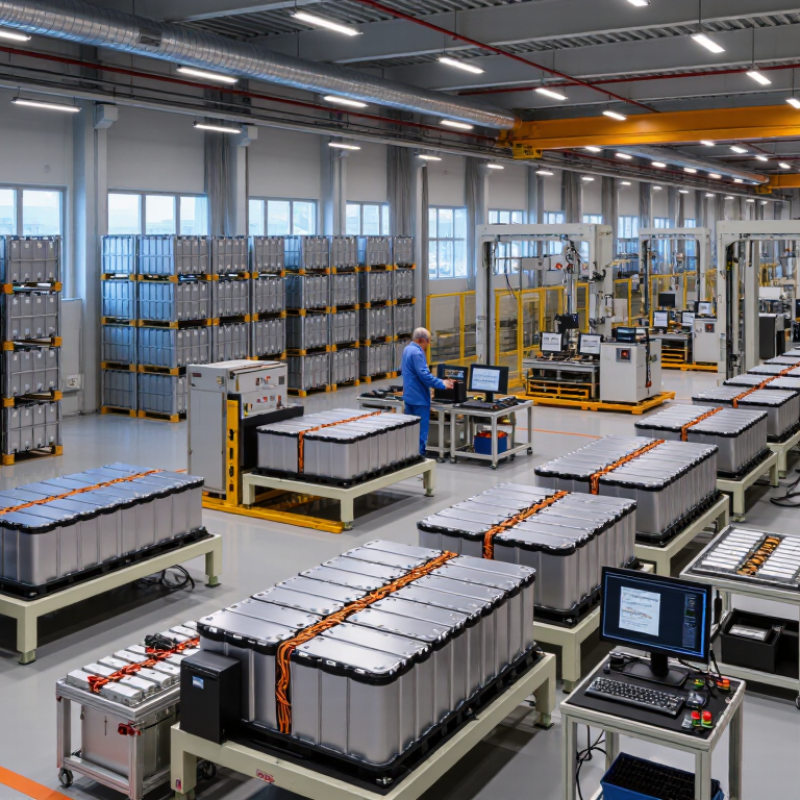
China’s custom large format batteries sector is moving from simple volume production toward engineered, application-specific systems. The change is visible in factories, where prismatic cells, busbars, cooling plates, and battery management systems are tested together. Capacity numbers matter, but they do not tell the whole story.
The International Energy Agency reported in Global EV Outlook 2024 that electric vehicle battery demand reached about 750 GWh in 2023, increasing by roughly 40% year on year. BloombergNEF’s 2024 Battery Price Survey recorded an average lithium-ion pack price of 115 dollars per kWh, down 20% from 2023. These figures show stronger scale and improving cost efficiency. They do not guarantee reliable customization.
Jeff Dahn, a leading lithium-ion battery researcher, has observed, “The battery is the most important component of an electric vehicle.” His point also applies to storage, marine, industrial, and low-speed mobility projects. A supplier must match cell chemistry, enclosure size, thermal control, charging limits, cycle-life targets, and certification needs. A 280Ah LFP cell may suit one storage cabinet, while another project needs a different voltage platform or cooling design.
This guide examines China’s leading custom large format batteries suppliers through technical capability, manufacturing experience, quality control, and communication reliability. It considers factory audits, prototype testing, traceability, warranty terms, and after-sales support. Price remains important. Yet price alone misleads. A polished specification sheet cannot reveal weak welding or unstable firmware. This guide also has limits, because supplier capabilities change quickly. Careful verification remains essential.
Define Large-Format Battery Needs: 100–280 Ah Cells and 12–48 V Packs
Defining a large-format battery starts with the load, not the catalogue. For industrial, marine, mobility, and backup systems, 100–280 Ah cells provide a practical capacity range. A 3.2 V, 280 Ah cell stores about 0.90 kWh before losses. Sixteen cells create a nominal 51.2 V pack with roughly 14.3 kWh. Usable energy changes with temperature, voltage limits, and reserve settings.
The International Energy Agency reported more than 750 GWh of global electric-vehicle battery demand in 2023. Its Batteries and Secure Energy Transitions report also recorded around 42 GW of new battery storage capacity that year. These figures support stronger demand for matched cells, thermal monitoring, and repeatable testing. Four 3.2 V cells commonly form a nominal 12.8 V pack. Eight cells suit 24 V systems, while sixteen suit 48 V systems. Those labels are nominal, not charging voltage. Do not size from Ah alone.
A reliable custom supplier should provide cell test curves, internal resistance data, cycle-life conditions, and BMS current limits. Ask for fuse ratings, temperature-sensor locations, enclosure dimensions, and end-of-line test records. For transport and industrial applications, request evidence related to UN 38.3 and applicable IEC 62619 testing. The numbers can look excellent on paper. One weak point remains: a 280 Ah cell may be unnecessary for a low-current 12 V load. Recheck peak current, cable losses, enclosure space, replacement weight, and cold-weather performance before approving the design.
Assess China’s Market Position: Over 75% of Global Cell Capacity in 2023
China Top Custom Large Format Batteries Supplier Guide
Assess China’s Market Position: Over 75% of Global Cell Capacity in 2023
China held more than 75% of global battery cell manufacturing capacity in 2023, according to widely cited industry estimates. This position reflects extensive production lines, established material networks, and strong engineering capabilities. It also gives overseas buyers access to large-format cell designs, including prismatic and pouch formats for energy storage, mobility, and industrial equipment.
Capacity is not equal to quality.
A factory may offer 280Ah or 314Ah cells, yet specifications alone prove little. During supplier evaluations, request production samples, capacity test curves, cycle-life data, and thermal management records. Check whether the stated capacity remains stable across different temperatures. Ask for traceable batch numbers and independent inspection reports. These details reveal more than a polished product sheet.
Custom battery projects require practical communication. Confirm voltage range, enclosure dimensions, connector positions, cooling methods, and protection settings before approving tooling. A reliable supplier should explain limitations instead of promising everything. Review quality controls for electrode coating, cell assembly, welding, and final testing. Transport documentation and applicable safety testing, such as UN 38.3, also deserve attention.
The market data is impressive, but it can mislead. Manufacturing scale does not automatically guarantee consistent delivery or engineering support. I have found that small changes in terminal placement or operating temperature can affect an entire battery design. Careful sampling, factory audits, and written acceptance criteria reduce that risk.
Select Chemistry and Performance: LFP Designs Deliver 3,000–8,000 Cycles
Selecting a custom large format battery begins with chemistry, not container size. Lithium iron phosphate (LFP) cells suit stationary storage, utility equipment, and commercial vehicles. In field projects, well-managed LFP packs can deliver roughly 3,000 to 8,000 cycles. Actual results depend on depth of discharge, temperature, charge rate, and maintenance. Cycle numbers need context. A 100% daily discharge stresses cells more than an 80% operating window.
A capable supplier should show test conditions, not only headline specifications. Request cycle-test data, cell matching records, thermal design details, and battery management system limits. Ask how the enclosure handles rain, dust, vibration, and heat near 45°C. For a 48V cabinet or an 800V system, protection devices and service isolation must suit the installation. Capacity should be checked at the required load, not only at room temperature. Small details reveal practical experience.
LFP offers strong thermal stability and predictable aging, but it is not automatically the best choice. Cold charging can reduce performance or damage cells without suitable controls. Large packs also need balanced modules, clear wiring, and accessible replacement points. Field reviews often reveal projects focused on cycle count while overlooking standby losses and cable heating. That is an expensive lesson. Supplier reliability includes traceable materials, realistic warranty terms, documented safety tests, and responsive technical support. Performance claims should survive independent review.
Verify Supplier Compliance: UN 38.3, IEC 62619, UL 1973, and IP Ratings
When sourcing custom large format batteries from China, compliance evidence should guide supplier selection. UN 38.3 confirms transport testing for the complete battery design, not merely individual cells. Request the test report, revision number, laboratory identity, and configuration tested. A 48 V cabinet may differ after adding a new enclosure, connector, or battery management system. That difference matters. Ask whether production units match the tested samples.
For industrial applications, IEC 62619 addresses safety risks in secondary lithium battery systems. UL 1973 can support evaluation of stationary battery systems, depending on the intended application. Do not accept a certificate image without scope, model numbers, and expiration details. Check cell traceability, protection thresholds, thermal sensors, wiring, and documented fault responses. IP ratings also need context. An IP65 claim should identify test conditions, enclosure design, and cable-entry protection. Inspect gasket compression and door alignment during a sample review. Small gaps can defeat a strong rating.
Reliable suppliers provide controlled drawings, change notices, incoming inspection records, and serial-level traceability. They should explain who owns retesting after a design change. Ask for an audit trail, not polished paperwork. Even an experienced review can miss weak field support or unclear maintenance instructions. That is where confidence drops. Review warranty boundaries, training materials, emergency procedures, and service response times before signing. Compliance is stronger when documents, hardware, and factory controls tell the same story.
Compare Custom Quotes Using Capacity, DoD, Warranty, and 10-Year TCO
When comparing custom large format battery quotes from China, capacity is only the opening figure. BloombergNEF reported an average lithium-ion pack price of 115 USD per kWh in 2024, after a 20% annual decline. That benchmark helps, but custom systems can cost more because of casing, thermal control, testing, and logistics. Ask whether the quoted capacity is nominal or usable. A 1,000 kWh battery rated at 90% DoD provides about 900 kWh before efficiency losses. Small wording differences matter.
DoD should be assessed beside cycle life and warranty limits. A supplier promising 80% DoD may offer better long-term value than one promising 95% DoD with faster degradation. The International Energy Agency reported global electric vehicle battery demand exceeded 750 GWh in 2023, showing the scale of manufacturing growth, but scale does not remove project risk. Request warranty terms for retained capacity, annual throughput, operating temperature, and response times. Read the exclusions carefully. They are often overlooked.
For a 10-year TCO, calculate usable energy, not nameplate capacity. Include purchase price, installation, cooling, software, maintenance, freight, insurance, degradation, and possible augmentation. A simple model divides total ten-year cost by delivered megawatt-hours. One weak assumption can distort the result. Replacement timing is also uncertain. Ask for measured cycle data under your expected daily profile, rather than relying on laboratory claims. The cheapest quote may be cheaper only on paper.
FAQS
Start with load demand, peak current, runtime, temperature, and available enclosure space. Do not size from Ah alone. A 280 Ah cell may be excessive for a low-current 12 V load.
Four 3.2 V cells create a nominal 12.8 V pack. Eight cells suit 24 V systems. Sixteen cells create a nominal 51.2 V pack. These are nominal voltages, not charging voltages.
One 3.2 V, 280 Ah cell stores about 0.90 kWh before losses. Sixteen cells provide roughly 14.3 kWh nominally. Usable energy changes with temperature, voltage limits, and reserve settings.
LFP suits stationary storage, utility equipment, and commercial vehicles. Well-managed packs may deliver about 3,000 to 8,000 cycles. Actual life depends on discharge depth, temperature, charging rate, and maintenance. Cycle counts need context.
Request cell test curves, internal resistance data, and cycle-test conditions. Ask for cell matching records and battery management limits. The supplier should explain fuse ratings, sensor locations, and service isolation. Paper numbers are not enough.
Cold charging can reduce performance or damage cells without suitable controls. Ask how the pack performs near 45°C. Check cable heating, standby losses, and replacement access. This detail is easy to miss.
Request complete test reports, revision numbers, laboratory details, and tested configurations. Check whether production batteries match the tested samples. Relevant evidence may include UN 38.3, IEC 62619, and UL 1973 evaluations. A certificate image proves little by itself.
Confirm the stated IP rating, test conditions, cable-entry protection, and enclosure design. Inspect gasket compression and door alignment on a sample unit. Small gaps matter. A strong rating can fail in practice.
Conclusion
Choosing custom large format batteries starts with clearly defining the required application. Typical solutions use 100–280 Ah cells assembled into 12–48 V packs, but voltage, capacity, operating conditions, space, and safety requirements should be confirmed before requesting designs. China remains a major manufacturing center, accounting for more than 75% of global cell capacity in 2023, which gives buyers access to broad production capabilities and customization options.
Battery chemistry and performance are equally important. LFP designs can provide approximately 3,000–8,000 cycles when properly managed, making them suitable for demanding energy storage and mobility applications. Before selecting a supplier, verify testing and compliance documentation, including UN 38.3, IEC 62619, UL 1973, and appropriate IP ratings. When comparing custom quotations, evaluate usable capacity, depth of discharge, warranty terms, charging limits, service support, and estimated 10-year total cost of ownership rather than focusing only on the initial purchase price.

Blog Tags: